
About Libby Beaman
Lived 1844 – 1932 (aged 87–88). Libby Beaman was an artist.
Elizabeth Beaman (1844-1934), also known by her maiden name Elizabeth Gertrude DuBois, claimed to be the first non-Aleut woman to go to the Pribilof Islands off the coast of Alaska, although she was not. She was a naturalist, artist, mapmaker, and writer. Her year spent in Alaska produced a diary in which she wrote about her experiences during seal season. Not much is known of Beaman's later life, but her contributions to documenting her time in Alaska has established her as a woman who overcame societal norms and expectations.
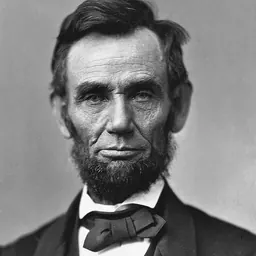
Early life Born Elizabeth Gertrude DuBois in Great Bend, Pennsylvania, in 1844, she was the eldest child of Nicholas and Louise DuBois. Her father was a civil engineer by training but a government official by career. For two years, Libby and her family lived at Mount Vernon while her father oversaw the restoration of George Washington's home. Her father worked under presidents James K. Polk, Zachary Taylor, and was well acquainted with Abraham Lincoln. She had a passion for art and attended the Corcoran School of Art. Beaman was given the opportunity to work for her father as a mapmaker, at a time when the United States' borders were expanding. Unbeknownst to Beaman, she would work on details of a map of the Alaska Purchase in which she would draw Saint Paul Island (Alaska) and St. George Island (Alaska), her future home for a year. While there, she met prisoner John Warren Beaman (1845-1903). The two married in 1874, ten years after their first meeting. On November 26, 1880, Libby and John welcomed their son, Charles Worcester Beaman, in Washington, D.C. President Hayes had explained to Beaman that the supervision of seal pelts was important as it provided a substantial income for the United States government. Over the course of the year spent in Alaska, Beaman kept a diary, later published by her granddaughter Betty John titled Libby: The Alaskan Diaries and Letters of Libby Beaman, 1879-1880.
Historian and scholar depiction Historians and scholars discuss Beaman as a woman who helped to establish a new social role for women in a masculine dominated landscape. The nineteenth century was a time when women were excluded from participating in nature and exploration of the wild American landscape, yet Beaman's boldness has identified her as woman who contributed to nature and the sciences, going against popular culture. After the death of her husband in 1903, Libby moved to Cincinnati, Ohio, to live with her son and his family.
She died on May 8, 1934, at the age of ninety.
Don’t just read it —
keep it.
Full-length biographies made to live with: read them, listen on the way to work, watch them tonight.
- E-book
- Audio
- Video
Instant download · yours to keep · every purchase keeps this site free
Important facts
People in Libby Beaman's life
Named in this biography and alive at the same time



Related people
Same field, nearest in time




Contemporaries
People whose lives overlapped Libby Beaman's

Frequently asked questions
Who was Libby Beaman?
American naturalist (1844–1934)
When was Libby Beaman born?
Libby Beaman was born in 1844 in Great Bend.
When did Libby Beaman die?
Libby Beaman died in 1932 in Cincinnati, Ohio.
What was Libby Beaman's occupation?
Libby Beaman was an artist.
Sources & further reading
Cite this page
APA: Biography.guide. (2026). Libby Beaman. https://biography.guide/libby-beaman/
MLA: "Libby Beaman." Biography.guide, https://biography.guide/libby-beaman/.
Chicago: "Libby Beaman." Biography.guide. https://biography.guide/libby-beaman/.
Data last updated: 2026-09-20 · Spot an error? Report a correction.
Page generated 2026-09-27 05:00 UTC