
About Liao Chengzhi
Lived 1908 – 1983 (aged 74). Liao Chengzhi was a Chinese politician and diplomat.
Liao Chengzhi (; 25 September 1908 – 10 June 1983) was a Chinese politician. He joined the Chinese Communist Party in 1928, and rose to the position of director of the Xinhua News Agency; after 1949, he worked in various positions related to foreign affairs, most prominently president of the Beijing Foreign Languages Institute, president of the Sino-Japanese Friendship Society, and Minister of the Office of Overseas Chinese Affairs.
Early life
Liao was born in the Ōkubo neighbourhood of Tokyo in 1908 to father Liao Zhongkai and mother He Xiangning. His father had wanted to study abroad ever since he was a student at Hong Kong's Queen's College; he left his wife behind in Hong Kong to pursue his studies in Tokyo in January 1903, but she joined him there just three months later. She pursued education there as well, taking time off after young Liao was born, but returning to school just six months later. Liao was overweight as a child; even his own parents referred to him as "fatty" . His parents became members of the Kuomintang very early on; Sun Yat-sen was a frequent visitor to their household, sparking the young Liao's interest in politics.
Liao returned to his parents' home of Guangdong in 1923, where he entered the middle school attached to Lingnan University.
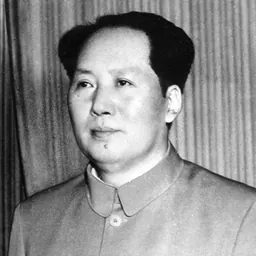
Fighting the Nationalists and Japan In August 1933, Liao bid farewell to his mother and, under the orders of the Party, proceeded to the Sichuan-Shaanxi area carrying Kuomintang codes which would allow the Communists to decrypt their telegraph messages. After his arrival there, he became Secretary of the Politburo of the Chinese Red Army's New Fourth Army. However, he offended his superior Zhang Guotao by pointing out some of his ideological errors; Zhang Guotao criticised Liao as a "member of a Kuomintang family" and had him arrested. He spent two more years in a CCP prison, and thus ended the Long March as a criminal, but was restored to good standing in the Party in late 1936 while in northern Shaanxi by Mao Zedong and his old friend Zhou Enlai. He then began his work with the Red China News Agency, Xinhua's forerunner, where he put his international experience to good use, translating news into English, French, German, and Japanese. His work there formed the foundation of what would become the CCP's united front strategy in the territory, aimed at using Hong Kong's economic resources and connections to overseas Chinese communities to fund CCP aims; indeed, while in Hong Kong, Liao cultivated relations and alliances with the territory's "big capitalists". His mother arranged for Jing Puchun to be sent there as well, as a surprise for her son; the two had a joyous reunion at the docks as Liao stepped off his ship, and married soon after, on 11 January 1938. Liao left Hong Kong in January 1941, but after the Imperial Japanese Army invaded and occupied the city, he was chosen for his fluency in Japanese along with Lian Guan to sneak back in and establish contact with fellow revolutionaries who had been trapped there; by May, he had helped over 500 people escape from Hong Kong, including his mother, Soong Ching-ling, Mao Dun, Xia Yan, Liang Shuming, Cai Chusheng, Liu Yazi, Hu Feng, Hu Sheng, and Zou Taofen (邹韬奋).
In 1960, Liao warned that Communist China "shall not hesitate to take positive action to have Hong Kong, Kowloon and New Territories liberated" should the status quo (i.e. colonial administration) be changed. The warning killed any democratic development in Hong Kong for the next three decades.
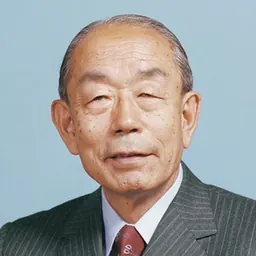
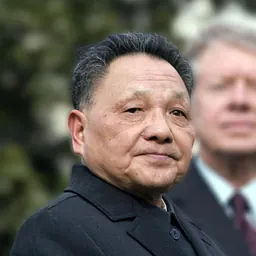
Even as he turned 70, Liao remained active and busy in politics, in 1978 heading up the newly established Hong Kong and Macau Affairs Office and the newly revived Overseas Chinese Affairs Office, of whose predecessor he had been the head up until 1970. He also continued to play an important role in Sino-Japanese relations, accompanying Deng Xiaoping on his visit to Japan, meeting with Prime Minister Takeo Fukuda. In March 1980, with his health worsening, Liao flew to the United States to undergo coronary artery bypass surgery at the Stanford University's Medical Center. He remained overweight even in his twilight years; after his surgery, his wife tried to manage his diet more closely, but he continued to eat fatty foods and smoke the occasional cigarette. Chinese President Li Xiannian gave a memorial speech at his funeral.
Don’t just read it —
keep it.
Full-length biographies made to live with: read them, listen on the way to work, watch them tonight.
- E-book
- Audio
- Video
Instant download · yours to keep · every purchase keeps this site free
Important facts
Family & relationships
People in Liao Chengzhi's life
Named in this biography and alive at the same time


Related people
Same field, nearest in time






Contemporaries
People whose lives overlapped Liao Chengzhi's


Frequently asked questions
Who was Liao Chengzhi?
Chinese politician (1908-1983)
When was Liao Chengzhi born?
Liao Chengzhi was born on 25 September 1908 in Ōkubo.
When did Liao Chengzhi die?
Liao Chengzhi died on 10 June 1983 in Beijing.
What was Liao Chengzhi's occupation?
Liao Chengzhi was a politician and diplomat.
What nationality was Liao Chengzhi?
Liao Chengzhi was Chinese.
Sources & further reading
Cite this page
APA: Biography.guide. (2026). Liao Chengzhi. https://biography.guide/liao-chengzhi/
MLA: "Liao Chengzhi." Biography.guide, https://biography.guide/liao-chengzhi/.
Chicago: "Liao Chengzhi." Biography.guide. https://biography.guide/liao-chengzhi/.
Data last updated: 2026-09-20 · Spot an error? Report a correction.
Page generated 2026-09-27 05:24 UTC