
Liang Mong Song
Taiwanese engineer
About Liang Mong Song
Born 1952. Liang Mong Song is a Taiwanese.
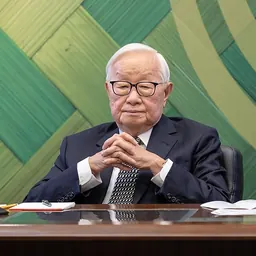
Liang Mong Song is a Taiwanese electronic engineer. He is the co-chief executive officer of the Semiconductor Manufacturing International Corporation. He was previously an engineer at TSMC and Samsung Electronics.
He is known as one of the "Six Knights of TSMC R&D".
Early life and education Liang was born in Taiwan in 1952. His father was Liang Chao-chu and his mother was Liang Shih Ing-ing.
Liang graduated from National Cheng Kung University with a bachelor's degree and master's degree in electrical engineering. He then completed doctoral studies in the United States at the University of California, Berkeley, where he studied under Chenming Hu. He earned his Ph.D. in electrical engineering from Berkeley in 1984. His doctoral dissertation was titled, "Current, Field Stress-Induced Degradation in Thin Gate-Oxide MOSFETs".
Career After obtaining a doctorate in electrical engineering, Liang was elected as a fellow of the Institute of Electrical and Electronics Engineers. He was responsible for the memory-related work of ultra-micro semiconductors.
According to the data of the United States Patent and Trademark Office, Liang owns 181 semiconductor technology patents, all of which are key technical research. He has published more than 350 technical papers in Taiwan and the United States.
Work at TSMC After returning to Taiwan in 1992, Liang served as an engineer and senior R&D director of TSMC. He is credited with nearly 500 TSMC patents, and was responsible for or participated in the most advanced development of each generation of TSMC's manufacturing processes. In 2003, TSMC defeated IBM with its own technology.
In 2005, when Morris Chang named Rick Tsai to succeed him as CEO, Liang expected to be promoted to R&D Vice President. However he was passed over, leaving Liang furious. In February 2009, Liang Mong Song left TSMC and joined National Tsing Hua University as a professor in the Department of Electrical Engineering and Institute of Electronics. He left for South Korea more than half a year later. Liang agreed to join Samsung and at the same time took away more than 20 employees, including those from his old TSMC engineering department. On 13 July 2011, Liang officially joined Samsung as the chief technology officer of Samsung's LSI department and was also the executive vice president of Samsung's wafer foundry.
At that time, Samsung was at the R&D bottleneck of switching from the 28 nm process to the 20-nanometer process. Liang advocated that Samsung abandon the 20 nm process and directly upgrade from the 28 nm process to the 14 nm process.
After Liang assisted Samsung in successfully developing the 14 nm process, Samsung won the first batch of orders for the Apple A9 and Qualcomm's order, which were originally exclusive to TSMC in the Apple processor-related market. This caused TSMC's stock price to fall for a time, losing 80% of Apple's orders and losing US$1 billion. In October 2011, TSMC launched a four-year-old lawsuit against Liang, accusing him of supposedly leaking TSMC's business secrets to Samsung. South Korea entered the wafer foundry industry where a few companies have the ability to compete and by 2018, Samsung's foundry revenue climbed to approximately US$10 billion, and was attempting to surpass TSMC in the 3 nm process.
An expert technical investigation report commissioned by TSMC showed that because Samsung's product technology was licensed from IBM, its product features were originally the same as those of IBM, but very different from those of TSMC. TSMC appealed against the verdict. In the second instance the court sided with TSMC as it found Sungkyunkwan University had a special relationship with Samsung. Liang refused to accept the appeal, and the final verdict of the Supreme Court was Liang could not continue to provide services to Samsung in any way until after the end of 2015. The judgment was also the first time in Taiwan's court history that senior corporate executives were prohibited from working for a competitor company after the non-compete period has expired. Some media commented it as a "historic judgment".
Move to SMIC In 2015, Liang had left Samsung. In 2017 he was hired at Semiconductor Manufacturing International Corporation Co-CEO. After he joined, SMIC improved the yield of its mass production and shrank the size of its chips. He pushed for smaller chips which prompted clashes with SMIC executives and shareholders who also wanted to focus on less-advanced but profitable areas.
In late 2020, Liang complained he wasn't consulted when SMIC brought in his former boss Chiang Shang-yi as deputy chairman. A letter containing his grievances was published online in Chinese media. He also wrote that he had led a team to complete the development of 7 nm process at SMIC.
In 2022, Liang was still with SMIC and the 7 nm process was completed. Chiang was no longer with SMIC.
Don’t just read it —
keep it.
Full-length biographies made to live with: read them, listen on the way to work, watch them tonight.
- E-book
- Audio
- Video
Instant download · yours to keep · every purchase keeps this site free
Important facts
People in Liang Mong Song's life
Named in this biography and alive at the same time



Contemporaries
People whose lives overlapped Liang Mong Song's





Frequently asked questions
Who is Liang Mong Song?
Taiwanese engineer
When was Liang Mong Song born?
Liang Mong Song was born in 1952.
What nationality is Liang Mong Song?
Liang Mong Song is Taiwanese.
Sources & further reading
Cite this page
APA: Biography.guide. (2026). Liang Mong Song. https://biography.guide/liang-mong-song/
MLA: "Liang Mong Song." Biography.guide, https://biography.guide/liang-mong-song/.
Chicago: "Liang Mong Song." Biography.guide. https://biography.guide/liang-mong-song/.
Data last updated: 2026-09-20 · Spot an error? Report a correction.
Page generated 2026-09-27 05:25 UTC