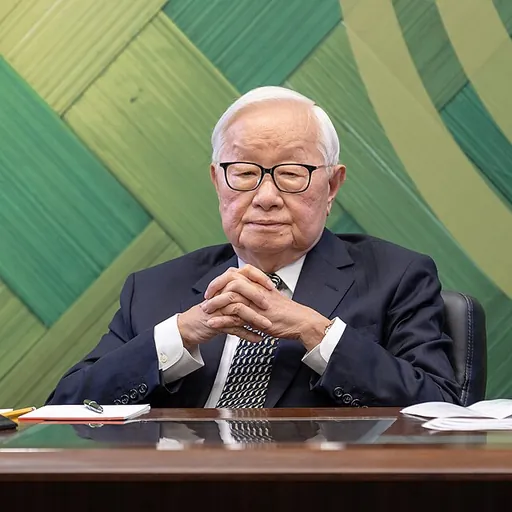
About Morris Chang
Born 1931. Morris Chang is an American and Taiwanese engineer and entrepreneur, known for Taiwan Semiconductor Manufacturing Company.
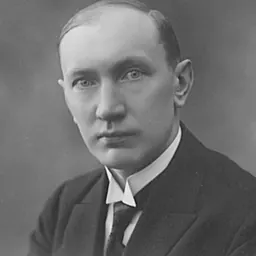
Morris Chang Chung-mou (; born July 10, 1931) is a Taiwanese billionaire business executive and electrical engineer. He is the founder of Taiwan Semiconductor Manufacturing Company (TSMC) and was the company's chief executive officer (CEO) from 1987 to 2005, and its chairman until 2018. , Forbes estimates his net worth at US$8.5 billion.
Born in China, Chang lived in Hong Kong and immigrated to the United States. After attending Harvard University, he graduated with three degrees from the Massachusetts Institute of Technology (MIT) and earned his doctorate from Stanford University in 1964. He began his career as a semiconductor engineer first at Sylvania Electric Products, then Texas Instruments, and, in 1984, became the president and chief operating officer of General Instrument.
During the 1980s, Chang moved to Taiwan to serve as head of the Industrial Technology Research Institute (ITRI). In 1987, he founded TSMC, the world's first semiconductor foundry, and is regarded as the founder of Taiwan's semiconductor industry. He pioneered the foundry model of semiconductor fabrication, leading TSMC to become the largest company in Taiwan and one of the world's largest semiconductor companies. President Tsai Ing-wen awarded him the Order of Propitious Clouds in 2018 and the Order of Dr. Sun Yat-sen in 2024 for his contributions to technology development in Taiwan.
Early life Chang was born in Ningbo, Chekiang, on July 10, 1931, to a middle-class Chinese family. His father, Chang Wei-kuan (1906–1992), was a graduate of East China Normal University (then Kwang Hua University) who received a Western education. Wei-kuan was an official in charge of finance for the Yin county government and later a bank manager. Due to the senior Chang's career and the outbreak of the Second Sino-Japanese War (1937–1945), the Chang family moved to Nanjing, then to Guangzhou, Hong Kong, Chongqing, and Shanghai. He majored in applied physics and engineering sciences, but, in order to gain better career prospects in engineering, transferred to the Massachusetts Institute of Technology (MIT) in his sophomore year.
Chang did not pass two consecutive doctoral qualification examinations and eventually left MIT without obtaining a PhD. He was tasked with improving germanium transistor yields, besides device development. He earned his doctorate under John L. Moll, William E. Spicer, and Gerald Pearson. His dissertation was titled, "Optical absorption and photoluminescence of doped GaAs and (InxGa1-x)As".
Career Chang worked on a four-transistor project for TI where the manufacturing was done by IBM. This was one of the early semiconductor foundry relationships. Also at TI, Chang pioneered the then controversial idea of pricing semiconductors "ahead of the cost curve", which meant sacrificing early profits ("short term") to gain market share and achieve manufacturing yields that would result in greater profits over an extended timeline ("long-term").
During his 25-year career (1958–1983) at Texas Instruments, he rose up in the ranks to become the group vice president responsible for TI's worldwide semiconductor business. In the late 1970s, when TI's focus turned to calculators, digital watches and home computers, Chang felt like his career focused on semiconductors was at a dead end at TI.
Chang left TI and later became president and chief operating officer of General Instrument Corporation (1984–1985).
Taiwan In the early 1980s, while still at Texas Instruments, Chang witnessed TI's factory in Japan achieving twice the chip production yield as TI's factory in Texas. This marked his return to the ROC, initially thought to last for a few years, three decades after he left during the chaotic Chinese Civil War mainly between the People's Republic of China and the ROC. This was the beginning of the period where firms increasingly saw value in outsourcing their manufacturing capabilities to Asia. Soon, TSMC became one of the world's most profitable chip makers. Chang left ITRI in 1994 and became chairman of Vanguard International Semiconductor Corporation from 1994 to 2003 while continuing as chairman of TSMC. In 2005, he handed TSMC's CEO position to Rick Tsai.
In June 2009, Chang returned to the position of TSMC's CEO once again. The same year, Chang performed the role of Master Dragon in the first episode of “Let’s Go Guang!”, an animated Chinese-learning program for children. In 2016, MIT named Building E52 the “Morris and Sophie Chang Building” in honor of Chang and his wife. Building E52 is the original home of the MIT Sloan School of Management and headquarters of the MIT Department of Economics.
On June 5, 2018, Chang announced his retirement from TSMC, succeeded by C.C. Wei as CEO and Mark Liu as chairman. Chang was awarded the Order of Propitious Clouds, First Class in September 2018.
Chang has served as Presidential Envoy of the Republic of China (Taiwan), under the name Chinese Taipei, to APEC several times. He represented Chen Shui-bian in 2006. Tsai Ing-wen appointed Chang to the same role six times from 2018 to 2023.
In an interview with the Brookings Institution in 2022, Chang said the US federal government’s efforts to increase onshore chip manufacturing by spending tens of billions of dollars would be a very expensive and wasteful exercise in futility. He believed the US would increase onshore semiconductor manufacturing somewhat at a very high cost, and produce at high unit costs, rendering it unable to compete with factories like TSMC. Chang said TSMC chairman Mark Liu decided to invest US$12 billion in Arizona at the urging of the US government.
Personal life Chang obtained American citizenship in 1962. Chang married his second wife, Sophie Chang, a cousin of Foxconn founder Terry Guo, in 2001. He has two stepdaughters through his second marriage. MIT Corporation, MIT's board of trustees, Life Member Emeritus Goldman Sachs member of board of directors (2001–2002) Advisor to the Office of the President of the Republic of China Committee of 100
Honorary doctorates National Chengchi University, 2007 Asia University, Taiwan, 2015
Awards and recognitions Morris Chang was conferred the Order of Propitious Clouds with Special Grand Cordon by President Tsai Ing-wen, 2018. 1999, Exemplary Leadership Award from the Fabless Semiconductor Association (now Global Semiconductor Alliance), the first recipient of the award; now the award bears his name, "Dr. Morris Chang Exemplary Leadership Award". 2000, IEEE Robert N. Noyce Medal for Exceptional Contributions to Microelectronics Industry. 2002 National Academy of Engineering Member 2005, Nikkei Asia Prize for Regional Growth 2007, Computer History Museum Fellow Award, for dramatically accelerating the production of semiconductor-based devices and systems by developing an independent semiconductor manufacturing foundry. 2008 Robert N. Noyce Award from the Semiconductor Industry Association (US) 2011, IEEE Medal of Honor. 2011, Order of Brilliant Star with Grand Cordon from the Republic of China. 2014 SPIE Visionary Award 2018, Order of Propitious Clouds with Special Grand Cordon from the Republic of China. 2024, Order of Dr Sun Yat-sen with Grand Cordon from the Republic of China.
Authored books
Don’t just read it —
keep it.
Full-length biographies made to live with: read them, listen on the way to work, watch them tonight.
- E-book
- Audio
- Video
Instant download · yours to keep · every purchase keeps this site free
Important facts
Family & relationships
People in Morris Chang's life
Named in this biography and alive at the same time



Related people
Same field, nearest in time


Contemporaries
People whose lives overlapped Morris Chang's

Frequently asked questions
Who is Morris Chang?
Taiwanese businessman and electrical engineer (born 1931)
When was Morris Chang born?
Morris Chang was born on 10 July 1931 in Ningbo.
What is Morris Chang's occupation?
Morris Chang is an engineer and entrepreneur.
What is Morris Chang known for?
Morris Chang is known for Taiwan Semiconductor Manufacturing Company.
What nationality is Morris Chang?
Morris Chang is American and Taiwanese.
Sources & further reading
Cite this page
APA: Biography.guide. (2026). Morris Chang. https://biography.guide/morris-chang/
MLA: "Morris Chang." Biography.guide, https://biography.guide/morris-chang/.
Chicago: "Morris Chang." Biography.guide. https://biography.guide/morris-chang/.
Data last updated: 2026-09-21 · Spot an error? Report a correction.
Portrait: Wikimedia Commons · author & licence
Page generated 2026-09-27 05:00 UTC