
About Liang Huasheng
Lived 1904 – 1999 (aged 94–95). Liang Huasheng was a politician.
Liang Huasheng (; 25 September 1904 – 2 March 1999), formerly known as Liang Wenyan, was a lieutenant general in the Republic of China Army. He served as Chairman of the Jilin Provincial Government and was known as Hua Gong.
Biography
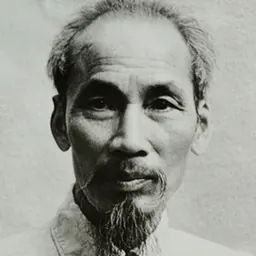
Born in Lidaokeng Village, Yangzhe Township, Maoming, Guangdong Province (now Sishui Town, Gaozhou City). In May 1924, he was admitted to the first batch of Huangpu Army Officer School. In 1925, he joined the National Revolutionary Army and participated in the Eastern Expedition (the crusade against Chen Jiongming). During the Northern Expedition, he was promoted from platoon commander and company commander to regimental commander. In 1930, he served as deputy brigade commander of the 2nd Brigade of the 2nd Division of the National Revolutionary Army and commander of the 4th Regiment, and participated in the Central Plains War. In 1932, he was promoted to commander of the 247th Brigade of the 83rd Division. The following year, he participated in the Defense of the Great Wall of the Inner Mongolian Campaign and faced the Japanese army at Gubeikou and Nantianmen. In September 1933, he was promoted to commander of the 92nd Division of the National Revolutionary Army and participated in the fifth encirclement and suppression of the Chinese Communist Party and the Chinese Workers' and Peasants' Red Army. During the pursuit, he was stationed in Guiyang. In April 1935, he was awarded the rank of Army Major General. In September 1936, he was appointed attached to the Ministry of Military Affairs and entered the third phase of the Army University to study. In the same year, he was appointed as the staff officer of the Chairman's Attendant's Office of the Military Commission. In 1942, he returned to his hometown to attend his father's funeral and established Haishan Middle School in his hometown. In 1942, Liang Huasheng was transferred to the captain of the Central Training Corps. He went to Liuzhou to guide the work of the Vietnamese Revolutionary Alliance. More than 800 young people from Vietnam, including Ho Chi Minh, received training in Liang Huasheng's Sino-Vietnamese training class. In the same year, Liang Huasheng was appointed deputy commander-in-chief of the 1st Group Army and became a member of the Chinese Expeditionary Force to fight in Myanmar. In April 1943, he was promoted to deputy commander-in-chief of the 11th Group Army, and concurrently served as the education director of the Cadre Training Group of the Nationalist Government Military Commission in Yunnan, responsible for training the Chinese Expeditionary Force and non-commissioned officers at all levels under the Chinese Army General Headquarters. The training regiment has general classes, combat training classes, automobile and combat vehicle training classes, communications infantry artillery medics and other brigades. It employs American instructors, uses the latest teaching materials, and uses new equipment. The total number of graduated officers and soldiers has reached 50,000. He made great contributions to the reunification of Yunnan and Burma, the opening of international routes, and the successful counterattack of Hunan and Guangxi. In February 1944, Liang Huasheng was transferred to the position of deputy commander-in-chief of the 20th Group Army.
After the end of the Second Sino-Japanese War, in December 1945, Liang Huasheng went to Northeast China to serve as deputy commander-in-chief of the Northeast Security Command. In June 1946 (the 35th year of the Republic of China), he acted as the chairman of the Jilin Provincial Government and officially took office as the chairman of the Jilin Provincial Government in October of the same year.
In May 1947, he concurrently served as the commander of the Jidong Corps. On July 19, the National Government appointed Liang Huasheng as the chairman of the Jilin Election Office; the National Government also appointed him as a representative of the National Assembly and a legislator of the Legislative Yuan.
In January 1948, he served as deputy commander-in-chief of the Northeast Bandit Suppression Headquarters, director of the Changchun Appeasement Office, and Shenyang Defense Commander. In the Liaoshen campaign, the People's Liberation Army won, and Liang Huasheng escaped from Shenyang and returned south before losing the city. In 1949, he served as deputy director of the Guangdong Provincial Appeasement Office. The Kuomintang was finally defeated in the second civil war between the Kuomintang and the Communist Party, and Liang Huasheng transferred to Taiwan. He successively served as national policy adviser to the Presidential Office and founding president of the Guangdong Province Taiwanese Association and Gaolei Association. In 1969, he retired from service. He served as the Honorary Director of Lu Baoyao Guoqiang Martial Arts Center. Liang Huasheng died on March 2, 1999, at the age of 96.
Family
Don’t just read it —
keep it.
Full-length biographies made to live with: read them, listen on the way to work, watch them tonight.
- E-book
- Audio
- Video
Instant download · yours to keep · every purchase keeps this site free
Important facts
People in Liang Huasheng's life
Named in this biography and alive at the same time

Related people
Same field, nearest in time






Contemporaries
People whose lives overlapped Liang Huasheng's

Frequently asked questions
Who was Liang Huasheng?
Chinese general (1904–1999)
When was Liang Huasheng born?
Liang Huasheng was born in 1904.
When did Liang Huasheng die?
Liang Huasheng died in 1999.
What was Liang Huasheng's occupation?
Liang Huasheng was a politician.
Sources & further reading
Cite this page
APA: Biography.guide. (2026). Liang Huasheng. https://biography.guide/liang-huasheng/
MLA: "Liang Huasheng." Biography.guide, https://biography.guide/liang-huasheng/.
Chicago: "Liang Huasheng." Biography.guide. https://biography.guide/liang-huasheng/.
Data last updated: 2026-09-20 · Spot an error? Report a correction.
Page generated 2026-09-27 05:20 UTC