
Liang Chi-chao
Chinese politician, activist and journalist
About Liang Chi-chao
Lived 1873 – 1929 (aged 55). Liang Chi-chao was a Chinese translator, journalist, philosopher, historian, writer and politician.
In his youth, Liang joined his teacher Kang Youwei in the Hundred Days' Reform of 1898. When the movement was defeated, he fled to Japan and promoted a constitutional monarchy and organized political opposition to the dynasty. After the revolution of 1911, he joined the Beiyang government, serving as the chief justice and the first president of the currency system bureau. He became dissatisfied with Yuan Shikai and launched a movement to oppose his ambition to be emperor. After Yuan's death, he served as the finance chief of the Duan Qirui cabinet and as supervisor of the Salt Administration. He advocated the New Culture Movement and supported cultural change but not political revolution.
Biography Family Liang Qichao was born in a small village in Xinhui, Guangdong Province on February 23, 1873. Liang's father, Liang Baoying (, Cantonese: Lèuhng Bóu-yīng; courtesy name Lianjian ; Cantonese: Lìhn-gaan), was a farmer and local scholar, but had a classical background that emphasized on tradition and education for ethnic rejuvenescence allowed him to be introduced to various literary works at six years old. By the age of nine, Liang started writing thousand-word essays and became a district-school student soon after. Liang had two wives: Li Huixian (; Cantonese: Léih Waih-sīn) and Wang Guiquan (; Cantonese: Wòhng Gwai-chyùhn). They gave birth to nine children, all of whom became successful individuals through Liang's strict and effective education. Three of them were scientific personnel at the Chinese Academy of Sciences, including Liang Sicheng, the prominent historian of Chinese architecture.
Early life Liang passed the Xiucai degree provincial examination at the age of 11. In 1884, he undertook the arduous task of studying for the traditional governmental exams. At the age of 16, he passed the Juren second level provincial exams and was the youngest successful candidate at that time.
In 1890, Liang failed in his Jinshi degree national examinations in Beijing and never earned a higher degree. He took the exams along with Kang Youwei, a famous Chinese scholar and reformist. According to one popular narrative of Liang's failure to pass the Jinshi, the examiner was determined to flunk Kang for his heterodox challenge to existing institutions, but since the exams were all anonymous, he could only presume that the exam with the most unorthodox views was Kang's. Instead, Kang disguised himself by writing an eight-legged essay espousing traditionalist ideas and passed the exam while Liang's paper, which was assumed to be Kang's, failed.
Inspired by the book Illustrated Treatise on the Maritime Kingdoms by the reform Confucian scholar Wei Yuan, Liang became extremely interested in western political thought. After returning home, Liang went on to study with Kang Youwei, who was teaching at in Guangzhou. Kang's teachings about foreign affairs fueled Liang's interest in reforming China.
In 1895, Liang went to the capital Beijing again with Kang for the national examination. During the examination, he was active in the Gongche Shangshu movement. After failing to pass the examination for a second time, he stayed in Beijing to help Kang publish Domestic and Foreign Information. He also helped to organize the , where Liang served as secretary. For time, he was also enlisted by the governor of Hunan, Chen Baozhen to edit reform-friendly publications, such as the Hunan Daily (Xiangbao ) and the Hunan Journal (Xiang xuebao ).
Reform movements As an advocate of constitutional monarchy, Liang was unhappy with the governance of the Qing Government and wanted to change the status quo in China. He organized reforms with Kang Youwei
This proposal soon ignited a frenzy of disagreement, and Liang became a wanted man by order of Empress Dowager Cixi, the leader of the political conservative faction who later took over the government as regent. Cixi strongly opposed reforms at that time and along with her supporters, condemned the "Hundred Days' Reform" as being too radical.
In 1898, the Conservative Coup ended all reforms, and Liang fled to Japan, where he stayed for the next 14 years. While in Tokyo he befriended the influential politician and future Japanese Prime Minister Inukai Tsuyoshi. In Japan, he continued to actively advocate the democratic cause by using his writings to raise support for the reformers' cause among overseas Chinese and foreign governments. He continued to emphasize the importance of individualism, and to support the concept of a constitutional monarchy as opposed to the radical republicanism supported by the Tokyo-based Tongmenghui (the forerunner of the Kuomintang). During his time in Japan, Liang also served as a benefactor and colleague to Phan Boi Chau, one of Vietnam's most important anticolonial revolutionaries.
In 1899, Liang went to Canada, where he met Sun Yat-Sen among others, then to Honolulu in Hawaii. During the Boxer Rebellion, Liang was back in Canada, where he formed the "Chinese Empire Reform Association". This organization later became the Constitutionalist Party which advocated constitutional monarchy. While Sun promoted revolution, Liang preached incremental reform.
In 1900–1901, Liang visited Australia on a six-month tour that aimed at raising support for a campaign to reform the Chinese empire and thus modernize China through adopting the best of Western technology, industry and government systems. He also gave public lectures to both Chinese and Western audiences around the country. This visit coincided with the Federation of the six British colonies into the new nation of Australia in 1901. He felt this model of integration might be an excellent model for the diverse regions of China. He was feted by politicians, and met the first Prime Minister of Australia, Edmund Barton. He returned to Japan later that year.
In 1903, Liang embarked on an eight-month lecture tour throughout the United States, which included a meeting with President Theodore Roosevelt in Washington, DC, before returning to Japan via Vancouver, British Columbia, Canada.
While living in Japan in 1905, Liang supported the Constitutionalist movement within the Qing administration.
The descendant of Confucius Duke Yansheng was proposed as a replacement for the Qing dynasty as Emperor by Liang Qichao.
Politician For the construction of a modern nation-state, Liang focused on two relative political questions. The first was the ways by which people became citizens in a modern nation-state, as Liang thought Chinese needed to improve civic ethos to build the nation-state in the Qing dynasty. The second was the meaning of citizenship itself; Liang thought both questions were important achieving reformation and modernization under Qing rule. He deemed "whites" and "yellows" as competing, with "brown," "black," and "red" peoples in subordinate position.
In 1915, he opposed Yuan's attempt to make himself emperor. He convinced his disciple Cai E, the military governor of Yunnan, to rebel. Progressive party branches agitated for the overthrow of Yuan and more provinces declared their independence. The revolutionary activity that he had frowned upon was utilized successfully. Besides Duan Qirui, Liang was the biggest advocate of entering World War I on the Allied side. He felt it would boost China's status and also ameliorate foreign debts. He condemned his mentor, Kang Youwei, for assisting in the failed attempt to restore the Qing in July 1917.
Liang led a group of private citizens to the Paris Peace Conference to lobby for China's interests and provide reports back to China. In the editorial, Liang compared the circulation of information in a country to the blood and pulse of a body. Its inaugural editorial includes a saying by Liang which became famous: "to renew a people, we must first renew their fictions."
During this period of Japan's challenge in the First Sino-Japanese War (1894–95), Liang was involved in protests in Beijing pushing for an increased participation in the governance by the Chinese people. It was the first protest of its kind in modern Chinese history. This changing outlook on tradition was shown in the historiographical revolution launched by Liang Qichao in the early twentieth century. Frustrated by his failure at political reform, Liang embarked upon cultural reform. In 1902, while in exile in Japan, Liang wrote "The New Historiography" , which called on Chinese to study world history to understand China rather than just Chinese history. He contended that Chinese must view their past in a different light and reconstruct it because "f there is no historiographical revolution, our country cannot be saved."
Translator
Liang was head of the Translation Bureau and oversaw the training of students who were learning to translate Western works into Chinese. He believed that this task was "the most essential of all essential undertakings to accomplish" because he believed Westerners were successful – politically, technologically and economically.
Philosophical Works: After escaping Beijing and the government crackdown on anti-Qing protesters, Liang studied the works of Western philosophers of the Enlightenment period, namely Hobbes, Rousseau, Locke, Hume and Bentham, translating them and introducing his own interpretation of their works. His essays were published in a number of journals, drawing interest among Chinese intellectuals who had been taken aback by the dismemberment of China's formidable empire at the hands of foreign powers.
Utilitarianism and 'Life-ism' (the continuous expansion and preservation of life) were advocated by Liang and Yan Fu, but drew criticism from Wang Guowei.
Western Social and Political Theories: In the early 20th century, Liang Qichao played a significant role in introducing Western social and political theories into Korea such as Social Darwinism and international law. Liang wrote in his well-known manifesto, New People :"Freedom means Freedom for the Group, not Freedom for the Individual. (…) Men must not be slaves to other men, but they must be slaves to their group. For, if they are not slaves to their own group, they will assuredly become slaves to some other."Poet and novelist Liang was among the earliest writers of science fiction in China. His 1902 novel The Future of New China described potential political reforms for the self-strengthening of China and its development to world power status. He also had a strong interest in Buddhism and wrote historical and political articles on its influence in China. Liang influenced many of his students in producing their own literary works. They included Xu Zhimo, renowned modern poet, and Wang Li, an accomplished poet and founder of Chinese linguistics as a modern discipline.
Publications
Introduction to the Learning of the Qing Dynasty (1920) The Learning of Mohism (1921) Chinese Academic History of the Recent 300 Years (1924) History of Chinese Culture (1927) The Construction of New China The Philosophy of Lao Tzu The History of Buddhism in China Collected Works of Yinbingshi, Zhonghua Book Co, Shanghai 1936, republished in Beijing, 2003, /K.210
Family Paternal grandfather Liang Weiqing (1815–1892), pseudonym Jingquan Paternal grandmother Lady Li (1817–1873), daughter of Guangxi admiral Li Diguang Father Liang Baoying (1849–1916), courtesy name Lianjian Mother Lady Zhao (1852–1887) First wife Li Huixian , married Liang Qichao in 1891, died of illness on September 13, 1924 Second wife Wang Guiquan , initially Li Huixian's handmaiden before becoming Liang Qichao's concubine in 1903
Issue and descendants From left to right: Liang Sining, Liang Sirui, Liang Sili and Liang Sida, were at Tianjin in 1934. Eldest daughter: Liang Sishun (April 14, 1893 – 1966), became an accomplished poet, married Zhou Xizhe in 1925 Zhou Nianci Zhou Tongshi Zhou Youfei Zhou Jiaping Eldest son: Liang Sicheng (April 20, 1901 – January 9, 1972), became a famous architect and teacher, married Lin Huiyin (June 10, 1904 – April 1, 1955) in 1928 Son: Liang Congjie (August 4, 1932 – October 28, 2010), prominent environmental activist, married firstly Zhou Rumei , married secondly Fang Jing Son: Liang Jian , son of Zhou Rumei Daughter: Liang Fan , daughter of Fang Jing Daughter: Liang Zaibing 2nd son: Liang Siyong (July 24, 1904 – April 2, 1954), married Li Fuman Daughter: Liang Baiyou 3rd son: Liang Sizhong (August 6, 1907 – 1932) 2nd daughter: Liang Sizhuang (1908 – May 20, 1986), married Wu Luqiang in 1933 Daughter: Wu Liming Son: Yang Nianqun (January 20, 1964–), male-line great-grandson late-Ch'ing era personage Yang Du 4th son: Liang Sida (December 16, 1912 – 2001), married Yu Xuezhen Daughter: Liang Yibing 1st son: Liang Renyou 2nd son: Liang Renkan 3rd daughter: Liang Siyi (December 13, 1914 – 1988), married Zhang Weixun 1st daughter: Zhang Yuwen 2nd son: Zhang Anwen 4th daughter: Liang Sining (October 30, 1916 – 2006), married Zhang Ke Zhang Antai Zhang Anqiu Zhang Anjian Zhang Hui Zhang Anning 5th son: Liang Sili (August 24, 1924 – April 14, 2016), married Mai Xiuqiong Liang Zuojun Liang Hong Liang Xuan
Liang Sishun, Liang Sicheng, and Liang Sizhuang were borne by Li Huixian. Liang Siyong, Liang Sizhong, Liang Sida, Liang Siyi, Liang Sining, and Liang Sili were borne by Wang Guiquan.
Legacy Liang's pedigree book was once lost with only one page left. The family members recreated the naming method by giving sixteen characters in a sequence, each generation following one. Liang didn't follow it by using ‘’ to his children.
Liang favored nationalism that incorporated different ethnic groups of the Qing empire to oppose Western imperialists. Despite the failures of his reforms, Liang's idea of Chinese nationalism based on the civic idea of Five Races Under One Union inspired Sun Yat-sen and the Kuomintang's nationalism, as well as the nationalist rhetoric of the CCP.
Don’t just read it —
keep it.
Full-length biographies made to live with: read them, listen on the way to work, watch them tonight.
- E-book
- Audio
- Video
Instant download · yours to keep · every purchase keeps this site free
Important facts
more
man shu shi zhu ren, tan shan lv ke, yin bing, yin bing zi, ai guo zhe, cang jiang, ru hui an zhu ren, liang ren, yi shi shi, ji tian jin, zhuo ru, xian min, zhong guo zhi xin min, yi ci, wai shi shi, shuang tao ge, jian shi, ren fu, Rengong, Liang Ch'i-ch'ao, xin min zi, Yinbingshi zhuren, zi you zhai zhu ren, yin bing shi zhu ren, xin shi shi, she yuan, meng yuan, shao nian zhong guo zhi shao nian, hong you, yuan gonFamily & relationships
People in Liang Chi-chao's life
Named in this biography and alive at the same time
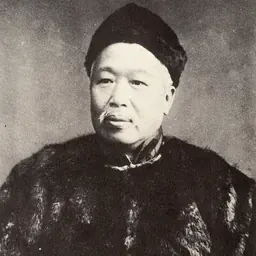

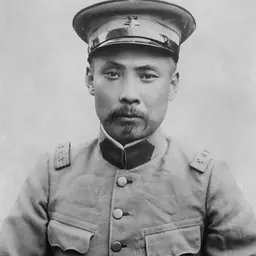


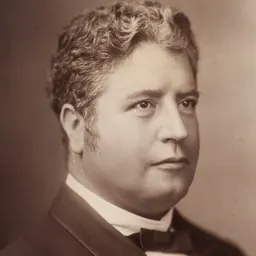
Related people
Same field, nearest in time
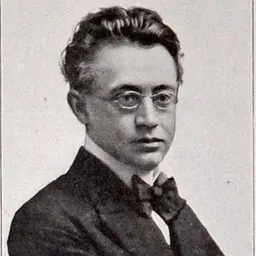




Contemporaries
People whose lives overlapped Liang Chi-chao's

Frequently asked questions
Who was Liang Chi-chao?
Chinese politician, activist and journalist (1873–1929)
When was Liang Chi-chao born?
Liang Chi-chao was born on 23 February 1873 in Huicheng Subdistrict.
When did Liang Chi-chao die?
Liang Chi-chao died on 19 January 1929 in Peking Union Medical College Hospital.
What was Liang Chi-chao's occupation?
Liang Chi-chao was a translator, journalist, philosopher, historian, writer and politician.
What nationality was Liang Chi-chao?
Liang Chi-chao was Chinese.
Sources & further reading
Cite this page
APA: Biography.guide. (2026). Liang Chi-chao. https://biography.guide/liang-chi-chao/
MLA: "Liang Chi-chao." Biography.guide, https://biography.guide/liang-chi-chao/.
Chicago: "Liang Chi-chao." Biography.guide. https://biography.guide/liang-chi-chao/.
Data last updated: 2026-09-20 · Spot an error? Report a correction.
Page generated 2026-09-27 05:27 UTC