
Li Xiangfu
Chinese politician
About Li Xiangfu
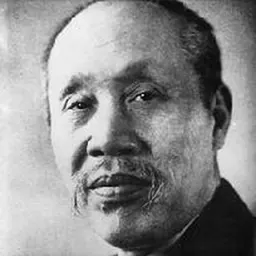
Lived 1907 – 1963 (aged 55–56). Li Xiangfu was a Chinese forestry scientist.
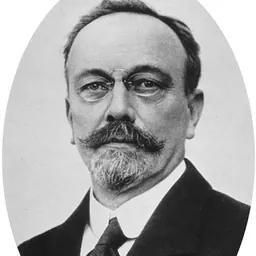
Li Xiangfu (; 1907 – 20 October 1963), courtesy name Shiyu and pseudonym Lin Zhong , was a Chinese forestry scientist, educator, and political activist. He participated in the founding political institutions of the People's Republic of China and was a delegate to the first plenary session of the Chinese People's Political Consultative Conference in 1949, later serving as a member of the first and second CPPCC National Committees. After 1949 he held several important positions in China's forestry and academic sectors, including vice minister of the Ministry of Forestry and Land Reclamation, president of the Beijing Forestry College, vice president of the Chinese Academy of Forestry, and president of the Chinese Society of Forestry.
Biography Li was born in 1907 in Guanbuqiao Town, Zongyang County, Anhui Province. He began studying at a traditional private school in his hometown at the age of eight and was admitted to Tongcheng Middle School at the age of thirteen. During the May Fourth Movement, he participated in local patriotic activities. In 1920 he was expelled from Tongcheng Middle School after joining a student protest against the school principal, and subsequently enrolled at the Anhui Second Agricultural School in Wuhu. In the autumn of 1922 he entered the Shandong Agricultural College. In 1924 he joined the reorganized Kuomintang and supported Sun Yat-sen’s policy of the First United Front between the Kuomintang and the Chinese Communist Party.
During the May Thirtieth Movement in 1925, Li served as one of the leaders of the Jinan Student Federation and the Jinan Support Association for the Shanghai Incident. After facing persecution for opposing the arrest of students by warlord authorities, he secretly left Jinan and went to Japan for further study. He enrolled in the forestry program at Hokkaido Imperial University. In 1927 he traveled to Tokyo and, with the introduction of Wang Zhemin, joined the Chinese Communist Party. He later returned to Hokkaido, where he organized a Communist Party branch among Chinese students and served as its secretary.
In 1929 he moved to Tokyo to work as an intern at the Meguro Forestry Station while also taking charge of activities of the Chinese Students’ Society for Social Science Research. Due to frequent public activities organized by Communist members, Japanese authorities placed the organization under surveillance. On 3 October of that year, with the consent of the Chinese embassy in Japan, Japanese authorities launched a mass arrest of Communist members. Li was detained for about ninety days before being released on bail in early 1931, after which he returned to China.
Later in 1931 Li began teaching at the College of Agriculture of Shanghai Labor University. In 1932 he was sent by the Military Commission of the Chinese Communist Party to work with the underground provincial committee in Xi'an in Shaanxi. After a betrayal within the organization, he relocated to Wuhan with the approval of the Party and subsequently lost contact with the Communist Party organization for a period of time. In 1933 he began teaching at the College of Agriculture of Zhejiang University and later moved to the College of Agriculture of Wuhan University.
After the outbreak of the Second Sino-Japanese War in 1937, Li contacted Dong Biwu at the Eighth Route Army office in Wuhan and restored his connection with the Communist Party organization. In early 1938, through the introduction of Zhou Xinmin, he was sent to the First War Zone, where he established the Pinghan Railway Agricultural and Forestry Farm at Jigongshan in southern Henan and served as its director. Using the farm as a base, he organized anti-Japanese mobilization activities among the population of eight counties in southern Henan. In October 1938, with approval from the Communist Party, Li and figures such as Li Fanyi, Fan Wenlan, and Qian Junrui established an Anti-Japanese Work Committee in the border region of Henan and Hubei. Although nominally under the command of Li Zongren of the Fifth War Zone, the committee effectively operated under the leadership of the Communist Party.
In 1939, as anti-Communist campaigns intensified, Li Zongren ordered the dissolution of the committee. With the approval of Dong Biwu, Li relocated to Yan'an. In August 1941 he moved from Yan'an to Sichuan and became a professor in the Department of Forestry at Sichuan University. While teaching, he also engaged in united front activities and democratic movements under a legal public identity. When the China Democratic League established its Sichuan branch in November 1944, Li was elected as a committee member responsible for youth affairs. At the League’s first national congress in 1945, he was elected a member of the central committee and standing committee and served as deputy director of the Youth Work Committee.
Between 1944 and 1946, Li helped organize large-scale student movements in Chengdu, which led to persecution by the Kuomintang authorities and secret police. Under pressure from the provincial authorities, he was eventually forced to leave Sichuan in 1946 and moved to Nanjing to work at the national headquarters of the China Democratic League, serving as deputy director of the Youth Work Committee.
In January 1949, with arrangements made by the Chinese Communist Party, Li went to Beiping to assist in preparing the headquarters of the China Democratic League. Later that year he attended the first plenary session of the Chinese People's Political Consultative Conference. In November he was elected a member of the central committee of the China Democratic League and deputy director of its organizational committee.
After the founding of the People's Republic of China in 1949, Li served in several prominent positions in forestry administration and academic institutions. He became vice minister of the Ministry of Forestry and Land Reclamation, president of the Beijing Forestry College (now Beijing Forestry University), vice president of the Chinese Academy of Forestry, and president of the Chinese Society of Forestry. Li died in Beijing on 20 October 1963.
Don’t just read it —
keep it.
Full-length biographies made to live with: read them, listen on the way to work, watch them tonight.
- E-book
- Audio
- Video
Instant download · yours to keep · every purchase keeps this site free
Important facts
People in Li Xiangfu's life
Named in this biography and alive at the same time


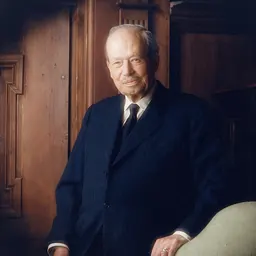
Related people
Same field, nearest in time




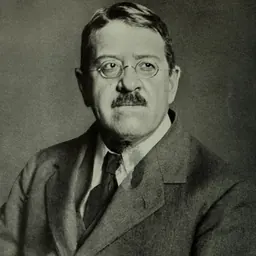
Contemporaries
People whose lives overlapped Li Xiangfu's



Frequently asked questions
Who was Li Xiangfu?
Chinese politician (1907–1963)
When was Li Xiangfu born?
Li Xiangfu was born in 1907.
When did Li Xiangfu die?
Li Xiangfu died in 1963.
What was Li Xiangfu's occupation?
Li Xiangfu was a forestry scientist.
What nationality was Li Xiangfu?
Li Xiangfu was Chinese.
Sources & further reading
Cite this page
APA: Biography.guide. (2026). Li Xiangfu. https://biography.guide/li-xiangfu/
MLA: "Li Xiangfu." Biography.guide, https://biography.guide/li-xiangfu/.
Chicago: "Li Xiangfu." Biography.guide. https://biography.guide/li-xiangfu/.
Data last updated: 2026-09-25 · Spot an error? Report a correction.
Page generated 2026-09-27 05:12 UTC