
About Li Jingquan
Lived 1908 – 1989 (aged 80). Li Jingquan was a Chinese politician.
Li Jingquan (; November 1, 1909 – April 24, 1989) was a Chinese politician and the first Chinese Communist Party Committee Secretary of Sichuan following the establishment of the People's Republic of China in 1949. He supported many of Mao Zedong's policies including the Great Leap Forward.
In 1956, in order to initiate "land reform", Li ordered the execution of some 6000 landlords in the Tibetan areas of Sichuan. It was then that he met Deng Xiaoping, the secretary of the Southwest Bureau responsible for Sichuan, with whom he had a long working relationship. After the founding of the People's Republic of China, Li became one of the dominant political figures in Sichuan. As in other areas of the Southwest, public security was a major early concern and Mao Zedong praised and rewarded leaders who forcefully approached "anti-bandit" activity and the Campaign to Suppress Counterrevolutionaries.
Socialist Transformation and Conflict with Tibetans in Sichuan (1955–1957) In October 1955, Mao Zedong called for an acceleration of agricultural collectivization around China. While Mao had explicitly exempted Tibet from this campaign, he had also left many decisions to local officials and warned them that those who were not able to carry out the cooperatives would simply be replaced. Chinese officials gathered together Tibetan peasants to provide "class education" and prepare for land reform and cooperatives, and also attempted to disarm the Khamba Tibetans, many of whom owned rifles. These steps angered local Tibetans and in February 1956, a number of uncoordinated attacks began against Chinese officials and soldiers, reaching most of Ganzi's eighteen counties. The Litang Monastery was a particular site of resistance; the Tibetans there had about a thousand rifles and when Chinese officials demanded they disarm and start land reforms in February 1956, a decision was made by the Tibetans to fight, and some Chinese workers were attacked on March 9, 1956.
Great Leap Forward (1958–1961) After Mao Zedong launched the Anti-Rightist Movement in 1957, Li became more radical, persecuting more than 50,000 "bourgeoisie rightist" elements, which represented 10% of the rightists persecuted nationwide during the movement. From 1958 to 1961, he participated enthusiastically in the Great Leap Forward movement. Li's radical policies created major food shortages in Sichuan (a province famous for its crop surpluses), particularly the impoverished hilly ethnic regions in the mountains of western Sichuan and Chongqing where most of the people who were starved to death in the province were from, indicated that famine in the province was widespread, leading to the deaths of over 8 million people from starvation, disease or murder during the Great Leap Forward according to official statistics. In 1961, Li was made Chinese Communist Party Committee Secretary of the Southwestern Bureau of China, and retained his position as Party Secretary of Sichuan province. Li, however, was dissatisfied with the agricultural results in Pi county where Mao had visited. According to Yang Jisheng's extensive history of the Great Leap Forward in Sichuan, Li Jingquan supported Mao strenuously throughout the campaign, even in periods when Mao's line seemed to be losing momentum.
During the campaign, Li received a large number of county-level documents in Sichuan (then included all areas of Chongqing and parts of Tibetan areas), in particular the impoverished hilly ethnic regions in the mountains of western Sichuan and Chongqing where most of the people who were starved to death in the province were from, indicated that famine in the province was widespread. However, he chose to emphasize that other reasons such as hookworm might be responsible for deaths, downplayed major problems in the pork supplies in Sichuan, and pushed forward with overreporting grain totals even at the times when Mao himself had instructed the Party not to inflate the numbers. Sichuan therefore became one of the worst-hit famine provinces during the Great Leap Forward, with estimates as high as eight to ten million excess deaths.
Third Front construction During the Third Front campaign to develop basic industry and national defense industry in China's rugged interior in preparation for potential invasions by the United States or the Soviet Union, Li was appointed in 1964 to lead the Southwest Third Front Preparatory Small Group. This administrative body was established to oversee regional construction and planning. He was released in 1972 and rehabilitated in 1973.
Later life (1977–1989) Following the Cultural Revolution, Li served as a vice-chairman of the Standing Committee of the National People's Congress and as a member of the 10th and 11th Central Committee of the Chinese Communist Party.
Personal life In 1941, he married Xiao Li (肖里), with whom he had five sons and two daughters. During the Cultural Revolution, Li was expelled and imprisoned. Meanwhile, Li's wife Xiao Li was tortured and committed suicide. Li's son, a student at the Beijing Institute of Aeronautics and Astronautics was also killed by Red Guards.
Don’t just read it —
keep it.
Full-length biographies made to live with: read them, listen on the way to work, watch them tonight.
- E-book
- Audio
- Video
Instant download · yours to keep · every purchase keeps this site free
Important facts
People in Li Jingquan's life
Named in this biography and alive at the same time
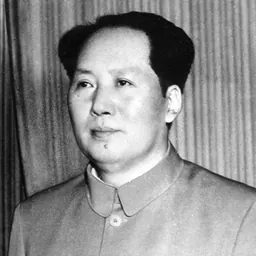
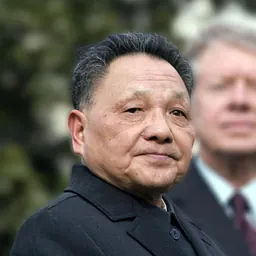


Related people
Same field, nearest in time






Contemporaries
People whose lives overlapped Li Jingquan's


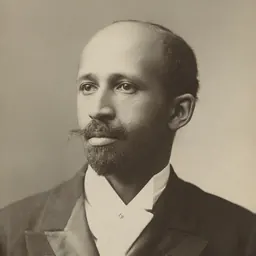
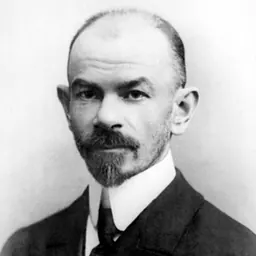
Frequently asked questions
Who was Li Jingquan?
Chinese politician (1908-1989)
When was Li Jingquan born?
Li Jingquan was born on 19 September 1908 in Linchuan District.
When did Li Jingquan die?
Li Jingquan died on 24 April 1989.
What was Li Jingquan's occupation?
Li Jingquan was a politician.
What nationality was Li Jingquan?
Li Jingquan was Chinese.
Sources & further reading
Cite this page
APA: Biography.guide. (2026). Li Jingquan. https://biography.guide/li-jingquan/
MLA: "Li Jingquan." Biography.guide, https://biography.guide/li-jingquan/.
Chicago: "Li Jingquan." Biography.guide. https://biography.guide/li-jingquan/.
Data last updated: 2026-09-20 · Spot an error? Report a correction.
Page generated 2026-09-27 05:25 UTC