
About Lewis Nockalls Cottingham
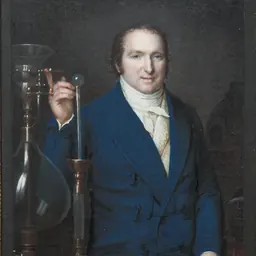
Lived 1787 – 1847 (aged 59–60). Lewis Nockalls Cottingham was a British architect, designer, writer and collector.
Lewis Nockalls Cottingham (1787 – 13 October 1847) was a British architect who pioneered the study of Medieval Gothic architecture. He was a restorer and conservator of existing buildings. He set up a Museum of Medieval Art in Waterloo Road, London with a collection of artefacts from demolished buildings and plaster casts of the medieval sculpture.
Biography
Cottingham was born in 1787 at Laxfield in Suffolk of a respectable family. He showed a talent for science and the arts early and he was apprenticed to a builder at Ipswich. After several years he moved to London and there placed himself with an architect and surveyor. He commenced his professional career in 1814 at his residence near Lincoln's Inn Fields. Cottingham's first public appointment was as architect and surveyor to the Cooks Company in 1822. Soon after this he erected a mansion in the perpendicular style of Gothic architecture for John Harrison at Snelston Hall in Derbyshire. In 1825 he became architect to Rochester Cathedral.
Between 1814 and 1822, he published several works illustrating medieval English architecture, including a set of plans of Westminster Hall (1822) and a larger work on Henry VII's Chapel. Charles Locke Eastlake described his working drawings of Gothic ornaments as "ill-selected and coarse in execution, but curious as being perhaps the first full-size illustrations of Mediaeval carving published in this form".
Cottingham won a competition to remodel the interior of the Chapel of Magdalen College, Oxford; work started in July 1829 and lasted at least six years; in the course of the restoration, a great deal of seventeenth and eighteenth century work was stripped away.
George Truefitt studied with Cottingham as an apprentice from 1839 to 1844, after which he worked briefly for two other members of the profession. Calvert Vaux became in 1843, an articled pupil of Cottingham, who was one of the elders of the English Gothic Revival, had supervised the sometimes overzealous restoration of a number of important medieval churches. Cottingham planned new streets and designed many urban dwellings in the Waterloo Bridge Road area on the Surrey side of London (where he built his own house); erected banks (the one in Bury St. Edmund's of 1844-1846 was most admired), hotels, and other commercial buildings; and published a book on Greek and Roman architecture.
He also supervised repairs at Hereford Cathedral, St Albans Abbey, and the Church of St James at Louth.
Works and restorations
1822-30 Snelston Hall, Derbyshire (demolished 1951) 1822-30 Snelston domestic houses 1824-33 Estate at Waterloo Bridge Road, London 1825-30 Rochester Cathedral 1829-33 refitted Magdalen College Chapel, Oxford 1830-47 Brougham Hall, Westmorland 1831 Elvaston Castle, Derbyshire 1832-33 St Albans Abbey (now the Cathedral and Abbey Church of St Alban) 1833–41 St Patrick's Cathedral, Armagh 1836-?? Theberton, Suffolk 1841 St Oswald's Church, Ashbourne Derbyshire 1841 Parish Church Great Chesterford, Essex 1841 Parish Church Horningsheath, Suffolk 1841-47 Hereford Cathedral 1842 Parish Church Milton Bryan 1842-47 St. Mary's Church, Bury St. Edmunds 1843-44 St. Mary's Church, Nottingham - tower restoration 1843-48 The Norman Tower, Bury St Edmunds - restoration 1844 St. James Church, Louth, Lincolnshire - spire restoration 1846 St. Mary's Church, Clifton, Nottinghamshire 1845 - 47 St Helen's Church, Thorney, Nottinghamshire. New church. 1846 The former Savings Bank, Crown Street, Bury St Edmunds 1846 Tuddenham School, Suffolk 1846 Great Chesterford School, Essex 1846 - 47 Parish Church Theberton, Suffolk 1846 - 47 Parish Church Barrow, Suffolk 1846 - 47 Parish Church Roos, Yorkshire 1846 - 47 Brougham Chapel, Westmorland 1847 Kilpeck, Herefordshire church restoration 1847 Ledbury, Herefordshire church restoration
Family
He married Sophia Cotton on 24 January 1821. They had 4 children.
Nockalls Johnson Cottingham (1823–1854) who was also an architect. Nockalls Johnson was lost in the wreck of the SS Arctic on its way to New York City. Edwin Cotton Cottingham (1825–1876) Sophia Anne Cottingham (1827-1827) Sophia Sarah Jane Cottingham (1830–1867)
Don’t just read it —
keep it.
Full-length biographies made to live with: read them, listen on the way to work, watch them tonight.
- E-book
- Audio
- Video
Instant download · yours to keep · every purchase keeps this site free
Important facts
People in Lewis Nockalls Cottingham's life
Named in this biography and alive at the same time



Related people
Same field, nearest in time

Contemporaries
People whose lives overlapped Lewis Nockalls Cottingham's


Frequently asked questions
Who was Lewis Nockalls Cottingham?
British architect (1787–1847)
When was Lewis Nockalls Cottingham born?
Lewis Nockalls Cottingham was born in 1787 in Suffolk.
When did Lewis Nockalls Cottingham die?
Lewis Nockalls Cottingham died on 13 October 1847 in London.
What was Lewis Nockalls Cottingham's occupation?
Lewis Nockalls Cottingham was an architect, designer, writer and collector.
What nationality was Lewis Nockalls Cottingham?
Lewis Nockalls Cottingham was British.
Sources & further reading
· Wikipedia: Lewis Nockalls Cottingham
· DBpedia: Lewis Nockalls Cottingham
Cite this page
APA: Biography.guide. (2026). Lewis Nockalls Cottingham. https://biography.guide/lewis-nockalls-cottingham/
MLA: "Lewis Nockalls Cottingham." Biography.guide, https://biography.guide/lewis-nockalls-cottingham/.
Chicago: "Lewis Nockalls Cottingham." Biography.guide. https://biography.guide/lewis-nockalls-cottingham/.
Data last updated: 2026-09-20 · Spot an error? Report a correction.
Page generated 2026-09-27 05:04 UTC