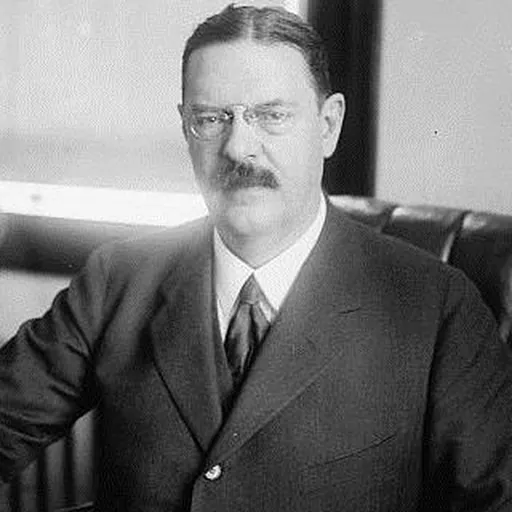
About Lewis Nixon
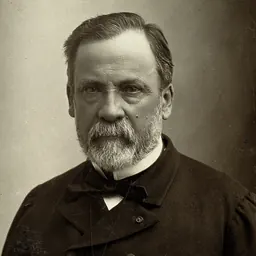
Lived 1861 – 1940 (aged 79). Lewis Nixon was an American military officer, engineer, naval architecture and political activist.
Lewis Nixon (April 7, 1861 – September 23, 1940) was a naval architect, shipbuilding executive, public servant, and political activist. He designed the United States' first modern battleships, and supervised the construction of its first modern submarines, all before his 40th birthday. He was briefly the leader of Tammany Hall. He started an ill-fated effort to run seven major American shipyards under common ownership as the United States Shipbuilding Company, and he was the chair of the New York City commission that began construction of the Williamsburg Bridge.
Birth and naval education
Nixon was born on the eve of the American Civil War, in Leesburg, Virginia, to Colonel Joel Lewis Nixon and Mary Jane Turner. Leesburg, only three miles into the Confederacy, changed hands several times over the course of the War. His brother George H. Nixon fought in the Virginia Cavalry as a member of "Mosby's Raiders."
Nixon graduated first in his class from the United States Naval Academy in 1882 and was sent to study naval architecture at the Royal Naval College, Greenwich, where, in 1885, he again graduated first in the class.
Shipbuilding and other businesses
On Nixon's return to the United States, he was assigned to the John Roach & Sons shipyard in Chester, Pennsylvania, which the United States Navy had commandeered in order to finish three protected cruisers of the new steel navy: , , and . In 1890, with help from assistant naval constructor David W. Taylor, he designed the three s: , and . While in Pennsylvania, he earned a Doctor of Science degree from Villanova University.
Beginning in December 1896, the Crescent Shipyard built the United States' first submarines, including the . The submarine's success led to an order for more submarines of the "Holland Type" by the Navy. Those subs, known as the s, were built at the Crescent Shipyard and the Union Iron Works, a shipbuilding firm near Mare Island Naval Shipyard, 20 miles north of San Francisco. These submarines became America's first fleet of underwater fighting vessels, and were operated by the United States Navy on both coasts.
These submarines also gave birth to a new company, founded by John Philip Holland on February 7, 1899. His company was then known as the Holland Torpedo Boat Company and (after 1904) the Electric Boat Company.
Nixon also founded the International Smokeless Powder and Dynamite Company of Parlin, New Jersey.
Nixon also founded the United States Long Distance Automobile Company. From 1901 to 1903, its Jersey City, New Jersey, factory manufactured gasoline-powered cars "to meet the requirements of those who seek simplicity of construction, economy in running and unusual strength and durability." In January 1904, the company became Standard Motor Construction Company, which manufactured a larger car called a "Standard" through 1905. The auto lines were then sold to Hewitt Motor Co. of New York City. Nixon continued to serve as Standard Motor Construction's president into the next decade, when it was a major manufacturer of marine engines.
In 1902, promoter John W. Young persuaded Nixon to preside over the consolidation of Crescent Shipyard with six other shipyards on the East and West Coasts, to form a single shipbuilding trust, under the name United States Shipbuilding Company. Unfortunately, "the one thing [the consolidated firms] lacked, individually and collectively, was a realistic prospect of earning sustained profits." One of its first actions was to close Crescent Shipyard. By then, Nixon had re-entered the shipbuilding business by leasing a yard in Perth Amboy, New Jersey.
From late 1904 to January 1906, Nixon was in Russia supervising the construction of ten torpedo boats for the navy of Czar Nicholas II.
Nixon's shipbuilding expertise was called upon after the sinking of the . Nixon suggested numerous changes including the required use of wireless communication devices on ships. He also suggested that ships have a more efficient way of reversing.
In 1910, Müller-Ury completed a three-quarter-length seated portrait of Nixon that was exhibited at Knoedler's that December.
From 1915 until his death, Nixon was president of the Nixon Nitration Works, in what is now the Nixon section of Edison, New Jersey. A 1924 explosion and resulting fire destroyed much of the Works, which was then rebuilt and resumed operations.
Public service and political activism
In 1895, the New York Legislature authorized the East River Bridge Commission to undertake a second span across the river, ultimately known as the Williamsburg Bridge. In January 1898, New York City Mayor Robert A. Van Wyck sacked the entire membership of the Commission after he had complained of its slow and expensive pace. He appointed Nixon as the Commission's new president. Nixon continued to serve as the Commission's president during the bridge's construction until the Commission's powers were transferred to the Commissioner of Bridges on January 1, 1902.
Nixon was active in Democratic Party politics. In December 1901, the longtime Tammany Hall boss Richard Croker chose Nixon as his successor. Croker's choice of Nixon surprised observers because Nixon had spoken out against vice and corruption in City government and seemingly had nothing in common with Croker. Nixon resigned several months later and explained, "I find that I cannot retain my self-respect and remain the leader of the Tammany organization."
A resident of Staten Island, Nixon served from 1914 to 1915 as the borough's Acting Commissioner of Public Works and its consulting engineer.
In 1919, New York Governor Al Smith appointed Nixon as the State's Superintendent of Public Works, and then as New York City's Regulatory Public Service Commissioner.
Personal life and legacy
In 1891, Nixon married Sally Lewis Wood of Washington, D.C., a descendant of General Andrew Lewis of Colonial Virginia.
Their son was Stanhope Wood Nixon (April 1, 1894 – January 12, 1958), whom Swiss-born American artist Adolfo Müller-Ury (1862–1947) would paint full-length in Scottish costume in 1902–1903.
In 1929, he purchased 16 East 79th Street built by Sidney Dillon Ripley. He moved in with Sally and Stanhope. Sally would die in the house on June 15, 1937.
Lewis died on September 23, 1940, at Monmouth Memorial Hospital in Long Branch, New Jersey.
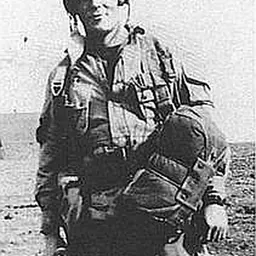
Through Stanhope, Nixon was the grandfather and namesake of Lewis Nixon III (1918-1995), a US Army officer in "Easy" Company of the 506th Parachute Infantry Regiment of the 101st Airborne Division during World War II. Nixon III parachuted into combat on D-Day, participated in Operation Market Garden, and fought in the Battle of the Bulge; he and his friend Richard Winters later worked for Nixon Nitrate and were made famous by Stephen E. Ambrose's 1992 book Band of Brothers.
Don’t just read it —
keep it.
Full-length biographies made to live with: read them, listen on the way to work, watch them tonight.
- E-book
- Audio
- Video
Instant download · yours to keep · every purchase keeps this site free
Important facts
Family & relationships
People in Lewis Nixon's life
Named in this biography and alive at the same time


Related people
Same field, nearest in time





Contemporaries
People whose lives overlapped Lewis Nixon's




Frequently asked questions
Who was Lewis Nixon?
American naval architect (1861-1940)
When was Lewis Nixon born?
Lewis Nixon was born on 7 April 1861 in Leesburg.
When did Lewis Nixon die?
Lewis Nixon died on 23 September 1940 in Long Branch.
What was Lewis Nixon's occupation?
Lewis Nixon was a military officer, engineer, naval architecture and political activist.
What nationality was Lewis Nixon?
Lewis Nixon was American.
Sources & further reading
· DBpedia: Lewis Nixon (naval architect)
Cite this page
APA: Biography.guide. (2026). Lewis Nixon. https://biography.guide/lewis-nixon/
MLA: "Lewis Nixon." Biography.guide, https://biography.guide/lewis-nixon/.
Chicago: "Lewis Nixon." Biography.guide. https://biography.guide/lewis-nixon/.
Data last updated: 2026-09-23 · Spot an error? Report a correction.
Portrait: Wikimedia Commons · author & licence
Page generated 2026-09-27 05:05 UTC