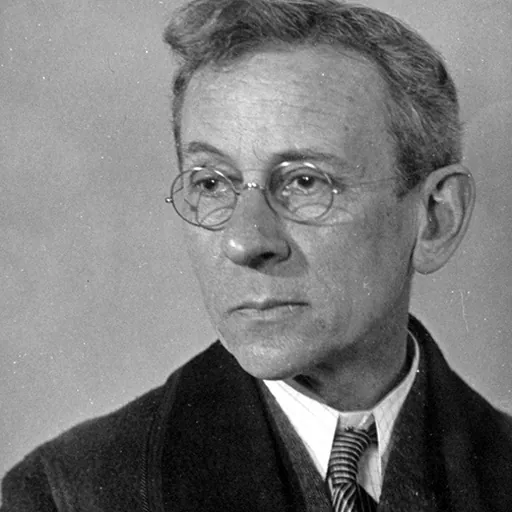
Lewis Hine
American sociologist and photographer
About Lewis Hine
Lived 1874 – 1940 (aged 66). Lewis Hine was an American sociologist, photographer, photojournalist and artist.
Lewis Wickes Hine (September 26, 1874 – November 3, 1940) was an American sociologist and muckraker photographer. His photographs taken during times such as the Progressive Era and the Great Depression captured young children working in harsh conditions, playing a role in bringing about the passage of the first child labor laws in the United States.
Early life Hine was born in Oshkosh, Wisconsin, on September 26, 1874. Following the accidental death of his father, the teenaged Hine was forced to undertake a number of jobs to support his widowed mother and sisters. Aspiring to become an educator like his mother, Hine managed to save a portion of his earnings as the family breadwinner to pay for schooling at the University of Chicago, where he enrolled in 1900. While a student in Chicago, Hine met Frank Manny, a professor of education at the Normal School who was named superintendent of the Ethical Culture School in New York City in 1901. At Manny's invitation, Hine accepted a position as an assistant teacher and relocated to New York. There, he encouraged his students to use photography as an educational medium. Hine also studied sociology at Columbia University and New York University.
Hine led his sociology classes to Ellis Island in New York Harbor, photographing the thousands of immigrants who arrived each day. Between 1904 and 1909, Hine took over 200 plates (photographs) and came to the realization that documentary photography could be employed as a tool for social change and reform. to aid the NCLC's lobbying efforts to end the practice. In 1913, he documented child laborers among cotton mill workers with a series of Francis Galton's composite portraits.
Hine's work for the NCLC was often dangerous. As a photographer, he was frequently threatened with violence or even death by factory police and foremen. At the time, the immorality of child labor was meant to be hidden from the public. Photography was not only prohibited but also posed a serious threat to the industry. To gain entry to the mills, mines and factories, Hine was forced to assume many guises. At times he was a fire inspector, postcard vendor, bible salesman, or even an industrial photographer making a record of factory machinery.
During and after World War I, he photographed American Red Cross relief work in Europe. In the 1920s and early 1930s, Hine made a series of "work portraits", which emphasized the human contribution to modern industry. In 1930, Hine was commissioned to document the construction of the Empire State Building. He photographed the workers in precarious positions while they secured the steel framework of the structure, taking many of the same risks that the workers endured. To obtain the best vantage points, Hine was swung out in a specially designed basket 1,000 ft above Fifth Avenue. At times, he remembered, he hung above the city with nothing below but "a sheer drop of nearly a quarter-mile."
During the Great Depression, Hine, once again, worked for the Red Cross, photographing drought relief in the American South, and for the Tennessee Valley Authority (TVA), documenting life in the mountains of eastern Tennessee.
Later life In 1936, Hine was selected as chief photographer for the Works Progress Administration's National Research Project, which studied changes in industry and their effect on employment, but his work there was not completed. He was also a faculty member of the Ethical Culture Fieldston School.
The last years of his life were filled with professional struggles by loss of government and corporate patronage. Hine hoped to join the Farm Security Administration photography project, but despite writing repeatedly to Roy Stryker, Stryker always refused. Few people were interested in his work, past or present, and Hine lost his house and applied for welfare. He died on November 3, 1940, at Dobbs Ferry Hospital in Dobbs Ferry, New York, after an operation. He was 66 years old.
Legacy Hine's photographs supported the NCLC's lobbying to end child labor, and in 1912 the Children's Bureau was created. The Fair Labor Standards Act of 1938 eventually brought child labor in the US to an end.
In 1984, PBS produced a one-hour documentary, America and Lewis Hine, about Hine's life and work. The film was directed by Nina Rosenblum, written by Dan Allentuck and narrated by Jason Robards, Maureen Stapleton, and John Crowley.
In 2006, author Elizabeth Winthrop Alsop's historical fiction middle-grade novel Counting on Grace was published by Wendy Lamb Books. The latter chapters center on 12-year-old Grace and her life-changing encounter with Hine, during his 1910 visit to a Vermont cotton mill known to have many child laborers. On the cover is the iconic photo of Grace's real-life counterpart, Addie Card (1897–1993), taken during Hine's undercover visit to the Pownal Cotton Mill.
In 2016, Time published altered (colorized) versions of several of Hine's original photographs of child labor in the US.
Collections
Hine's work is held in the following public collections: Art Institute of Chicago, Chicago, Illinois Albin O. Kuhn Library & Gallery of the University of Maryland, Baltimore County – almost five thousand NCLC photographs George Eastman Museum – thousands of photographs and negatives Library of Congress – over 5,000 photographs, including examples of Hine's child labor and Red Cross photographs, his work portraits, and his WPA and TVA images. New York Public Library, New York International Photography Hall of Fame, St. Louis, Missouri
Notable photographs Young Doffers in the Elk Cotton Mills (1910) Newsies at Skeeter's Branch (1910) Steam Fitter (1920)
Gallery
Don’t just read it —
keep it.
Full-length biographies made to live with: read them, listen on the way to work, watch them tonight.
- E-book
- Audio
- Video
Instant download · yours to keep · every purchase keeps this site free
Important facts
People in Lewis Hine's life
Named in this biography and alive at the same time






Related people
Same field, nearest in time
Contemporaries
People whose lives overlapped Lewis Hine's


Frequently asked questions
Who was Lewis Hine?
American sociologist and photographer (1874–1940)
When was Lewis Hine born?
Lewis Hine was born on 26 September 1874 in Oshkosh.
When did Lewis Hine die?
Lewis Hine died on 3 November 1940 in Hastings-on-Hudson.
What was Lewis Hine's occupation?
Lewis Hine was a sociologist, photographer, photojournalist and artist.
What nationality was Lewis Hine?
Lewis Hine was American.
Sources & further reading
Cite this page
APA: Biography.guide. (2026). Lewis Hine. https://biography.guide/lewis-hine/
MLA: "Lewis Hine." Biography.guide, https://biography.guide/lewis-hine/.
Chicago: "Lewis Hine." Biography.guide. https://biography.guide/lewis-hine/.
Data last updated: 2026-09-20 · Spot an error? Report a correction.
Page generated 2026-09-27 05:10 UTC