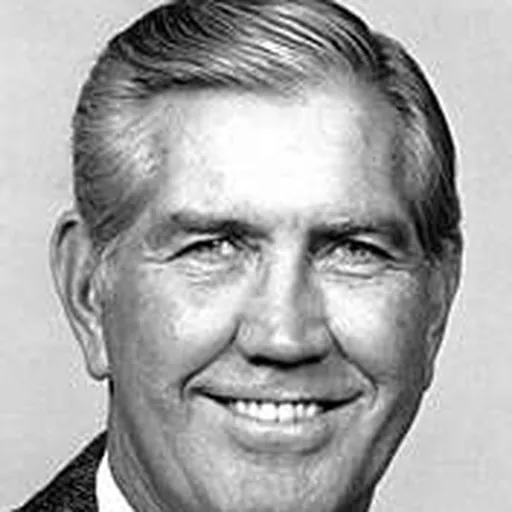
Lew Carpenter
American football player and coach
About Lew Carpenter
Lived 1932 – 2010 (aged 78). Lew Carpenter was an American baseball player and american football player.
Lewis Glen Carpenter (January 12, 1932 – November 14, 2010) was an American professional football player and coach. He played college football for the University of Arkansas and professionally for ten seasons in the National Football League (NFL) as a halfback and fullback with the Detroit Lions, Cleveland Browns, and Green Bay Packers. He played on three NFL Championship teams, with Detroit in 1953 and with Green Bay in 1961 and 1962. After his playing career ended, Carpenter spent 31 years as an assistant coach in the NFL with the Minnesota Vikings (1964–1966), Atlanta Falcons (1967–1968), Washington Redskins, St. Louis Cardinals (1970–1972), Houston Oilers (1970–1974), Green Bay Packers (1975–1985), Detroit Lions (1987–1988), and Philadelphia Eagles (1990–1994). Carpenter also coached the Frankfurt Galaxy of the World League of American Football in 1996 and at Southwest Texas State University. He concluded his 47 years of playing and coaching football at the end of the 1996 season. Scientific tests on his brain diagnosed post-mortem that he had an advanced case of chronic traumatic encephalopathy (CTE).
Early years and family Carpenter was born to Verba Glen Carpenter and Edna Earl Pullam in Hayti, Missouri. He was raised in West Memphis, Arkansas, where he attended high school and played six-man football. In 1951, Lew married Ann Holt. The couple had four daughters; Cheryl, Cathy, Lisa and Rebecca.
College career While at the University of Arkansas (1949–1953), Carpenter starred at the halfback position for the Razorbacks. As a senior, he played in the Blue-Grey College All-Star Game. Carpenter also played wide receiver, tight end, and served as back-up quarterback during his college years. Carpenter received varsity letters in football, basketball, and baseball. He graduated with a Bachelor of Science degree in biology. Carpenter played for three different head coaches during his time at Arkansas. John Barnhill recruited him out of high school, but he retired from coach after the 1949 season. Otis Douglas took over in 1950, but he was an ineffective coach and was fired at the end of the 1952 season. In 1953, Bowden Wyatt became the head coach during Carpenter's senior season. Carpenter never won any championships in college, but his brother Preston helped the 1954 team win the Southwest Conference.
Carpenter played baseball after his 1953 senior year in college in the minor (then class B) Carolina League, as a pitcher, with the Winston-Salem Cardinals. During this season he had a batting average of .286 under manager Jimmy Brown. Scouts for the NFL also offered him a contract and football beat baseball in this circumstance.
Detroit Lions In 1953, Carpenter was drafted by the National Football League for the Detroit Lions in the eighth round of the draft, 97th selection. The first time in game play he got the football, he scored a 73-yard touchdown on an interception.
For the next three seasons, Carpenter was a running back. He was the Lions' leading rusher and won his first world championship in 1953.
Once again at the top of the division with 9 wins, 2 losses and 1 tied game, Cleveland advanced to the Championship Game against Detroit. But the Lions dominated from start to finish, causing six turnovers and limiting the Browns' quarterbacks (Tommy O'Connell and Milt Plum) to 95 yards passing in a 59–14 rout.
Green Bay Packers
In 1959, Coach Vince Lombardi got a key trade by getting Lew Carpenter to come to Green Bay, Wisconsin, and to play for the Packers.
At halftime in the locker room, Coach Lombardi concluded his pep talk with, "And now, men of Green Bay, step aside. Make way for the mightiest Green Bay team in years! A Winning team! Go get 'em, Green Bay!" In response, Carpenter and the rest of the Packers slammed their lockers, growled loudly, and assaulted the field in determination. During the rest of the game, the Bears watched Carpenter closely, seeing him as a threat. The Packers adjusted tactics and used Carpenter repeatedly as bait while another player got the critical touchdown. At the end of the game, the Green Bay Packers beat the Chicago Bears by a score of 9 to 6. The Packer players raised Lombardi to their shoulders and ran with him in victory. "We're on our way Now!" shouted Lombardi.
The Packers stormed back in the 1962 season, jumping out to a 10-win and 0-loss start, on their way to a 13–1 season. This consistent level of success would lead to Lombardi's Packers becoming one of the most prominent teams of their era, and even to their being featured as the face of the NFL on the cover of Time on December 21, 1962, as part of the magazine's cover story on "The Sport of the '60s" and Lew Carpenter is mentioned in the article as one of the Packers' star players. Shortly after Time's article, the Packers faced the Giants in a much more brutal championship game than the previous year, but the Packers prevailed on the surprising foot of Jerry Kramer and the determined running of Jim Taylor. The Packers defeated the Giants in New York, 16–7. Carpenter re-injured himself but finished the game. During this season Carpenter assisted other players in their game, gaining the informal title of "coach". While the Packers had an 11–1 season, it was at great cost. Many players injured themselves and re-injured themselves like Carpenter. Coach Lombardi placed Carpenter as a reserve running back, but had to play him time after time for the winning effort. After four full seasons of play with the Packers, Carpenter concluded his professional football playing days at the end of the 1963 season.
Coaching career In 1964 Carpenter became one of the assistant coaches of the Minnesota Vikings. He served in various coaching positions and teams over the next 30 years. These included receivers coach, passing game coach and offensive coordinator for the Atlanta Falcons and the Washington Redskins.
1967 was disappointing for the Falcons. They finished their season at 1–12–1. Tommy Nobis (LB) was named to his second Pro Bowl and Junior Coffey (RB) ended the year with 722 yards to finish as the eighth leading rusher in the league and the Falcons’ Most Valuable Player and Carpenter helped coach them both.
Lombardi reorganized the Redskins and brought along a couple of coaches he worked with before, including Bill Austin for the offensive line and Lew Carpenter for the receivers. Carpenter was listed as the Packers passing game coordinator and offensive coordinator coach over various seasons. their best since 1955, but died of cancer on the eve of the 1970 season.
St. Louis Cardinals The football club St. Louis Cardinals moved to St. Louis, Missouri, in 1960 and stayed there until 1987. Then the franchise moved to Tempe, Arizona and became the Arizona Cardinals. When Carpenter got there in 1970 the club had many nicknames such as, the "football Cardinals," "Big Red", "Gridbirds" or "Cardiac Cards" to avoid confusion with the baseball St. Louis Cardinals.
"Coach Lew" went to St. Louis as a receivers and tight end coach for head coach Bob Holloway.
Carpenter did work with and help coach future Pro Football Hall of Fame winners during his time with the Cardinals. These included Dan Dierdorf inducted in 1996, Jackie Smith inducted in 1994, Larry Wilson inducted in 1978 and Roger Wehrli inducted in 2007.
Houston Oilers In 1973, Carpenter's first coaching season there, the Oilers won only 1 game during the entire season. This was a 31 to 27 win over the Baltimore Colts. On a brighter note, Elvin Bethea won his 3rd Pro Bowl team spot. In 1974, the Oilers won their season opener at home by defeating the San Diego Chargers with a 21 to 14 win. The 1974 season was the best year with a 7 win & 7 loss season. And best of all, they defeated their rival Cleveland Browns for the first time ever with a 28 to 24 victory.
Carpenter was the receivers and tight ends coach
Green Bay Packers Carpenter was the receivers and tight ends coach for the Green Bay Packers under head coaches (HC) Bart Starr (1975––1983) and Forrest Gregg (1984–1987) from 1975 to 1985. This continued in the 1989, when players such as Barry Sanders, Deion Sanders, and Derrick Thomas were available, but the Packers chose offensive lineman Tony Mandarich with the second overall pick in the NFL draft. Though rated highly by nearly every professional scout at the time, Mandarich's performance failed to meet expectations. ESPN has rated Mandarich as the third "biggest sports flop" in the last 25 years. This must have been a frustrating time for Carpenter but he focused on the basics and coached on for his beloved Packers.
Carpenter worked with and/or coached with the following Pro Football Hall of Famers during his coaching tenure with the Packers. These include coach Bart Starr who was inducted as a player in 1977, coach Forrest Gregg who was inducted as a player in 1977 and James Lofton, inducted in 2003.
Detroit Lions Carpenter was the Detroit Lions receivers and tight ends coach for 1987 and 1988. He worked with head coaches Darryl Rogers and Wayne Fontes. At the end of the 1988 season, Fontes hired Mouse Davis and June Jones as assistants and installed the Run & Shoot offense. This required the letting go of Carpenter and other assistant coaches. Fontes would later abandon the Run & Shoot offense.
Carpenter worked with and/or helped coach the following Pro Football Hall of Famers. These include Lem Barney inducted in 1992, Barry Sanders inducted in 2004 and coach Dick LeBeau inducted as a player in 2010.
Philadelphia Eagles Carpenter was the Eagles wide receivers coach from 1990 to 1992 and the wide receivers/tight ends coach in 1993 and 1994. Carpenter again coached James Lofton.
Later coaching In 1995, Carpenter went back to Southwest Texas State University, now known as Texas State University–San Marcos and was the running backs coach under head coach Jim Bob Helduser. The "Lewis Carpenter University of Arkansas Scholarship" has been established in his memory through Chase Bank in New Braunfels, Texas. He is one of at least 345 NFL players to be diagnosed after death with this disease.
CTE is a progressive degenerative disease found in people who have had repeated hits to the head. CTE is most commonly found in professional athletes who have experienced repeated concussions or other brain trauma.
In media In the 2009 book by John Eisenberg, That First Season: How Vince Lombardi Took the Worst Team in the NFL and Set It on the Path to Glory, Lew Carpenter is mentioned on 30 pages of its 304 hardback pages.
Don’t just read it —
keep it.
Full-length biographies made to live with: read them, listen on the way to work, watch them tonight.
- E-book
- Audio
- Video
Instant download · yours to keep · every purchase keeps this site free
Important facts
People in Lew Carpenter's life
Named in this biography and alive at the same time





Related people
Same field, nearest in time
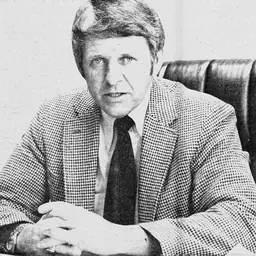

Contemporaries
People whose lives overlapped Lew Carpenter's

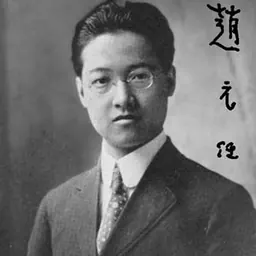


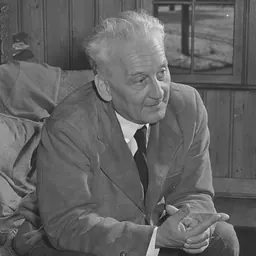
Frequently asked questions
Who was Lew Carpenter?
American football player and coach (1932-2010)
When was Lew Carpenter born?
Lew Carpenter was born on 12 January 1932 in Hayti.
When did Lew Carpenter die?
Lew Carpenter died on 14 November 2010 in New Braunfels.
What was Lew Carpenter's occupation?
Lew Carpenter was a baseball player and american football player.
What nationality was Lew Carpenter?
Lew Carpenter was American.
Sources & further reading
Cite this page
APA: Biography.guide. (2026). Lew Carpenter. https://biography.guide/lew-carpenter/
MLA: "Lew Carpenter." Biography.guide, https://biography.guide/lew-carpenter/.
Chicago: "Lew Carpenter." Biography.guide. https://biography.guide/lew-carpenter/.
Data last updated: 2026-09-22 · Spot an error? Report a correction.
Portrait: Wikimedia Commons · author & licence
Page generated 2026-09-27 05:03 UTC