
Lev Naryshkin
About Lev Naryshkin
Lived 1733 – 1799 (aged 66). Lev Naryshkin was a Russian.
Lev Aleksandrovich Naryshkin (Russian: Лев Александрович Нарышкин; 9 March 1733 – 21 December 1799) was an Ober–Shtalmeyster from the Naryshkin family, a famous court joker and rake of the times of Peter III and Catherine the Great.
Biography The youngest son of (cousin of Peter the Great) and state lady (granddaughter of ). He began his service in the Preobrazhensky Regiment; in 1751 he was appointed kamer–yunker at the court of Grand Duke Pyotr Fyodorovich. In 1756 he received the rank of kamerger, and a year later he was awarded the Order of Saint Anna, 1st Degree. On 10 February 1761, he was awarded the Order of Saint Alexander Nevsky.
After Peter III ascended the throne on 25 December, Naryshkin became one of his favourites. On 28 December, he was awarded 16,000 rubles from the money of the Kamer–Kontora. On 1 January 1762, he was promoted to shtalmeyster with the rank and salary of an actual general–poruchik; on 10 February, he received a stone house as a gift; on 16 February, as a result of the abolition of the , he was appointed, together with and , to receive denunciations of intent under the 1st or 2nd point in Saint Petersburg. On 17 May, the combined management of the Main Stable Office and the Court Office was given to Naryshkin's management; in June he received the Order of St. Andrew.
Until the death of Peter III, Naryshkin was with him inseparably, and upon Catherine the Great's accession to the throne he was arrested in Oranienbaum among the emperor's adherents. His arrest, however, did not last long, and Catherine continued to be merciful towards Naryshkin, and on the day of her coronation, 22 September 1762, she granted him the title of Ober–Shtalmeyster. In 1766, he accompanied Grand Duke Pavel Petrovich to Berlin. The following year, Naryshkin was elected as a deputy from the nobles of the Peremyshl and Vorotynsk Districts to the Legislative Commission, and at the same time became a member of the Deanery Commission. While attending meetings of the commission, he did not show much activity in its work, although his name is sometimes found among the persons who signed one or another statement of agreement or disagreement with any provision developed by the commission.
While in the presence of the empress, Naryshkin spent his entire life in the court circle. He accompanied the empress on her travels in 1780–1786 to Belorussiya, Vyshniy Volochyok and Crimea.
Naryshkin was distinguished by his extraordinary hospitality and passion for organizing magnificent and noisy balls, masquerades and picnics. One of the masquerades given by Naryshkin for Catherine in 1772 cost him 300,000 rubles. A description of this masquerade was made in the then Sankt-Peterburgskie Vedomosti. His house was always open to visitors from morning to evening, and the owner did not know many of his guests by name, but he received everyone with the same cordiality.
He died on 21 December 1799, shortly before his death he was granted actual kamerger title. He was buried in the Annunciation Church of the Alexander Nevsky Lavra.
Place in history Despite the fact that Naryshkin did not hold major positions, he himself was not at all upset about this, since he did not strive for this – but he was always proud of his high birth, being a cousin of Peter the Great.
Naryshkin was unusually popular in Saint Petersburg society and was considered perhaps the brightest star among Catherine's courtiers, bringing gaiety and excitement into their circle and being, in fact, the main jester of the court. His cheerful, good–natured character, sociability and wit earned him the favor of Peter III, who was usually suspicious of his wife's courtiers. Mikhail Shcherbatov in his essay "On the Damage to Morals in Russia", characterizing Peter III, wrote:
Catherine, having a very low opinion of Naryshkin's talents and moral qualities and calling him either a "born arlekin", or "weak–headed, spineless" or, finally, "an insignificant person", nevertheless, greatly appreciated his sociable character and ability to entertain society:
Moreover, when in 1783, on the pages of the magazine "Interlocutor of Lovers of the Russian Word", Denis Fonvizin, hiding under the mask of an anonymous person, turned to Catherine with a question hinting at Naryshkin: "Why in former times jesters, tricksters and jokers did not have ranks, but now they have and very large?" – he received a very harsh rebuke from Catherine.
Naryshkin's original personality was reflected in some of the empress's literary works. So, she brought him out in her comedy L'Insouciant and in two humorous essays: Relation authentique d'un voyage outre–mer, que sir Leon grand'ecuyer aurait entrepris par l'avis de ses amis and Leoniana ou faits et dits de sir Leon, grand'ecuyer, recueillis par ses amis. Naryshkin was not a writer, but his interest in literature and its figures is sufficiently attested; in particular, Nikolay Novikov dedicated the 2nd edition of his "Drone" to him.
Derzhavin, who dedicated two poems to Naryshkin, wrote about him:
And from the posthumous reviews about Naryshkin the following is typical:
Family Naryshkin was married on 22 February 1758, to (1741–1800), daughter of the Cossack Hetmanate General of the Baggage Train and Anna Razumovskaya. In 1755, Marina Osipovna was taken to court and made a maid of honor; thanks to her beauty and the patronage of Grand Duchess Ekaterina Alekseevna, the future Catherine II, she soon married Lev Naryshkin. This wedding was arranged by the Grand Duchess herself, who wrote in her notes: She died on 28 July 1800 in Saint Petersburg and was buried in the Alexander Nevsky Lavra.
In marriage, the Naryshkins had 2 sons and 5 daughters: Aleksandr Lvovich (1760–1826), Ober–Gofmarshal, Ober–Kamerger. He was married to a lady–in–waiting and lady of state, (1762–1822); Natalya Lvovna (1761–1819), maid of honor, married since 1781 to Count (d. 1812); they had a son , grandson Vladimir; Ekaterina Lvovna (1762–1820), maid of honor, married to Count Yuriy Golovkin (1762–1846) since 1782; (1764–1838), Ober–Egermeyster. He was married to the famous beauty and favorite Princess Mariya Svyatopolk–Chetvertinskaya (1779–1854); Anna Lvovna (1766–1826), maid of honor of the court, was married to the Polish Prince Poninskiy; (1767 – after 1812), sang beautifully and played the harp; in 1789 Grigoriy Potyomkin fell in love with her; later she became the third wife of Prince Feliks Lyubomirskiy (1747–1819); Elizaveta Lvovna (1770–1795), died in childhood.
Don’t just read it —
keep it.
Full-length biographies made to live with: read them, listen on the way to work, watch them tonight.
- E-book
- Audio
- Video
Instant download · yours to keep · every purchase keeps this site free
Important facts
People in Lev Naryshkin's life
Named in this biography and alive at the same time
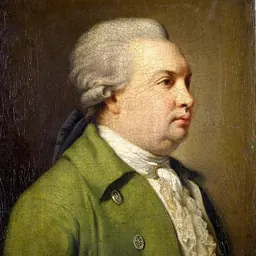

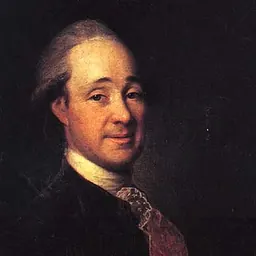
Contemporaries
People whose lives overlapped Lev Naryshkin's


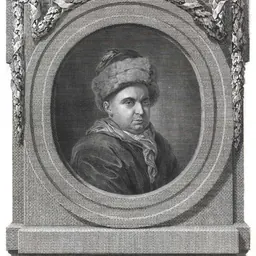



Frequently asked questions
Who was Lev Naryshkin?
(1733-1799)
When was Lev Naryshkin born?
Lev Naryshkin was born on 26 February 1733 in Saint Petersburg.
When did Lev Naryshkin die?
Lev Naryshkin died on 20 November 1799 in Saint Petersburg.
What nationality was Lev Naryshkin?
Lev Naryshkin was Russian.
Sources & further reading
· DBpedia: Lev Naryshkin (1733)
Cite this page
APA: Biography.guide. (2026). Lev Naryshkin. https://biography.guide/lev-naryshkin-1733/
MLA: "Lev Naryshkin." Biography.guide, https://biography.guide/lev-naryshkin-1733/.
Chicago: "Lev Naryshkin." Biography.guide. https://biography.guide/lev-naryshkin-1733/.
Data last updated: 2026-09-20 · Spot an error? Report a correction.
Page generated 2026-09-27 05:22 UTC