
About Lev Gatovsky
Lived 1903 – 1997 (aged 93). Lev Gatovsky was a Russian economist.
Lev Markovich Gatovsky (Russian: Лев Маркович Гатовский; 26 July 1903 – 18 April 1997) was a Soviet economist, being one of the first who tried to create a theoretical framework in which to understand the nature of the socialist project taking place in the Soviet Union from a political economy perspective. He became director of the Institute of Economics of the Soviet Academy of Sciences, later renamed Russian Academy of Sciences, from 1965 to 1971. Apart from his general academic work, he contributed to several major economic developments such as the first two five-year economic plans and the 1965 Soviet Economic Reform, as well as editing the first Political Economy textbook of the USSR. on 26 July 1903 in the city of Minsk, in the Russian Empire, later Soviet Union, and current Belarus. He died on 18 April 1997, in Moscow, current Russia.
His father, Mordukh Girshevich Gatovsky (1871—?), worked as a doctor, becoming the head of a regional outpatient clinic after the 1917 revolution. When Gatovsky was seventeen, he joined the Komsomol and became one of the secretaries of the Minsk district and city Komsomol committee (1920–1921). During the decade of the 1920s he also conducted propagandistic lecture work.
In 1921, Gatovsky became one of the first students of the Belarusian State University in Minsk. During this time, he also lectured on political economy at the Central Party School of the Communist Party of Belarus. In September 1922 he moved to Moscow, where he entered the second year of the Plekhanov Russian University of Economics, graduating in 1925 with a degree in trade economics.
During World War II, him and other 26 members of the Institute of Economics of the Soviet Academy of Sciences volunteered in the 21st Infantry Division. At this time, he was a member of the editorial board, head of the department and special war correspondent for the Krasnaya Zvezda newspaper. At the end of the war he was demobilized with the rank of colonel.
Gatovsky presented "Development of Soviet Economics and its Motive Forces," addressing the mechanisms guiding the Soviet economy, material incentives, democratic centralism, planning innovations, wage policies, and economic accounting. His report highlighted the theoretical aspects of Soviet economic growth and management.
26 May 1949; communication to the Secretary of the Central Committee of the All-Union Communist Party (Bolsheviks): P. Fedoseev, Editor-in-Chief of the "Bolshevik" magazine, reported to the Secretary Malenkov about the excessive praise for Voznesensky's book among economists at the magazine, particularly by Gatovsky. Despite editorial objections, Gatovsky's review was published with some modifications. According to him, Gatovsky had continued promoting the book as a significant Marxist–Leninist work, influencing other staff members like Koshelev and Kuzminov to include more quotes from the book in their articles. Fedoseev admitted his responsibility for allowing the proliferation of these quotes and suggested that the editorial board needed new, more qualified members to improve the magazine's quality. Despite the low marketability of grain farming during this period, pricing was predominantly influenced by the kulaks (wealthy peasants), who, although representing only 5% of the rural population, controlled a substantial portion of the grain market and production means, including agricultural machinery. Socialist enterprises, such as collective and state farms, demonstrated the highest marketability, yet their overall contribution to gross grain production remained minimal. In 1931, Gatovsky expanded this analysis from a Political Economy perspective when he tackled the issue of whether the Soviet economy could be defined as "socialist". He presented this analysis in the "Draft programme on the theory of the Soviet economy", published in the Planovoye Khozyaistvo journal.
In this draft, Gatovsky has a distinct shift in tone and tools of analysis between different sections. For the pre-1929 period, he draws heavily on general Marxist theory and Lenin's specific contributions. The discussions of political, economic, and intellectual struggles during this time reflect the intense political conflicts and hardships of the era.
Consequently, these analyses often seem more descriptive than analytical, with a logic that is ideological rather than philosophical.
Logical confusion In the criticism that J. Miller does in his article "A Political Economy of Socialism in the Making" This book, that later that year received the USSR Academy of Sciences prize, featured an article by Lev Gatovsky titled "The Foundations for Constructing a Socialist Economy in the USSR". In this article he examined the transformative impact of the Revolution on social and economic relations, and highlighted the role of the revolution in debunking the myths of the time regarding the permanence and stability of private property, as well as the working class's capability to manage state affairs and the economy. For the analysis, he divided the 40 years since the October Revolution into two historical periods: the first 20 years marked by the transformation from capitalism to socialism and the establishment of a socialist order, and the subsequent 20 years characterized by the further development of socialism and gradual progress towards communism.
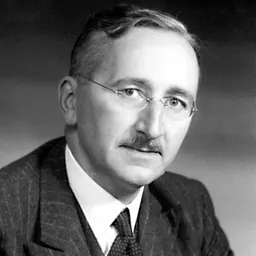
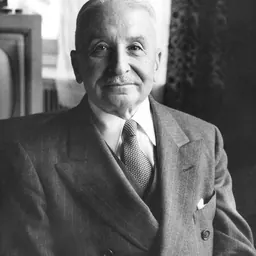
For him, the revolution not only facilitated the unrestricted development of productive forces but also demonstrated the advantages of socialism. Using the theoretical foundations of Marxism–Leninism and Lenin's blueprint for building socialism, he illustrated how, under the leadership of the Communist Party, the Soviets achieved remarkable milestones in a historically short period. This includes the industrialization of the country, the challenging collectivization of agriculture, and a significant cultural revolution. That is why he criticises reformist and revisionist assertions about the possibility of a peaceful and spontaneous transition from capitalism to socialism. By addressing the relationship between the economic base and the superstructure, and the productive relations and productive forces during this transition, he remarks the essential role that the Communist Party and the Soviet state had in advancing towards communist economic construction. and Eric Hobsbawm argued that this deterministic view of history can oversimplify complex developments. On this line, Robert Michels' "Iron Law of Oligarchy" warns of the risks of power concentration within parties, potentially leading to inefficiency and suppression of dissent. From a more economic point of view, Friedrich Hayek and Ludwig von Mises were critical with centralized planning for its lack of market signals and innovation. Regarding the cultural aspect, Antonio Gramsci emphasized the importance of cultural and ideological work alongside economic changes. And finally, Eduard Bernstein and Jürgen Habermas advocated for a more flexible, reformist approach, highlighting the need for adaptability in the socialist practice.
The Institute of Economics of the USSR Academy of Science In 1965, Gatovsky became director of the Institute of Economics of the USSR Academy of Science, until his departure in 1971. The main focus on the institute under his direction was on the theoretical study of the socialist reconstruction of the USSR's national economy. It aimed to further develop Marxist–Leninist political economy, combat bourgeois ideology, and denounce the concepts of Right and "Left" deviations. The institute delved into the fundamental questions of Marxist political economy and the Leninist stage of its development, exploring the content and methodology of what was then called the "theory of the Soviet economy."
Key areas of study included the theoretical foundations of planning and managing the Soviet economy, socialist industrialization, the technical reconstruction of industry, and the socialist restructuring of agriculture. Additionally, the institute addressed issues related to the relationship between urban and rural areas. which was used in the practice of capital investment planning and enterprise design. One of the major results of the work on the economics of industry and commerce was the book "Political Economy" published in 1954 under the editorship of L. M. Gatovsky, K.V. Ostrovityanova, and others. Although originally designed for students, it had a notorious impact on economic circles. Centralized economic planning was considered paramount, as highlighted by Joseph Stalin's assertion that plans were binding and shaped the country's economic trajectory.
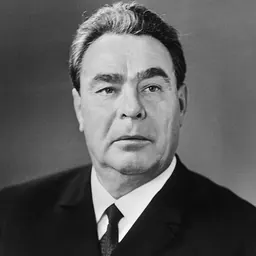
The transition process But State planning had a significant shift with the introduction of the "economic reform" starting in 1965, known as the Soviet Economic Reform of 1965, or the "Liberman reform". Despite official rhetoric proclaiming the improvement and consolidation of centralized planning, the reform ultimately dismantled it. An extensive propaganda campaign vilified centralized planning as obsolete, bureaucratic, and restrictive, attributing its flaws to Stalin's interpretation of socialism. Him and other authors argued that it stifled innovation and hindered the efficient allocation of resources. Liberman advocated for giving enterprises more autonomy and reducing central directives to key indices, thus allowing them to make decisions based on market demand. Similarly, V.S. Nemchinov and V. Trapeznikov, highlighted the need to eliminate bureaucratic tutelage and grant enterprises greater independence. They emphasized the importance of economic initiative and the limitations of purely administrative methods in guiding economic activity. A.M. Rumyantsev, echoed these sentiments by emphasizing the necessity of extending the economic independence and initiative of enterprises. He argued that central planning should focus on formulating general indicators of economic development while allowing enterprises to plan their activities independently. In this context, Gatovsky also took a critical stance against centralized planning believing that excessive bureaucratic control stifled innovation and economic progress. Ultimately he also called for reforms that would empower enterprises to make decisions autonomously: However, General Secretary Leonid Brezhnev and Kosygin's 1965 reforms fundamentally altered this approach, introducing cost accounting (khozraschot) and emphasizing profitability at the enterprise level. Gatovsky defined profit in a socialist economy as the residual surplus of revenue over costs, serving as an incentive mechanism to enhance enterprise performance. The new profit-centric approach sparked debates on the role of profit in a socialist economy, highlighting the tension between maintaining socialist ideals and adopting pragmatic economic reforms to drive efficiency and growth. and V. Batyrev, supported this shift, arguing that credit would drive better use of capital and enhance productivity. The reforms included extending long-term credits for capital investments, thus reducing reliance on non-repayable state funds. Interest rates were also adjusted to make loans more economically significant, with the standard rate raised to 4–4.25% for short-term and 4.5–6% for long-term loans by 1967. "Economic Laws and the Construction of Communism: Essays in Political Economy" (1970) “Methodology for forecasting economic development of the USSR” (1971, jointly with N. P. Fedorenko and S. A. Heinman) "Economic problems of the scientific and technological revolution under socialism" (1975, editor) “The material and technical basis of communism” (vols. 1–2, 1977, jointly with E. I. Kapustin and S. A. Heinman) "The Efficiency of Scientific and Technological Progress: Management Issues" (1978, editor) “Issues of the development of the political economy of socialism” (1979) "Scientific and technological progress and the economics of socialism" (1979, editor) “Construction of the material and technical base of communism” (vols. 1–2, 1982, jointly with E. I. Kapustin and S. A. Heinman)
Recognitions Gatovsky's contributions were recognized with several awards, including the Order of the Badge of Honor in 1962 and the Red Banner of Labor in both 1963 and 1973. He received the Order of the October Revolution in 1975 and the Order of Friendship of Peoples in 1983. His military service earned him the Order of the Red Star and medals for the defense of Moscow, victory over Germany, and victory over Japan. His scientific accomplishments were honored with the gold medal from the Exhibition of Achievements of the National Economy and the Sorbonne medal, both awarded in 1971.
Don’t just read it —
keep it.
Full-length biographies made to live with: read them, listen on the way to work, watch them tonight.
- E-book
- Audio
- Video
Instant download · yours to keep · every purchase keeps this site free
Important facts
People in Lev Gatovsky's life
Named in this biography and alive at the same time



Related people
Same field, nearest in time


Contemporaries
People whose lives overlapped Lev Gatovsky's
Frequently asked questions
Who was Lev Gatovsky?
Russian economist (1903-1997)
When was Lev Gatovsky born?
Lev Gatovsky was born on 13 July 1903 in Minsk.
When did Lev Gatovsky die?
Lev Gatovsky died on 18 April 1997 in Moscow.
What was Lev Gatovsky's occupation?
Lev Gatovsky was an economist.
What nationality was Lev Gatovsky?
Lev Gatovsky was Russian.
Sources & further reading
Cite this page
APA: Biography.guide. (2026). Lev Gatovsky. https://biography.guide/lev-gatovsky/
MLA: "Lev Gatovsky." Biography.guide, https://biography.guide/lev-gatovsky/.
Chicago: "Lev Gatovsky." Biography.guide. https://biography.guide/lev-gatovsky/.
Data last updated: 2026-09-25 · Spot an error? Report a correction.
Page generated 2026-09-27 05:11 UTC