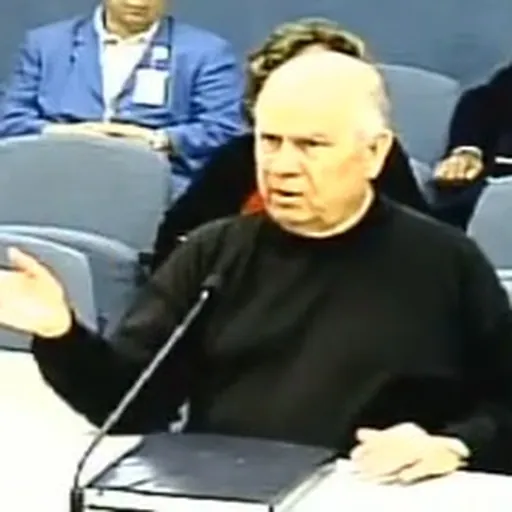
About Leroy Griffith
Born 1932. Leroy Griffith is an American film producer and nightclub owner, known for Chief executive officer.
Leroy Charles Griffith (born March 26, 1932) is an American theater and nightclub proprietor, former Broadway and off-Broadway theater producer and director, and former burlesque and adult film producer. In a career spanning 75 years, he owned, leased, or operated more than 70 theaters, cinemas, and nightclubs across the United States, dating from the burlesque era of the 1950s to the present. Earl Wilson, among others, nicknamed him "Burlesque King."
During burlesque's heyday, Griffith was a prolific producer of live stage shows featuring showgirls, strippers, comedians, vaudevillians, and other stars of the era. As burlesque declined in popularity, he made the crossover to exhibiting as well as producing adult films and operating strip clubs, notably past and present Miami-area clubs such as Club Madonna, Deja Vu, and Wonderland.
His business endeavors in the adult entertainment industry have, for decades, put him at odds with restrictive municipalities. He has taken legal action, often successfully, to defend his constitutional rights and be able to operate his establishments. His and others' trailblazing victories helped to make the adult entertainment industry more accepted and tolerated in 20th and 21st century American society.
Early years
Griffith was born in Poplar Bluff, Missouri, to Stella Duncan (1909–1961) and Floyd Roy Griffith (1909–1984). His father was a theater manager, police officer, and concession stand operator. The younger Griffith served as a projectionist, cashier, and usher at local theaters in his hometown. He started out selling popcorn at his father's Strand Theater and was a concessions operator at the Jewel Theater, both in Poplar Bluff. Decades later, the senior Griffith relocated to Florida to work for his son's expanding theatrical empire. "In those days," Griffith recalled in a 1993 interview, "they had probably 30 people in the cast, a chorus line, an orchestra, two comics, a singer, a vaudeville act, and then five exotic dancers. It was a good show." Griffith discovered that any profit to be made was not from the show itself but from the concession stand: "That's where I was. In between acts, the pitchman would sell prize packages, candy, stuff like that. Concessions was where the real money was, just like it is with regular movies today."
Military service In 1955, Griffith was drafted into service with the U.S. Army in Hot Springs, Arkansas. While stationed at Elmendorf Air Force Base in Anchorage, Alaska, he worked with Bob Hope's USO show (featuring Jerry Colonna, Mickey Mantle, and Ginger Rogers, among others) when Hope was on tour there in December 1956.
Career
After an early discharge from the military, Griffith acquired his first theater, the Star, in Portland, Oregon. After a limited operation of a Kansas City, Missouri, restaurant and another period of short-term employment with Markovich, he opened a theater in Detroit, Michigan. He was in his mid-twenties.
A 1959 Billboard article described Griffith as one of the "brigade of regulars" employed by the popular King Reid Shows, a carnival that traveled the New England and Canada circuit and which was founded by Vermont showman and state legislator "King" Reid Lefèvre (1904–1968). Griffith managed the carnival's popular "Club 17 Revue," which featured burlesque shows.
Theater and club owner Outside his Roxy Theater (today, Club Madonna) in Miami Beach, Fla., 1973. Identifying "legitimate theaters" that were going out of business, Griffith began acquiring them. "These places would go under," he said in a 1993 interview, "and I'd go in and take over and make them successful with an adult policy."
Burlesque producer Griffith told the New York Times that he became interested in burlesque while a concession manager for Harold Minsky's burlesque houses in Chicago. From the late 1950s to the late 1960s, he was one of the nation's leading producers of burlesque entertainment. Entertainment columnist Earl Wilson called him the "new Minsky" and he and other newspapermen often referred to Griffith as "Burlesque King." In 1966, the New York branch manager of the American Guild of Variety Artists, which exercised jurisdiction over burlesque throughout the nation, told the New York Times that Griffith was the largest producer in the field. When finally the genre ceased to be a popular and profitable attraction, one of its last remaining producers adapted to changing tastes and times, converting his burlesque houses to adult film theaters and strip clubs.
A promotional poster for Griffith's Broadway revue, Hello Burlesque.
Broadway and off-Broadway producer
This Was Burlesque, a revue conceived by and starring burlesque star Ann Corio, was staged for 124 performances at Griffith's Hudson Theater on Broadway during the 1964–65 season, from March to June 1965. It went on to tour across the U.S. in various productions over the next two decades.
Griffith also produced Hello Burlesque, a 1965 show featuring showgirl Julie Taylor, "Miss Sex 5th Avenue."
He directed and co-produced The Wonderful World of Burlesque, an off-Broadway show that ran for 211 performances at the Mayfair Theater, from April to June 1965.
Signing his Mundo depravados co-stars Tempest Storm and Herb Jeffries (left) to film contracts in 1967.
Adult film producer
Griffith produced the sexploitation films Bell, Bare and Beautiful (1963) starring Virginia Bell, Lullaby of Bareland (1964), The Case of the Stripping Wives (1966), Mundo depravados (1967) starring Tempest Storm, and My Third Wife, George (1968). These films were exhibited in nationwide screenings, then later released in video format.
He was one of the first producers ever to hire a bi-racial couple to star in a film when he cast Tempest Storm and Herb Jeffries, "Hollywood's First Black Singing Cowboy," as the stars of his 1967 film Mundo depravados. Storm's 1959 marriage to Jeffries, according to the New York Times, "broke midcentury racial taboos, costing her work". Interracial marriage in the U.S. was not declared legal until a 1967 Supreme Court ruling.
Griffith's theaters and clubs Griffith owned, leased, or operated more than 70 theaters, cinemas, and nightclubs throughout the U.S., mostly concentrated in the Northeast, the Rust Belt, and the South. He also operated theaters in the Pacific Northwest.
Mid-Atlantic U.S.
Griffith's theaters in the Mid-Atlantic region included:
Midwestern U.S.
Griffith's theaters in the Midwest included:
Ohio Griffith was co-operator of Toledo's Town Hall Theater with "Queen of Burlesque" Rose La Rose (1916–1972), a nationally renowned stripper who, having shrewdly saved and invested her earnings, retired in 1958, settled in Toledo, and purchased the Town Hall and, eventually, another local theater. She was one of the rare women on the burlesque circuit to evolve from performer to theater owner in her own right.
Griffith's other Ohio theaters included:
Northeastern U.S.
Griffith's theaters in the Northeast included:
New York City
During the 1960s and 1970s, Griffith operated five theaters in New York City: the Gayety, the Hudson, the Mayfair Burlesque, and the Metropolitan, all in Manhattan; and the Shore on Coney Island in Brooklyn.
His 1960s Broadway and off-Broadway burlesque productions were staged in some of his Manhattan theaters, such as the Hudson and the Mayfair Burlesque.
The Mayfair Burlesque (now Sony Hall) was previously Billy Rose's popular Diamond Horseshoe nightclub, located in the basement level of the Paramount Hotel in Times Square.
Northwestern U.S. Griffith's theaters in the Northwest included:
Southern U.S. Griffith's theaters in the South included:
Florida
In addition to various theaters throughout Miami and Miami Beach, Griffith has operated these Florida theaters:
Miami
Griffith's Miami theaters included:
He bought the Boulevard in 1970 for $125,000 and renamed it the Pussycat, creating three different theaters within: the Pussycat, the center theater, was a 900-seat theater that showed adult films; the Kitty Cat featured female performers; and the Tomcat featured male performers. Later rebrandings of the theater-turned-strip club would include the names Wonderland and Gold Rush.
Miami Beach
Griffith's theaters in Miami Beach included:
On a visit to Miami Beach in 1961, Griffith noticed the Paris Theater was for sale. He originally leased it, then bought it, and staged burlesque there, under the name Paris Follies. Featured headliners included Tempest Storm and Blaze Starr. He sold it in 1986, then bought it back after its owners failed with the nightclub Paris Moderne, and later sold it again.
Griffith continued to open new venues throughout South Florida, from Broward County in the north to Key West in the south. In addition to bringing in live acts, he began showing movies. He also began producing films and exhibiting them in his theaters nationwide.
As burlesque was petering out across the rest of the country, Griffith added the Gayety on Collins Avenue to his theater chain in July 1964. In 1965, the Gayety was reported to be thriving as one of the 20 remaining burlesque theaters in the nation.
A young Mickey Rourke once worked for Griffith as a cashier and projectionist in Miami Beach.
Refusing to back down, Griffith attempted to show the film again months later. “Freedom of expression and the freedom to see what you chose to see is what they came over here for, isn't it?," he told The Miami Herald. "In America we have the right to see, hear and do what we like. Isn't that what this country is all about?”
Controversy over use of Madonna name In 1994, Griffith converted the Roxy from an adult movie theater to an all-nude strip club (Club Madonna), which it remains today. Griffith successfully withstood an attempt by attorneys for the pop singer Madonna to prevent him from using the name. According to an April 1994 item in the Daily Mail —
"The singer, who wants to open a parade of strip clubs herself, had her lawyer fire off a letter to the club's owner, Leroy Griffith, telling him he would have to change the name of his establishment 'because it gives the impression that my client endorses your club and its activities.' An attorney for the club hit back saying: 'If Madonna wants to take down the sign, she'll have to stop by with a ladder and do it herself.'"
Newsweek reported that her lawyers claimed she had been "injured" by her perceived association with the club and that its name was "a serious violation of our client's rights" under U.S. trademark law. Griffith's attorney countered that Madonna is a name "that's been in the public domain for a couple of thousand years."
Stormy Daniels Donald Trump Stormy Daniels for a two-night appearance at Club Madonna in 2018, during her “Make America Horny Again” tour. "I got her at the right price," Griffith told a local newspaper.
For a detailed table of Griffith's theaters and clubs, click here.
Legal battles As a producer of adult entertainment viewed by its opponents as obscene and risqué, Griffith frequently encountered the opposition of civic leaders, community activists, churches, and schools, among others. States and municipalities enacted restrictive laws and local ordinances. Police enforced them with raids, seizures, and arrests. Judges and courts often imposed civil and criminal sanctions — sometimes forcing format changes or outright closures of shows and theaters. These and other methods were used to try to thwart theater owners like Griffith, as well as the people and performers he and others like him employed.
From the beginning of his career, Griffith faced staunch opposition to his business efforts, whether as a burlesque producer, adult film theater operator, or strip club owner. Rather than capitulate to those who would curtail him or force him out of business, he often chose to wage lawsuits to stop them and assert his legal rights, inviting the criticism that he is litigious. His and others' legal victories emboldened the adult entertainment industry in the U.S. and contributed to the gradual erosion of legal and societal intolerance towards adult entertainment in the 20th and 21st centuries.
Police raids were a common risk of the trade for Griffith. One night, he and his dancers were arrested, only to return and open up the same night.
v. The City of Columbus (1961) In January 1961, Griffith was fined $500 for exhibiting "an indecent, immoral or impure picture" when he showed B-Girl Rhapsody at his recently opened Parsons Follies theater in Columbus, Ohio. He said he was happy to be arrested because it would give him a chance to go to court and "demand the same rights as any other American."
Griffith earned the scrutiny of U.S. Attorney General Robert F. Kennedy after he promoted his Gayety Burlesque Theater in the nation's capital with a sign that included the abbreviation "F.B.I.". Kennedy summoned Griffith to his Justice Department office, demanding an explanation. After Griffith explained that it stood for "Fine Burlesque Inside," Kennedy is said to have laughed.
His conviction, upheld in lower courts, was overturned in 1963 after the Ohio Supreme Court agreed to hear his appeal. The high court found the state's film censorship law unconstitutional. The Columbus Dispatch editorialized: "The most noteworthy factor that has come out of this battle is that violation of censorship laws in the movie field is something which is most difficult to define."
Later in 1961, a grand jury refused to indict Griffith on a charge of displaying "obscene, lewd or lascivious" pictures based on photos placed in the Parsons' lobby.
v. The City of Indianapolis (1962) Griffith's Ritz Theater, in Indianapolis, Ind., began hosting burlesque performances in 1962 in addition to showing adult films. Outcry from neighborhood residents led to intense scrutiny from city officials and the local newspaper, resulting in the arrest of the show's star and Griffith on indecency charges and the confiscation of 15 film reels in a June 1962 raid. The city revoked the theater's license the next month.
Fear of Love controversy, Miami Beach (1970) Fear of Love, Emile A. Harvard's avante-garde "educational" and "provocative comedy in two acts" with "graphic demonstrations of marriage behavior," was staged live at the Roxy in Miami Beach in 1970. Its cast members, male and female, performed nude.
The play, according to a synopsis of a previously produced film adaptation, was "an accurate presentation of married people having sexual difficulties and the unique, progressive approach in which a modern marriage counselor tries to solve them" and based "on actual cases."
Griffith told The Miami Herald's entertainment editor in a Sept. 10 column that he anticipated no legal harassment over his production, pointing to a California court ruling that "nothing in a play on the stage is obscene."
On Sept. 23, Mayor Jay Dermer called for a grand jury investigation of the Roxy for showing the play. He charged that it showed "live complete nudity, simulated sexual intercourse and homosexuality among females" and had "an extremely thin plot."
Though the city's vice squad officers and the chairman of Dermer's advisory committee to combat pornography branded the play pornographic, a municipal judge ruled that it was not obscene.
The next day, Griffith won a temporary restraining order from a local judge to keep the Roxy from being raided again. When the judge dissolved the order three weeks later, Griffith pulled the play from the Roxy's schedule.
v. Linda Lovelace (1974)
In 1974, Griffith won a $32,038 judgment for damages against Linda Lovelace, who appeared in the 1972 hardcore film Deep Throat. He had hired her for $15,000 a week for four weeks to star in a live, Las Vegas-style stage revue at his Paramount Theater in Miami, slated for November 1973, but she failed to appear. The judge awarded Griffith just half of the amount he sought.
Illusions of a Lady, New Orleans (1976) FBI agents seized Illusions of a Lady (1974) in a July 8, 1976, raid of Griffith's Sinerama Theater in New Orleans. The seizure was part of an effort to discourage interstate transportation of obscene materials into the city. A district court ruling later found that a federal magistrate issued the seizure warrant without probable cause; it was reversed, however, by a 1979 U.S. Court of Appeals decision.
"Continued police raids did take their toll on the New Orlean's porn industry," The Iron Lattice reported, "as did the rise of the VCR, which made it possible for people to view porn (or other movies) at home."
v. The City of Hialeah, Fla. (1985)
Griffith turned Hialeah's Atlas Cinema into an X-rated theater in August 1985, outraging Mayor Raul Martinez. "The issue is not censorship," Martinez said at the time. "It is morality. They will bring in derelicts, the sick of mind. They're like herpes – wherever they go, everybody gets infected. We don't need that."
v. The City of Miami Beach (1989-2020s)
In late 1989, after the cities of Fort Lauderdale and North Miami Beach outlawed alcohol in establishments featuring nude entertainers, Miami Beach officials – led by Mayor Alex Daoud – feared strip club operators would gravitate to their city and that Miami Beach "would be overrun with sex-mad, drunken men and immoral, naked women."
Film appearances
Griffith played brief cameo parts in some of his films.
His recollections of the burlesque era are included in Leslie Zemeckis's 2010 documentary, Behind the Burly Q.
His Miami Beach home on Pine Tree Drive was a filming location for scenes from the Frank Sinatra films Tony Rome (1967) and Lady in Cement (1968).
Interior theater sequences in Norman Lear's 1968 musical comedy film The Night They Raided Minsky's were shot in his Manhattan theater, the Gayety (now the Village East Cinema).
Scenes from the 1996 movie South Beach Academy were shot inside his Club Madonna in Miami Beach.
Personal life
Family Griffith married Linda Rivera in 1989. His children are from two previous marriages.
In May 1964, Griffith saved the life of his 18-month-old son, Cash, after pulling him unconscious from the family pool at their Venetian Islands home. He credited his effort to reading about mouth-to-mouth resuscitation instructions while on an airplane flight the week before.
Griffith's son Charles was convicted of first-degree murder and sentenced to life in prison after the 1985 mercy killing of his three-year-old daughter, who had been in a months-long coma in a Miami children's hospital following a freak accident. He was granted a retrial and, in 1995, took a deal to plead guilty to second-degree murder; he was released with credit for time served and good behavior. Charles Griffith later published an addiction recovery magazine and opened a sober house for women transitioning from substance rehab, both dedicated as memorials to his late daughter.
Philanthropy Nationally syndicated Broadway gossip writer Earl Wilson thanked Griffith in a December 1965 "It Happened Last Night" column "for his welcome Christmas check for the 'Earl Wilson Help the Needy Fund' which arrived just in time to aid some deserving folk."
In October 1966, following New York City's 23rd Street Fire that claimed the lives of 12 firefighters, Griffith's Gayety Burlesque in the East Village in Manhattan devoted proceeds from a show to benefit the firefighters' widows and 32 children.
Griffith, for years, hosted annual shows at his Carib Theater benefiting the Miami Beach Police and Firemen's Benevolent Association. In 1969, Miami Beach police chief Rocky Pomerance was disturbed by the publicity from Griffith's $2,200 donation to the association. Pomerance asked the group to give it back on the premise that "simple ethical morality" demanded it, but he was rebuffed. The group used the donation to create a scholarship fund for children of police and firemen killed before retirement.
The city's police softball teams and the Miami Beach Policemen's Relief and Pension Fund have also been beneficiaries of Griffith's charitable giving. In 1997, the MBPD recognized Griffith for his donation of bicycles to the department, for use by its bike patrol officers.
Work
Broadway and off-Broadway stage productions This Was Burlesque (1965) – co-producer Hello Burlesque (1965) – producer The Wonderful World of Burlesque (1965) – co-producer, director
Filmography Bell, Bare and Beautiful (1963) – producer, screenwriter, actor (Theater Manager) Lullaby of Bareland (1964) – producer The Case of the Stripping Wives (1966) – producer Mundo depravados (1967) – producer My Third Wife, George (1968) – producer Behind the Burly Q (documentary, 2010) – interview subject
Awards and recognitions 1970s: Key to the City of Miami Beach (awarded by Mayor Harold Rosen) 1970s: Recognition for "unselfish contributions" to the annual All-Star show (Miami Beach Police and Firemen's Benevolent Association) 1997: Recognition for "outstanding dedication and service" to the Washington Avenue Bike Unit (Miami Beach Police Department) 1999: Recognition for "generous support" for the Miami Beach Police softball teams (Miami Beach Police Department) 2000: Recognition for "generosity and continued support" (Miami Beach Policemen's Relief and Pension Fund) 2007: Best Adult Club in Miami Beach (Club Madonna), The Miami SunPost
List of Griffith's theaters and clubs
Theaters he has owned and operated, been an ownership partner in, leased, and/or managed include these:
Note: Click the "sort" icon at the head of each column to view data in alphabetical order.
Don’t just read it —
keep it.
Full-length biographies made to live with: read them, listen on the way to work, watch them tonight.
- E-book
- Audio
- Video
Instant download · yours to keep · every purchase keeps this site free
Important facts
People in Leroy Griffith's life
Named in this biography and alive at the same time






Related people
Same field, nearest in time
Contemporaries
People whose lives overlapped Leroy Griffith's


Frequently asked questions
Who is Leroy Griffith?
American film producer
When was Leroy Griffith born?
Leroy Griffith was born on 26 March 1932 in Poplar Bluff.
What is Leroy Griffith's occupation?
Leroy Griffith is a film producer and nightclub owner.
What is Leroy Griffith known for?
Leroy Griffith is known for Chief executive officer.
What nationality is Leroy Griffith?
Leroy Griffith is American.
Sources & further reading
Cite this page
APA: Biography.guide. (2026). Leroy Griffith. https://biography.guide/leroy-griffith/
MLA: "Leroy Griffith." Biography.guide, https://biography.guide/leroy-griffith/.
Chicago: "Leroy Griffith." Biography.guide. https://biography.guide/leroy-griffith/.
Data last updated: 2026-09-22 · Spot an error? Report a correction.
Portrait: Wikimedia Commons · author & licence
Page generated 2026-09-27 05:04 UTC