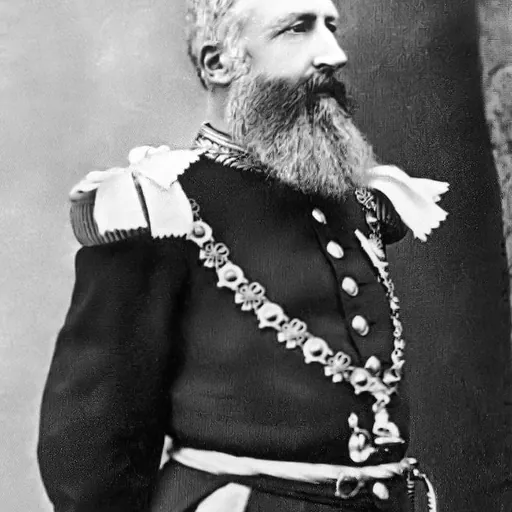
About Leopold II of Belgium
Lived 1835 – 1909 (aged 74). Leopold II of Belgium was a Belgian monarch.
Leopold II (9 April 1835 – 17 December 1909) was the second king of the Belgians from 1865 to 1909, and the founder and sole owner of the Congo Free State from 1885 to 1908.
Born in Brussels as the second but eldest-surviving son of King Leopold I and Queen Louise, Leopold succeeded his father to the Belgian throne in 1865 and reigned for 44 years until his death, the longest reign of a Belgian monarch to date. He died without surviving legitimate sons; the current king of the Belgians, Philippe, descends from his nephew and successor, Albert I. He is popularly referred to as the Builder King in Belgium in reference to the great number of buildings, urban projects and public works he commissioned.
Leopold was the founder and sole owner of the Congo Free State, a private colonial project undertaken on his own behalf as a personal union with Belgium. He used Henry Morton Stanley to help him lay claim to the Congo, the present-day Democratic Republic of the Congo. At the Berlin Conference of 1884–1885, the colonial nations of Europe authorised his claim and committed the Congo Free State to him. Leopold ran the Congo, which he never personally visited, by using the mercenary Force Publique for his personal gain. He extracted a fortune from the territory, initially by the collection of ivory and, after a rise in the price of rubber in the 1890s, by forced labour from the Indigenous population to harvest and process rubber.
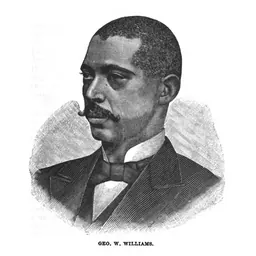
Leopold's administration was characterised by systematic brutality and atrocities in the Congo Free State, including forced labour, torture, murder, kidnapping, along with the amputation of the hands and sometimes feet of men, women, and children when the quota of rubber was not met. In one of the first uses of the term, George Washington Williams described the practices of Leopold's administration of the Congo Free State as "crimes against humanity" in 1890.
While it has proven difficult to accurately estimate the pre-colonial population and the extent to which it changed under the Congo Free State, estimates for the Congolese population decline during Leopold's rule range from 1 million to 15 million. The causes of the decline included epidemic disease, a reduced birth rate, and violence and famine caused by the regime. He was widely condemned because of his brutal and oppressive regime in the Congo that resulted in widespread suffering and loss of life including exploitation, violence, and immense human rights abuses, particularly involving the rubber trade. His eldest brother, Louis Philippe, Crown Prince of Belgium, died in infancy in 1834. As heir apparent, Leopold was granted the title of Duke of Brabant in 1840. The French Revolution of 1848 forced his maternal grandfather, Louis Philippe, to flee to the United Kingdom. Louis Philippe died two years later, in 1850. Leopold's fragile mother was deeply affected by the death of her father and her health deteriorated. She died of tuberculosis the same year, when Leopold was 15 years old.
Leopold's sister Charlotte became Empress Carlota of Mexico in 1864. The British monarch at the time, Queen Victoria, was Leopold II's first cousin, as was Victoria's husband, Prince Albert, since Leopold's father, Albert's father, Duke Ernest I of Saxe-Coburg-Gotha, and Victoria's mother, the then Duchess of Kent, were all siblings. As a young man, Leopold II served in the Belgian military and achieved the rank of lieutenant-general. He also served in the Belgian Senate at the time.
Marriage and family
At the age of 18, Leopold married Marie Henriette of Austria, a cousin of Emperor Franz Joseph I of Austria and granddaughter of the late Holy Roman Emperor Leopold II, on 22 August 1853 in Brussels. Lively and energetic, Marie Henriette endeared herself to the people by her character and benevolence. Her beauty earned her the sobriquet "The Rose of Brabant". She was also an accomplished artist and musician. Leopold lavished upon her large sums of money, estates, gifts, and a noble title, Baroness de Vaughan. Owing to these gifts and the unofficial nature of their relationship, their affair ironically lost Leopold more popularity in Belgium than any of his crimes in the Congo. Caroline bore two sons, Lucien Philippe Marie Antoine, Duke of Tervuren, and Philippe Henri Marie François, Count of Ravenstein. Their second son was born with a deformed hand, leading a cartoon to depict Leopold holding the child surrounded by Congolese corpses with their hands sliced off: the caption said "Vengeance from on high". They married secretly in a religious ceremony five days before his death. Their failure to perform a civil ceremony rendered the marriage invalid under Belgian law. After the king's death, it soon emerged that he had left his widow a large fortune in Congo securities, only some of which the Belgian government and Leopold's three estranged daughters were able to win back.
Early political career As Leopold's older brother, the earlier crown prince Louis Philippe, had died the year before Leopold's birth, Leopold was heir to the throne from his birth. When he was 5 years old, Leopold received the title of Duke of Brabant, and was appointed a sub-lieutenant in the army. He served in the army until his accession in 1865, by which time he had reached the rank of lieutenant-general.
The first revision of the Belgian Constitution came in 1893. Universal male suffrage was introduced, though the effect of this was tempered by plural voting. The eligibility requirements for the Senate were reduced, and elections would be based on a system of proportional representation, which continues to this day. Leopold pushed strongly to enable a royal referendum, whereby the king would have the power to consult the electorate directly on an issue, and use his veto according to the results of the referendum. The proposal was rejected, as it would have given the king the power to override the elected government. Leopold was so disappointed that he considered abdication.
Builder King
Leopold commissioned a great number of buildings, urban projects and public works. According to the historians Wm. Roger Louis and Adam Hochschild, this was largely possible thanks to the profits generated from the Congo Free State, though this is disputed. These projects earned him the epithet of "Builder King" (, ). The public buildings were mainly in Brussels, Ostend, Tervuren and Antwerp, and include the Parc du Cinquantenaire/Jubelpark (1852–1880), memorial arcade and complex, the Basilica of the Sacred Heart (1905–1969) and Duden Park in Brussels (1881); the Hippodrome Wellington racetrack (1883), the Royal Galleries and Maria Hendrikapark in Ostend (1902); the Royal Museum for Central Africa and its surrounding park in Tervuren (1898); and Antwerpen-Centraal railway station in Antwerp (1895–1905).
In addition to his public works, Leopold acquired and built numerous private properties for himself inside and outside Belgium. He expanded the grounds of the Royal Castle of Laeken, and built the Royal Greenhouses, as well as the Japanese Tower and the Chinese Pavilion near the palace (now the Museums of the Far East). In the Ardennes, his domains consisted of of forests and agricultural lands and the châteaux of Ardenne, Ciergnon, Fenffe, Villers-sur-Lesse and Ferage. He also built important country estates on the French Riviera, including the Villa des Cèdres and its botanical garden, and the Villa Leopolda.
Thinking of the future after his death, Leopold did not want the collection of estates, lands and heritage buildings he had privately amassed to be scattered among his daughters, each of whom was married to a foreign prince. In 1900, he created the Royal Trust, by means of which he donated most of his properties to the Belgian nation in perpetuity, and arranged for the royal family to continue using them after his death.
Attempted assassination On 15 November 1902, Italian anarchist Gennaro Rubino attempted to assassinate Leopold, who was riding in a royal cortege from a ceremony at the Church of St. Michael and St. Gudula (now Brussels' cathedral) in memory of his recently deceased wife, Marie Henriette. After Leopold's carriage passed, Rubino fired three shots at the procession. The shots missed the king but almost killed his grand marshal, Count Charles John d'Oultremont. Rubino was immediately arrested and subsequently sentenced to life imprisonment; he died in prison in 1918.
Belgians rejoiced that the king was safe: later in the day, in the Royal Theatre of La Monnaie before Tristan und Isolde was performed, the orchestra played The Brabançonne, which was sung loudly and ended with loud cheers and applause.
Leopold extracted a fortune from the Congo, initially by the collection of ivory, and after a rise in the price of rubber in the 1890s, by forced labour from the people to harvest and process rubber. He ran the Congo using the mercenary Force Publique for his personal enrichment. Estimates for the total population decline range from 1 million to 15 million, with a consensus growing around 10 million.
Leopold amassed a huge personal fortune by exploiting the natural resources of the Congo. At first, ivory was exported, but this did not yield the expected levels of revenue. When the global demand for rubber exploded, attention shifted to the labour-intensive collection of sap from rubber plants. Abandoning the promises of the Berlin Conference in the late 1890s, the Free State government restricted foreign access and extorted forced labour from the locals. Abuses, especially in the collection of rubber, included forced labour of the Indigenous population, beatings, widespread killings, and frequent mutilation when production quotas were not met. One practice used to force workers to collect rubber included taking wives and family members hostage.
Missionary John Harris of Baringa was so shocked by what he had encountered that he wrote to Leopold's chief agent in the Congo, saying: I have just returned from a journey inland to the village of Insongo Mboyo. The abject misery and utter abandon is positively indescribable. I was so moved, Your Excellency, by the people's stories that I took the liberty of promising them that in future you will only kill them for crimes they commit.
Criticism of the management of Congo
Inspired by works such as Joseph Conrad's Heart of Darkness (1902), originally published as a three-part series in Blackwood's Magazine (1899) and based on Conrad's experience as a steamer captain on the Congo 12 years earlier, international criticism of Leopold's rule increased and mobilised. Reports of outrageous exploitation and widespread human rights abuses led the British Crown to appoint their consul Roger Casement to investigate conditions there. His extensive travels and interviews in the region resulted in the Casement Report, which detailed the extensive abuses under Leopold's regime.
Relinquishment of the Congo
International opposition and criticism at home from the Catholic Party, Progressive Liberals The Belgian Congo gained independence in 1960 and became known as the Republic of the Congo.
Death and legacy
On 17 December 1909, Leopold II died at Laeken from an embolism, and the Belgian crown passed to Albert I, the son of Leopold's brother, Philippe, Count of Flanders. His funeral cortege was booed by the crowd Statues of him were erected in the 1930s at the initiative of Albert I, while the Belgian government celebrated his accomplishments in Belgium. MPs agreed to set up a parliamentary commission to examine Belgium's colonial past, a step likened to the Truth and Reconciliation Committee set up in South Africa after the apartheid regime was abolished. On 30 June, the 60th anniversary of the Democratic Republic of the Congo's independence, King Philippe released a statement expressing his "deepest regret" for the wounds of the colonial past, and the "acts of violence and cruelty committed" in the Congo during colonisation but did not explicitly mention Leopold's role in the atrocities. Some activists accused him of not making a full apology.
Statues
Leopold II remains a controversial figure in the Democratic Republic of the Congo. In the capital Kinshasa (known until 1966 as Leopoldville in his honour) his statue was removed after independence. Congolese culture minister Christophe Muzungu decided to reinstate the statue in 2005. He noted that the beginning of the Free State had been a time of some economic and social progress. He argued that people should recognise some positive aspects of the king as well as the negative, but hours after the six-metre (20ft) statue was erected near Kinshasa's central station, it was officially removed.
Leopold's controversial regime in the Congo Free State has motivated proposals for these statues to be removed. Other petitions, signed by hundreds, called for the statues to remain.
In early June 2020, a majority in the Brussels Parliament requested a committee to be set up to 'decolonise the public sphere' in the Brussels-Capital Region.
Don’t just read it —
keep it.
Full-length biographies made to live with: read them, listen on the way to work, watch them tonight.
- E-book
- Audio
- Video
Instant download · yours to keep · every purchase keeps this site free
Important facts
Family & relationships
People in Leopold II of Belgium's life
Named in this biography and alive at the same time





Related people
Same field, nearest in time

Contemporaries
People whose lives overlapped Leopold II of Belgium's




Frequently asked questions
Who was Leopold II of Belgium?
King of the Belgians from 1865 to 1909 (1835–1909)
When was Leopold II of Belgium born?
Leopold II of Belgium was born on 9 April 1835 in Brussels.
When did Leopold II of Belgium die?
Leopold II of Belgium died on 17 December 1909 in Laeken.
What was Leopold II of Belgium's occupation?
Leopold II of Belgium was a monarch.
What nationality was Leopold II of Belgium?
Leopold II of Belgium was Belgian.
Sources & further reading
· Wikipedia: Leopold II of Belgium
· DBpedia: Leopold II of Belgium
Cite this page
APA: Biography.guide. (2026). Leopold II of Belgium. https://biography.guide/leopold-ii-of-belgium/
MLA: "Leopold II of Belgium." Biography.guide, https://biography.guide/leopold-ii-of-belgium/.
Chicago: "Leopold II of Belgium." Biography.guide. https://biography.guide/leopold-ii-of-belgium/.
Data last updated: 2026-09-21 · Spot an error? Report a correction.
Portrait: Wikimedia Commons · author & licence
Page generated 2026-09-27 05:00 UTC