
Leopold Gutterer
German politician and journalist
About Leopold Gutterer
Lived 1902 – 1996 (aged 94). Leopold Gutterer was a German politician, journalist and secretary of state.
Leopold Gutterer (25 April 1902 – 27 December 1996) was a Nazi Party official and propagandist. He rose to the positions of State Secretary in the Reich Ministry for Public Enlightenment and Propaganda and Vice President of the Reich Chamber of Culture in Nazi Germany. In both offices, he reported directly to Reichsminister of Propaganda Joseph Goebbels. He was also an SS-Brigadeführer. After the conclusion of the Second World War, he underwent denazification and was sentenced to serve time in a labor camp.
Early life Gutterer was born in Baden-Baden and, after graduating from the local Gymnasium in 1920, he served in the Freikorps as a member of the Marinebrigade Ehrhardt. He also was a member of the Deutschvölkischer Schutz- und Trutzbund, the largest and most active antisemitic organization in the Weimar Republic. He worked for a time as a newspaper editor in 1922 before enrolling in courses on German studies, theater and ethnology at the Goethe University Frankfurt, though it is unclear whether he earned a university degree.
On 23 May 1925, Gutterer joined the Nazi Party (membership number 6,275) and, as an early Party member, he would later be awarded the Golden Party Badge. He co-founded a Nazi newspaper, the Frankfurter Beobachter (Frankfurt Observer) in Frankfurt am Main and worked as an editor and publisher from 1927. That same year, he also joined the SS in Frankfurt (SS number 1,028).
Gutterer next served as the Nazi Party Bezirksleiter in Göttingen, and was made the editor of the Niedersachsen Beobachter (Lower Saxony Observer), working full-time for the Party from 1929. A persuasive orator, he was named a national Party speaker (Reichsreder) and delivered propaganda addresses at party events throughout Germany. Because of this, he was arrested several times and served several short jail sentences. He served successively from 1931 as an Ortsgruppenleiter, Bezirksleiter and Kreisleiter in Hanover before becoming the propaganda leader of Gau Southern Hanover-Brunswick.
Career in Nazi Germany After the Nazi seizure of power, Gutterer was appointed to a government post with the rank of Regierungsrat (government councilor) on 1 April 1933 in the recently established Reich Ministry for Propaganda. There he worked in Department II (Propaganda) where the planning and execution of all large-scale propaganda campaigns took place. Gutterer headed the desk that was responsible for all mass rallies. He was also in charge of coordinating the Ministry's participation in the Winterhilfswerk annual winter donation drive. In addition to staging the May Day celebrations in Berlin and the Nuremberg rallies, he was in charge of the planning and designing of the annual Reich Harvest Thanksgiving Festivals that were held from 1933 to 1937 at the Bückeberg Hill.
On 1 January 1935, Gutterer was promoted to Oberregierungsrat (senior government councilor). After serving as deputy department head, and being promoted to Ministerialrat (ministerial councilor) in April 1937, he took over as head of Department II in March 1938. His next promotion took place 20 April 1938, directly to the rank of Ministerial Director, skipping the intermediate rank of Ministerialdirigent.
Gutterer was invited by SS-Obergruppenführer Reinhard Heydrich to represent the Propaganda Ministry at the Wannsee Conference, the meeting called to coordinate the implementation of the Final Solution. Originally scheduled for 9 December 1941, it was postponed to 20 January 1942, and Gutterer was unable to attend due to a scheduling conflict, but he expressed an interest in attending any follow-up meetings. On 8 May 1942, Gutterer delivered a speech opening The Soviet Paradise, an anti-Soviet propaganda exhibition in Berlin's Lustgarten that was visited by over 1.3 million people over the following month.
Goebbels had been dissatisfied with Gutterer's performance for some time and, on 22 April 1944, he was replaced as State Secretary by Werner Naumann. Gutterer was compensated by being appointed a managing director of UFA, the mammoth Nazi film production company, at "a huge salary". Later that year, he was called up for service in the Wehrmacht. Though holding the rank of SS-Brigadeführer since 9 November 1940, he was deployed at the front lines as a non-commissioned officer in an anti-tank gun unit during the final phase of the Second World War until he was taken prisoner by the American forces. In 1985, Gutterer was one of the few contemporary Nazi officials that were interviewed by the American historian Nathan Stoltzfus, during his research into the Rosenstrasse protest against the deportation of Berlin's Jews. Gutterer died in December 1996 in Aachen.
Don’t just read it —
keep it.
Full-length biographies made to live with: read them, listen on the way to work, watch them tonight.
- E-book
- Audio
- Video
Instant download · yours to keep · every purchase keeps this site free
Important facts
People in Leopold Gutterer's life
Named in this biography and alive at the same time
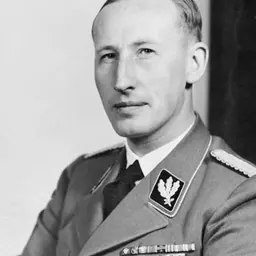
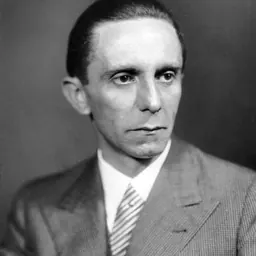


Related people
Same field, nearest in time






Contemporaries
People whose lives overlapped Leopold Gutterer's
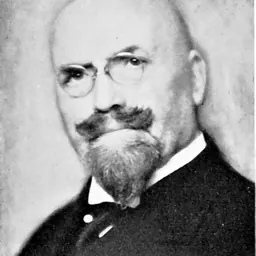


Frequently asked questions
Who was Leopold Gutterer?
German politician and journalist (1902-1996)
When was Leopold Gutterer born?
Leopold Gutterer was born on 25 April 1902 in Baden-Baden.
When did Leopold Gutterer die?
Leopold Gutterer died on 27 December 1996 in Aachen.
What was Leopold Gutterer's occupation?
Leopold Gutterer was a politician, journalist and secretary of state.
What nationality was Leopold Gutterer?
Leopold Gutterer was German.
Sources & further reading
Cite this page
APA: Biography.guide. (2026). Leopold Gutterer. https://biography.guide/leopold-gutterer/
MLA: "Leopold Gutterer." Biography.guide, https://biography.guide/leopold-gutterer/.
Chicago: "Leopold Gutterer." Biography.guide. https://biography.guide/leopold-gutterer/.
Data last updated: 2026-09-26 · Spot an error? Report a correction.
Page generated 2026-09-27 05:16 UTC