
About Leopold Blaustein
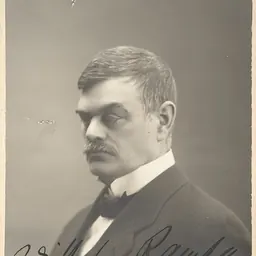
Lived 1905 – 1944 (aged 38–39). Leopold Blaustein was a Polish psychologist and aesthetician.
Leopold Blaustein (February 10 1905-1942/1944) was a Polish-Jewish philosopher, aesthetician, and psychologist. He was among the last generation of Kazimierz Twardowski's students and is also noted for his critique of Edmund Husserl's philosophy. His philosophical works are based on a combination of phenomenology and the analytical approach of the Lwów-Warsaw School of logic.
Blaustein is also cited as a pioneer in the description of mental reception of motion pictures and radio programs.
Background Leopold Blaustein was born in 1905 into a Polish-Jewish family. He was the son of Majer Blaustein, a Merchant and Rachel Blaustein née Landau. Leopold was educated in Lvov and studied philosophy and German philology at John Casimir University. He finished his education during his study visits in the city (1925) and in Berlin (1927-1928). There are also those who claim he committed suicide in 1944.
Works Twardowski exerted the most influence on Blaustein. One of the latter's most important work - Husserlian science: on the act, content and object of representations - was completed under his supervision. This work, which was published as a book in 1928, was divided into three: the historical reconstruction of the problem of the act, content, and object of presentations; the presentations of Husserl's theory; and, Blaustein's critique. One of his noted positions was his critique of Husserl's doctrine of constitution. He maintained that content is not dependent on consciousness but on the world. Blaustein also introduced a revised version of Ingarden's theory of purely intentional objects by adapting it to imaginative intuition. He maintained that an imaginative object is also an intentional object due to the following factors:
the imaginative object is founded on an imaginative presentation; it can be reproduced by aesthetic experience; and, it can become an object of derivative intentionality once it loses its connection with imaginative intuition. Blaustein's conceptualization is, however, differentiated from Ingarden's purely intentional objects based on his notion that the object is a strictly psychic phenomenon. His theory of aesthetic attitude holds that three kinds of perception have to be distinguished in our aesthetic commerce with various realms of art: perceptive, imaginative, and signitive ones. Each of these, for Blaustein, are different and applicable to different artistic realms.
Blaustein also posited that "concretization" is crucial in investigating an artistic work because its aesthetic perception assumes the form of one of its concretizations. His theory addressed concretization in three contexts:
in connection with ontological analyses dealing with the structure of different types of works of art; while investigating the process of getting acquainted with a literary work; and in connection with the aesthetic experience. In Przedstawienia Imaginatywyne, he described the objects represented in pictures as quasi-spatial objects for the spectators or objects that rest in its own space and independent of the space surrounding the spectator. This spatial conceptualization was described as peculiar, constituting a certain type of aperture in the spectator's space so that the space represented in the picture blends with the space occupied by the picture. Blaustein's magnum opus, Die ästhetische Perzeption, was completed in 1939 but was lost during World War II.
Blaustein was also one of the first to recognize the educational role of the cinema, treating it as a cultural institution capable of altering the views of its audience. Some of his works in this area include Representations of Imagination (1930), Schematic and Symbolic Representations (1931), and On the principles of humanistic psychology (1935).
Don’t just read it —
keep it.
Full-length biographies made to live with: read them, listen on the way to work, watch them tonight.
- E-book
- Audio
- Video
Instant download · yours to keep · every purchase keeps this site free
Important facts
People in Leopold Blaustein's life
Named in this biography and alive at the same time



Related people
Same field, nearest in time


Contemporaries
People whose lives overlapped Leopold Blaustein's


Frequently asked questions
Who was Leopold Blaustein?
Polish psychologist
When was Leopold Blaustein born?
Leopold Blaustein was born in 1905 in Lviv.
When did Leopold Blaustein die?
Leopold Blaustein died in 1944.
What was Leopold Blaustein's occupation?
Leopold Blaustein was a psychologist and aesthetician.
What nationality was Leopold Blaustein?
Leopold Blaustein was Polish.
Sources & further reading
· Wikipedia: Leopold Blaustein
Cite this page
APA: Biography.guide. (2026). Leopold Blaustein. https://biography.guide/leopold-blaustein/
MLA: "Leopold Blaustein." Biography.guide, https://biography.guide/leopold-blaustein/.
Chicago: "Leopold Blaustein." Biography.guide. https://biography.guide/leopold-blaustein/.
Data last updated: 2026-09-20 · Spot an error? Report a correction.
Page generated 2026-09-27 05:16 UTC