
About Leonidas C. Dyer
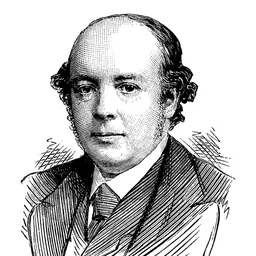
Lived 1871 – 1957 (aged 86). Leonidas C. Dyer was an American politician, lawyer and member of parliament.
Leonidas Carstarphen Dyer (June 11, 1871 – December 15, 1957) was an American politician, attorney, civil rights activist, and military officer. A Republican, he served eleven terms in the U.S. Congress as a U.S. Representative from Missouri from 1911 to 1933. In 1898, enrolling in the U.S. Army as a private, Dyer served notably in the Spanish–American War; and was promoted to colonel at the war's end.
Working as an attorney in St. Louis, Dyer started an anti-usury campaign and was elected to Congress as a Republican in 1910. As a progressive reformer, Dyer authored an anti-usury law in 1914 that limited excessive loan rates by bank lenders in the nation's capital, then still governed by Congress.
Horrified by the East St. Louis riots in 1917 and the high rate of reported lynchings in the South, Dyer introduced the Dyer Anti-Lynching Bill in 1918. In 1920, the Republican Party supported such legislation in its platform from the National Convention. In January 1922, Dyer's bill was passed by the House, which approved it by a wide margin due to "insistent countrywide demand". His father's family had roots in Virginia, where his uncle David Patterson Dyer was born; he was elected as a Republican Congressman from Missouri (1869–71).
Leonidas attended common schools and Central Wesleyan College. He studied law at Washington University in St. Louis, received his LL.B. degree in 1893, and was admitted to the bar.
Service in Spanish–American War When the Spanish–American War began, Dyer joined the United States Army and served in combat during the Santiago campaign as a private in 1898. He was promoted to colonel during the war, and served as a member of the staff of Herbert S. Hadley, future Governor of Missouri.
Anti-usury law Dyer continued his anti-usury campaign in 1914 by authoring a law that prevented banks from charging excessive interest rates on loans in Washington, D.C., which was then governed by Congress. Dyer believed that money lenders went after financially vulnerable people, authorizing loan contracts for unnecessary purposes. Dyer stated that usury was "an ancient moral crime against the poor and helpless."
Anti-lynching bill
St. Louis riots 1917
In May 1917, a riot broke out in St. Louis; white ethnic workers, out on strike, attacked black strikebreakers, brought in to replace them. In July, mob violence broke out in East St. Louis against blacks, also against a background of competition over jobs. Two white police officers were killed early in the confrontation. In retaliation, white mobs killed 35 blacks, mutilated the bodies, and threw them into the Mississippi River. White rioters openly targeted and lynched several blacks. Those who attempted to stop the lynchings were threatened by the white mob with physical violence. As blacks fled into St. Louis, white rioters threatened to kill them upon their return. White Illinois National Guardmen, sent to quell the riot either did nothing to stop the violence or participated in the attacks on the black community instead. One black child was shot and thrown into a burning building, while white prostitutes openly attacked black women. After the riots, of the 134 persons indicted, only nine whites who were put on trial went to prison while 12 indicted blacks who went to trial were imprisoned. Nearly one-third of the total 134 persons indicted were black. The conviction rate, mathematically, was more than doubled for blacks than for whites.
Dyer was distressed by such mob violence, with its disregard for the courts and the rule of law. His district in St. Louis had mostly African-American residents and he wanted to protect his constituents and other citizens. Many black people from his district had migrated to St. Louis from the South, in the exodus known as the Great Migration. They settled in St. Louis along with immigrants from southern and eastern Europe where industrialization had led to a strong economy and an increase in jobs.
Black leaders in the North had insisted that the Republican Party National platform for the presidential election of 1920 include support for anti-lynching legislation. After the election, the black community complained when months passed without Harding's getting a bill introduced and passed by Congress.
Dyer introduced a revised version of the bill in the House of Representatives in 1921. U.S. President Warren G. Harding, a Republican spoke in favor of Dyer's anti-lynching bill at an appearance in Birmingham, Alabama, and stated he would sign the bill if it was passed by the Senate. on January 26, 1922. Unable to vote, blacks were disqualified from serving on juries or holding any political office; they had virtually no political power within the official system. In the few cases that came to trial, all-white juries generally never convicted a white of lynching a black.
Proponents of Dyer's anti-lynching bill believed that lynching and mob violence took away African-American citizens' rights under the Fourteenth Amendment. These rights included a speedy and fair trial by an impartial jury. Other citizen rights included the right to be informed of the nature of the crime accused, the ability to have witnesses in the defense's favor, and to be represented by counsel in court. He was especially concerned about the clause that provided for federal authorities to punish state officials "remiss in the suppression of lynchings."
A prolonged filibuster by Southern white Democrats prevented consideration of the bill and defeated it. After the Democrats had held up voting on all the national business in the Senate for a week in December 1922 by their filibuster, the Republicans realized they could not overcome the tactic and finally conceded defeat on Dyer's bill.
Aftermath and legacy Following the defeat of his first bill in the Senate in 1922, Dyer tried unsuccessfully twice more to get it passed by the Senate. Rather, the murders of blacks were an extreme form of white extrajudicial punishment and community control, often targeting blacks who were economic competitors with whites, who were trying to advance in society, who were in debt to landowners (settlement season for sharecroppers was a time of high rates of lynchings in rural areas), or those who failed to "stay in their place". In 1919, according to the Pittsburgh Gazette Times, many Southerners viewed the practice of lynching as a sporting event.
In 1923, to gain national support for his anti-lynching bill, which was to be heard again that year in the Senate, Dyer toured the western United States to generate public support. His motto for his anti-lynching campaign was "We have just begun to fight." (This was the statement made famous by John Paul Jones.) Dyer attracted mixed black and white audiences in Denver, Portland, Los Angeles, Omaha, and Chicago. He thanked the National Association for the Advancement of Colored People (NAACP) for supporting his bill and praised their continuing to publicize the terrible human toll of lynching in the United States. In Chicago, 4000 people attended his anti-lynching rally. Dyer's campaign received positive coverage by the white mainstream press, which helped strengthen an anti-lynching movement in the West.
The national attention received by Dyer's anti-lynching bill and speaking campaign may have helped reduce lynchings in the South. More significantly, the Great Migration was underway, and black workers by the tens of thousands were leaving the South for Northern and Midwestern industrial cities, for jobs, education, and a chance to escape Jim Crow laws and violence. By 1934, when the Costigan-Wagner anti-lynching bill was introduced, lynchings had dropped to 15 per year.
Anti-automobile theft law In 1919, Dyer authored an anti-crime law that made transporting stolen cars across state borders a federal crime, to be prosecuted by federal law enforcement. In 1956, the FBI Director J. Edgar Hoover said that the law had led to the recovery of 227,752 stolen automobiles worth $212,679,296 (equivalent to $ billion in ). The Philippines were granted commonwealth status in 1935 and finally given independence in 1946.
Contraband liquor stock The New York Curb Exchange (NYCE) on April 10, 1929, had received a letter written by Dyer that demanded he be returned money after he had bought and sold at a loss Canadian whiskey company Hiram Walker stock. Dyer contended he did not know that the company made liquor, a contraband product in the U.S. during Prohibition and was forced to sell at a loss. He believed Hiram Walker and other company liquor stocks had been sold on the NYCE without acknowledgement that these were whiskey companies.
Dyer had voted against the Prohibition Eighteenth Amendment, the Volstead Act, the Volstead Act overriding presidential veto, and the Jones law. These laws authorized federal enforcement and essentially prohibited the sale of liquor in the United States. Both industries had been started and developed by German immigrants to the state. Prohibition would seriously damage the economies of Dyer's major city and state.
Terms and voting record Dyer served 11 terms in office for Missouri's 12th District. During his second term in office, on June 19, 1914, he was suspended from taking his seat in the House of Representatives due to contested voting election returns in 1912 in Missouri's 12th District. According to The New York Times, Dyer had nothing to do with the voting fraud. The House voted to unseat Dyer, who was active in legislative work, by a 147-to-98 vote. During the vote to oust Dyer, 22 Representatives voted "present", rather than give a vote for or against. By a 126 to 108 vote to replace Dyer, the House seated a Democrat, Michael J. Gill, who took the oath of office.
Gill served in the House from June 19, 1914, until March 3, 1915. He was defeated by Dyer in the 1914 elections.
TermYear startedYear ended
Dyer voted 1,556 times out of 2,035 Congressional roll calls. He missed voting 482 times, or 28%, in the Congressional time frame starting on April 5, 1911, and ending on March 1, 1933.
Retirement from public office Dyer ran unsuccessfully for re-election in 1932, 1934 and 1936, during the Great Depression. Dyer was buried in the Oak Grove Cemetery, in St. Louis.
Don’t just read it —
keep it.
Full-length biographies made to live with: read them, listen on the way to work, watch them tonight.
- E-book
- Audio
- Video
Instant download · yours to keep · every purchase keeps this site free
Important facts
People in Leonidas C. Dyer's life
Named in this biography and alive at the same time





Related people
Same field, nearest in time





Contemporaries
People whose lives overlapped Leonidas C. Dyer's


Frequently asked questions
Who was Leonidas C. Dyer?
American politician (1871-1957)
When was Leonidas C. Dyer born?
Leonidas C. Dyer was born on 11 June 1871 in Warren County.
When did Leonidas C. Dyer die?
Leonidas C. Dyer died on 15 December 1957 in St. Louis.
What was Leonidas C. Dyer's occupation?
Leonidas C. Dyer was a politician, lawyer and member of parliament.
What nationality was Leonidas C. Dyer?
Leonidas C. Dyer was American.
Sources & further reading
Cite this page
APA: Biography.guide. (2026). Leonidas C. Dyer. https://biography.guide/leonidas-c-dyer/
MLA: "Leonidas C. Dyer." Biography.guide, https://biography.guide/leonidas-c-dyer/.
Chicago: "Leonidas C. Dyer." Biography.guide. https://biography.guide/leonidas-c-dyer/.
Data last updated: 2026-09-20 · Spot an error? Report a correction.
Page generated 2026-09-27 05:20 UTC