
About Leonid Vainerman
Born 1946. Leonid Vainerman is a mathematician.
Leonid Iosifovich Vainerman (Ukrainian: Леонiд Йосипович Вайнерман; Russian: Леонид Иосифович Вайнерман; alternative spelling: Leonid Iosifovich Vaynerman; born November 15, 1946, in Kyiv, Ukraine) is a Ukrainian and French mathematician, professor emeritus at University of Caen Normandy. Vainerman's research results are in functional analysis, ordinary differential equations, operator theory, topological groups, Lie groups, and abstract harmonic analysis. Vainerman was a professor at Taras Shevchenko National University of Kyiv until 1992. He was a professor at International Solomon University from 1992 to 2002.
Visiting France, Belgium and Germany From 1992 to 1995, Vainerman was a visiting researcher at Pierre and Marie Curie University (Paris VI). During this appointment, he had fruitful collaborations with Michel Enock and Richard Kerner. In 1999, Vainerman was a visiting researcher at Katholieke Universiteit Leuven, where he had a fruitful collaboration with Stefaan Vaes. From 2000 to 2002, Vainerman was a visiting professor at the University of Strasbourg in France, where he organized a prominent meeting of theoretical physicists and mathematicians.
Permanent appointment in Caen Vainerman joined the University of Caen Normandy as an associate professor in Nicolas Oresme Mathematics Laboratory, He has been a professor emeritus at University of Caen Normandy since 2015. on generalizations of Pontryagin duality to non-commutative groups and developed the concept now known as Kac algebras (distinct from Kac-Moody algebras).
According to the French mathematician Alain Connes, The two teams independently developed a general Pontryagin duality theory for all locally compact groups. The contributions of both teams are covered in the 1992 book by Michel Enock and Jean-Marie Schwartz on Kac algebras. Per Alain Connes,
In his subsequent research, Vainerman obtained results on C*-algebras, Hopf algebras and quantum groups, as well as quantum hypergroups and quantum groupoids. Vainerman's research advanced the theory of quantum groups, including structural results on C*-algebraic quantum groups and their actions on operator algebras.
Scientific leadership
Vainerman organized a meeting at the University of Strasbourg February 21–23, 2002 that assembled theoretical physicists and mathematicians specializing in quantum group and quantum groupoid applications in quantum theories beyond the Standard Model. Vainerman edited the proceedings of the meeting and had them published as a book in 2003.
Don’t just read it —
keep it.
Full-length biographies made to live with: read them, listen on the way to work, watch them tonight.
- E-book
- Audio
- Video
Instant download · yours to keep · every purchase keeps this site free
Important facts
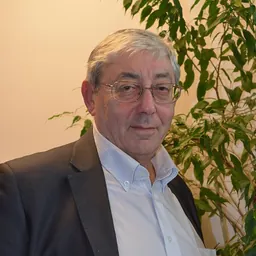
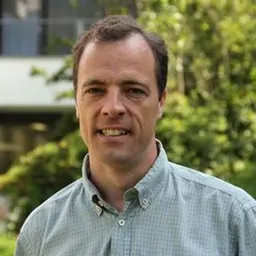
People in Leonid Vainerman's life
Named in this biography and alive at the same time


Related people
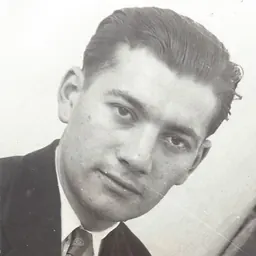
Same field, nearest in time
Contemporaries
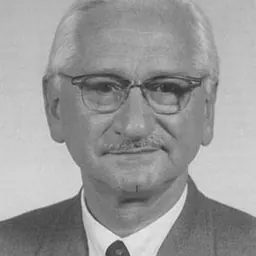
People whose lives overlapped Leonid Vainerman's


Frequently asked questions
Who is Leonid Vainerman?
mathematician (1946-)
When was Leonid Vainerman born?
Leonid Vainerman was born in 1946.
What is Leonid Vainerman's occupation?
Leonid Vainerman is a mathematician.
Sources & further reading
· DBpedia: Leonid I. Vainerman
Cite this page
APA: Biography.guide. (2026). Leonid Vainerman. https://biography.guide/leonid-vainerman/
MLA: "Leonid Vainerman." Biography.guide, https://biography.guide/leonid-vainerman/.
Chicago: "Leonid Vainerman." Biography.guide. https://biography.guide/leonid-vainerman/.
Data last updated: 2026-09-24 · Spot an error? Report a correction.
Page generated 2026-09-27 04:59 UTC