
About Leonid Shebarshin
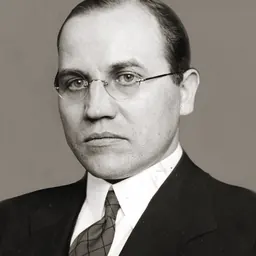
Lived 1935 – 2012 (aged 77). Leonid Shebarshin was a Russian diplomat and spy.
Leonid Vladimirovich Shebarshin (; 24 March 1935 – 30 March 2012) was an intelligence officer and spy for the Soviet Union. He served in the First Chief Directorate (FCD), the foreign intelligence arm of the KGB. In January 1989, he was promoted to the head of the FCD when his former boss, Vladimir Kryuchkov, was promoted to KGB chief. Prior to that Shebarshin had served as Kryuchkov's deputy from April 1987.
Early life After graduating in 1952 from high school with a silver medal, Shebarshin entered the Department of Indian Languages at the Moscow Institute of Oriental Studies. In 1954, the institute was integrated with the Moscow State Institute of International Relations, also known as MGIMO. It was there that Shebarshin continued his studies.
In 1957, he married a classmate, Nina Vassilyevna Pushkina, a student of Chinese languages. Upon graduation, in October 1958, he was assigned to work at the Soviet embassy in Pakistan. In 1962, he was promoted to the post of third secretary of the embassy and got a position at the department of South-East Asian Affairs of the USSR.
Pakistan In 1962, Shebarshin was invited to join the First Chief Directorate, where he began a new career in the rank of second lieutenant and security officer. After a year of training at an intelligence school, he was sent to work in Pakistan under diplomatic status.
At the time, Pakistan's participation in military-political blocs CENTO and SEATO, its close ties with the United States, conflict with neighboring India, and rapprochement with China made the Pakistan branch important for the Soviet intelligence. The acquisition of sources in U.S. facilities around Pakistan was of utmost importance to the KGB. At the time, the region was a large American colony in India, hosting military advisers, diplomats, spies, journalists, and other important operators.
At the initiative of the Soviet Union, Pakistani President Ayub Khan and Indian Prime Minister Lal Bahadur Shastri met in January 1966 in Tashkent to end the Indo-Pakistani War of 1965. This was a major diplomatic success for the Soviet delegation, headed by Alexei Kosygin. Shebarshin was promoted for contributing to the preparation for the negotiations. Shebarshin's supervisors later stated that he "achieved concrete results in the recruiting work," hinting that he bribed intelligence agents and acquired information.
India In 1968, Shebarshin returned to Moscow and took a year-long training course for managerial staff. In early 1971, he was sent by the KGB to India, and in 1975, he was appointed as rezident.
While Shebarshin was on the trip, there was another Indo-Pakistani War, which ended with the division of Pakistan and the secession of East Pakistan as Bangladesh, along with a state of emergency in India. Activities of American representatives in India required the close attention of the Soviet intelligence team; for decades, the United States remained the main opponent of the Soviet Union. India's relations with China were also important during that period. Shebarshin's residency in the key areas was assessed positively by the political leadership of the USSR.
Iran Shebarshin's six-year trip to India ended in April 1977. In late 1978 he received orders to prepare to work in Pahlavi Iran, and he arrived in May 1979. By this time, Soviet intelligence connections with Iranian officials had degraded, due in part to counterintelligence operations carried out by SAVAK, the secret police of the Iranian monarchy.
Shebarshin eventually arrived after the fall of the monarchy in Iran, when the Shah, Mohammad Reza Pahlavi, fled the country in January 1979. Ayatollah Khomeini returned to Iran the same year and received national recognition with the title of Imam. The Iranian Revolution marked an unprecedented intensification of internal political turmoil, which degenerated into armed clashes and numerous acts of terror, undertaken by all contending parties.
Soviet reaction to these events were mixed. They lost an ally and customer in the Shah, but the early stages of the revolution were seen as an opportunity to form a progressive coalition in the resulting power vacuum. The KGB quietly supported the communist Tudeh Party of Iran, helping the group form a united "progressive front" alongside other leftist groups. Initially, the USSR and Tudeh supported the religious leaders who came to power in Iran, hoping that their rule might give way to a more progressive movement afterwards. Since the broader Iranian leftist groups were reluctant to collaborate with the Tudeh Party, the KGB's role in subsequent years was limited to preventing covert links between CPSU International department and the Tudeh.
He served for a single day. RSFSR President Boris Yeltsin objected to the appointment and demanded a new candidate. He was replaced by Vadim Bakatin, whose job was essentially to dismantle the KGB. Shebarshin returned to his post as FCD head until Bakatin announced a new FCD deputy director, Vladimir Rozhkov, without consulting him. Shebarshin resigned from his post on 20 September 1991.
Shebarshin was awarded the Order of the Red Banner (1981) and the Order of the Red Star (1970). He also earned badges "For Service of Intelligence" (1967) and "Honorary State Security Officer" (1972).
With his friend, Nikolai Leonov, Shebarshin founded a consulting firm in 1991, the Russian National Economic Security Service (RNESS) , which is based in Moscow and was part of the structures associated with Alex Konanykhin during its first year of existence.
At the age of 77, Shebarshin took his own life by shooting himself at his home in Moscow. By that time, he had survived a stroke which led to complete blindness. According to his friends and colleagues, he suffered serious illnesses, which may have motivated his suicide.
Don’t just read it —
keep it.
Full-length biographies made to live with: read them, listen on the way to work, watch them tonight.
- E-book
- Audio
- Video
Instant download · yours to keep · every purchase keeps this site free
Important facts
People in Leonid Shebarshin's life
Named in this biography and alive at the same time
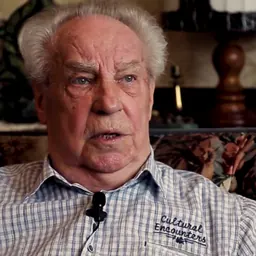
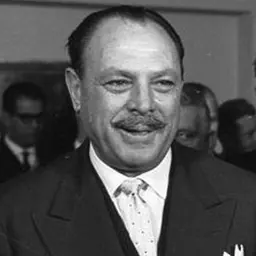
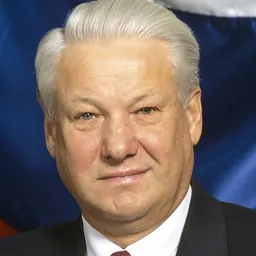


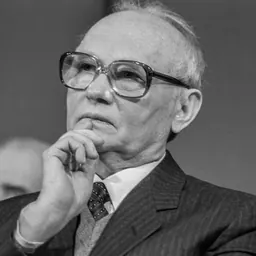

Related people
Same field, nearest in time
Contemporaries
People whose lives overlapped Leonid Shebarshin's


Frequently asked questions
Who was Leonid Shebarshin?
Soviet intelligence chairman (1935–2012)
When was Leonid Shebarshin born?
Leonid Shebarshin was born on 24 March 1935 in Moscow.
When did Leonid Shebarshin die?
Leonid Shebarshin died on 30 March 2012 in Troyekurovskoye cemetery.
What was Leonid Shebarshin's occupation?
Leonid Shebarshin was a diplomat and spy.
What nationality was Leonid Shebarshin?
Leonid Shebarshin was Russian.
Sources & further reading
· Wikipedia: Leonid Shebarshin
Cite this page
APA: Biography.guide. (2026). Leonid Shebarshin. https://biography.guide/leonid-shebarshin/
MLA: "Leonid Shebarshin." Biography.guide, https://biography.guide/leonid-shebarshin/.
Chicago: "Leonid Shebarshin." Biography.guide. https://biography.guide/leonid-shebarshin/.
Data last updated: 2026-09-20 · Spot an error? Report a correction.
Page generated 2026-09-27 04:57 UTC