
About Leonard Woolsey Bacon
Lived 1830 – 1907 (aged 77). Leonard Woolsey Bacon was an American cleric, biographer and theologian.
Leonard Woolsey Bacon (January 1, 1830 – May 12, 1907 ) was an American clergyman, born in New Haven, Connecticut. He was a social commentator and a prolific author on religious, social, and historical matters. In social, political, and religious issues of his times, he often broke with the traditions of his countrymen, sometimes causing "great sensation." and Edward Woolsey Bacon, and a half-brother of Thomas Rutherford Bacon of New Haven, Connecticut, all Congregational preachers. He graduated from Yale University in 1850, and in 1856 was ordained in Litchfield. He was also pastor of the First Church in Stamford, Connecticut (1862–65), and of the New England Congregational Church in Brooklyn, New York (1865–70).
Subsequently, he spent several years in Europe, chiefly in Geneva, as a student, preacher, and writer; in Geneva he spent part of his time preaching to "Americans sojourning there." In 1898, he was pastor of the First Church in Litchfield, Connecticut. He died at Assonet, May 12, 1907, and was buried in Grove Street Cemetery, New Haven, Connecticut.
Controversial statements Bacon evidently enjoyed getting involved in contemporary issues, such as divorce, temperance, Sunday rest, and the public conduct of officers of the United States armed forces. In many of these matters, however, he displayed a reluctance to impose religious views. When, in 1880, he wrote an open letter to The New York Times complaining about a steamboat company that evaded Connecticut's blue laws, he made it clear that laws mandating Sunday as a mandatory day of rest were not to be construed as endorsing any particular religion or discriminating "in favor of church-going."
Bacon appeared to have had a habit of causing controversy. In 1884, for instance, he felt compelled, in another letter to the Times, to state that contrary to reports he was in favor of "a uniform, universal divorce law throughout the States." In 1887, when he was the pastor of the Independent Presbyterian Church in Savannah, he caused a stir by publicly declaring that he favored mixed (black and white) schools and that he would not mind his daughter being seen walking with an African American or even marrying one.
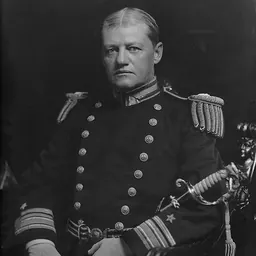
In 1898, as pastor in Litchfield, Connecticut, he wrote a letter published in The New York Times chastising Captain Robley Dunglison Evans (known as "Fighting Bob"), later admiral in the United States Navy, for boasting and profanity. Evidently this was part of a feud of sorts; the Chicago Daily Tribune reported on the news saying that Bacon "again fell foul" of "Fighting Bob" with his "sarcastic letter."
Bacon's writing Bacon edited Luther's Deutsche geistliche Lieder ("German Hymns") (New York, 1883), and wrote a number of historical and other books.
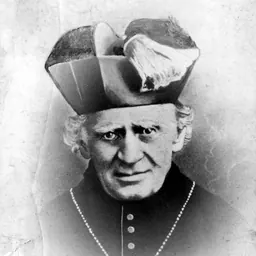
An Inside View of the Vatican Council Bacon republished, with commentary, the speech of Peter Richard Kenrick, Archbishop of St. Louis, given in 1871 at the First Vatican Council; Kenrick spoke out against the dogma of papal infallibility. The booklet contains Kenrick's speech and other historical documents, as well as Bacon's own "acute and valuable remarks."
Church Papers His Church Papers: Sundry Essays on Subjects Relating to the Church and Christian Society (1877), written while Bacon was in Geneva, was praised in the New Englander and Yale Review as a "juicy little volume"; the reviewer hailed the merit and attractiveness of the essays, which are "the product of sound reflection, and of a familiarity not only with books, but with men and things." Irenics and Polemics, with Sundry Essays in Church History (1898) A History of American Christianity (1898) Young People's Societies (with C. A. Northrup, 1900) The Congregationalists (1904)
Don’t just read it —
keep it.
Full-length biographies made to live with: read them, listen on the way to work, watch them tonight.
- E-book
- Audio
- Video
Instant download · yours to keep · every purchase keeps this site free
Important facts
People in Leonard Woolsey Bacon's life
Named in this biography and alive at the same time



Related people
Same field, nearest in time



Contemporaries
People whose lives overlapped Leonard Woolsey Bacon's



Frequently asked questions
Who was Leonard Woolsey Bacon?
American clergyman (1830-1907)
When was Leonard Woolsey Bacon born?
Leonard Woolsey Bacon was born on 1 January 1830 in New Haven.
When did Leonard Woolsey Bacon die?
Leonard Woolsey Bacon died on 12 May 1907 in Assonet, Massachusetts.
What was Leonard Woolsey Bacon's occupation?
Leonard Woolsey Bacon was a cleric, biographer and theologian.
What nationality was Leonard Woolsey Bacon?
Leonard Woolsey Bacon was American.
Sources & further reading
· Wikipedia: Leonard Woolsey Bacon
· DBpedia: Leonard Woolsey Bacon
Cite this page
APA: Biography.guide. (2026). Leonard Woolsey Bacon. https://biography.guide/leonard-woolsey-bacon/
MLA: "Leonard Woolsey Bacon." Biography.guide, https://biography.guide/leonard-woolsey-bacon/.
Chicago: "Leonard Woolsey Bacon." Biography.guide. https://biography.guide/leonard-woolsey-bacon/.
Data last updated: 2026-09-26 · Spot an error? Report a correction.
Page generated 2026-09-27 05:15 UTC