
Leonard Stein
American conductor and musicologist
About Leonard Stein
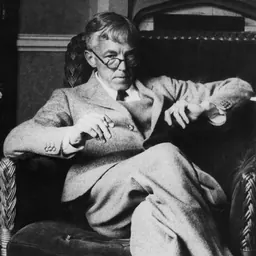
Lived 1916 – 2004 (aged 87–88). Leonard Stein was an American conductor, musicologist, university teacher and pianist.
Leonard David Stein (December 1, 1916 – June 23, 2004) was an American musicologist, pianist, conductor and university teacher. He was influential in promoting contemporary music on the American West Coast. He was for years Arnold Schoenberg's assistant, music director of the Schoenberg Institute at USC, and among the foremost authorities on Schoenberg's music. He was also an influential teacher in the lives of many younger composers, such as the influential minimalist La Monte Young.
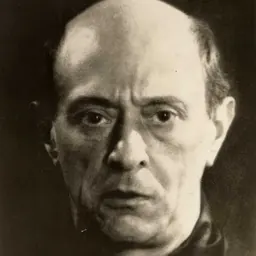
Life Stein studied piano under the Busoni disciple Richard Buhlig at Los Angeles City College, and composition and theory under Schoenberg at University of Southern California (1935–36) and University of California, Los Angeles (UCLA) (BA: 1939, MM: 1941, MA: 1942). Stein was an assistant to Schoenberg at UCLA from 1939 until Schoenberg's retirement in 1942. Thereafter until Schoenberg's death nine years later Stein was his personal assistant, working closely with Schoenberg on the editing of his scores, and later, completing four of Schoenberg's posthumously published theoretical writings pertaining to counterpoint, harmony, and composition, including an extended compilation to the second edition (1975) of Schoenberg's thought (Style and Idea). Lawrence Schoenberg, the youngest of Schoenberg's children, considered Stein the most important advocate of Schoenberg's music.
While working as an adjunct professor, Stein was the music director of the Schoenberg Institute at USC from 1975 to 1991, where he played a seminal role in promoting Schoenberg's music and his legacy to the American public by also organizing seminars and performing in concerts devoted to Schoenberg and new music.
Publications
Author 1963. "The Performer's Point of View". Perspectives of New Music 1, no. 2 (Spring): 62–71. 1963. "New Music on Mondays". Perspectives of New Music 2, no. 1 (Autumn–Winter): 142–150. 1965. Stein, Leonard David. The Performance of Twelve-Tone and Serial Music for the Piano. DMA diss. Los Angeles: University of Southern California. 1978. "From Inception to Realization in the Sketches of Schoenberg". In Internationale Schönberg-Gesellschaft: Bericht über den 1. Kongreß der Internationalen Schönberg-Gesellschaft: Wien, 4.–9. Juni 1974, edited by Rudolf Stephan, 213–27. Publikationen der Internationalen Schönberg-Gesellschaft 1. Vienna: Lafite. 1986. "Schoenberg and 'kleine Modernsky. In Confronting Stravinsky: Man, Musician, and Modernist, edited by Jann Pasler, 310–324. Berkeley and Los Angeles: University of California Press. (cloth); (pbk). 1987. "Busoni e Schonberg: op. 11 n. 2 come emblema di un rapporto". In La trascrizione Bach e Busoni: atti del Convegno internazionale (Empoli-Firenze, 23–26 ottobre 1985), edited by Talia Pecker Berio, 105–128. Quaderni della Rivista italiana di musicologia 18. Florence: L.S. Olschki.
Editor 1963. Arnold Schoenberg. Preliminary Exercises in Counterpoint. London: Faber and Faber. Reprinted New York: St. Martin's Press, 1964. 1967. Arnold Schoenberg. Fundamentals of Musical Composition, edited by Gerald Strang, with the collaboration of and an introduction by Leonard Stein. New York: St. Martin's Press. Reprinted London: Faber and Faber, 1970. 9780571092765 1969. Arnold Schoenberg: Structural Functions of Harmony, second edition, with corrections. New York: W. W. Norton; London: Benn. (Norton, cloth); (Norton, pbk); (Benn, cloth); (Benn, pbk). 1972. Arnold Schoenberg. Models for Beginners in Composition: Syllabus, Music Examples, and Glossary, revised edition, Los Angeles: Belmont Music Publishers. 1975. Arnold Schoenberg. Style and Idea, revised edition. New York: St. Martin's Press. 1975. "Schoenberg: Five Statements", edited by Leonard Stein. Perspectives of New Music 14, no. 1 (Fall–Winter): 161–173. 1988. From Pierrot to Marteau: An International Conference and Concert Celebrating the Tenth Anniversary of the Arnold Schoenberg Institute, University of Southern California School of Music, March 14–16, 1987. Los Angeles: Arnold Schoenberg Institute.
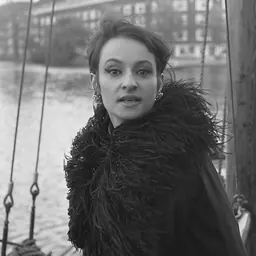
Discography Donald Erb. Music for Instruments and Electronic Sounds: Reconnaissance; In No Strange Land. Reconnaissance performed by Bonnie Douglas, violin; Rand Forbes, double-bass; Ralph Grierson, piano; Kenneth Watson, percussion; Michael Tilson Thomas, Moog synthesizer; Leonard Stein, Moog polyphonic instrument; Donald Erb, conductor. LP recording. 1 sound disc: analog, 33⅓ rpm, stereo.; 12 in. Nonesuch H-71223. New York: Nonesuch Records, 1969. Arnold Schoenberg. Brettl-Lieder. Marni Nixon, soprano; Leonard Stein, piano. LP recording, 1 disc.; 33⅓ rpm. stereo.; 12 in. RCA Red Seal ARL1-1231. [New York]: RCA Red Seal, 1975. Hindemith-Gross: Violin Sonatas. Robert Gross, violin; Mike Reese, piano; Leonard Stein, piano. Recorded: New York, New York City Center, 1944 and 1945. LP recording: 1 disc, 33⅓ rpm. mono. TownHall S32. Santa Barbara: TownHall Records, 1982. Joan La Barbara: Singing Through: Vocal Compositions by John Cage. With William Winant, percussion; Leonard Stein, pianist. CD recording. 1 sound disc: digital; 4¾ in. New Albion Records NA 035. San Francisco: New Albion Records, 1990. John Cage at Summerstage. Joan La Barbara, soprano; William Winant, percussion; Leonard Stein, piano, whistles, voice, and percussion. Recorded at John Cage's last concert given in New York's Central Park, 23 July 1992. CD recording. 1 sound disc: digital; 4¾ in. Music & Arts CD-875. Berkeley, California: Music & Arts, 1995.
Don’t just read it —
keep it.
Full-length biographies made to live with: read them, listen on the way to work, watch them tonight.
- E-book
- Audio
- Video
Instant download · yours to keep · every purchase keeps this site free
Important facts
People in Leonard Stein's life
Named in this biography and alive at the same time




Related people
Same field, nearest in time



Contemporaries
People whose lives overlapped Leonard Stein's





Frequently asked questions
Who was Leonard Stein?
American conductor and musicologist (1916–2004)
When was Leonard Stein born?
Leonard Stein was born on 1 December 1916 in Los Angeles.
When did Leonard Stein die?
Leonard Stein died in 2004 in Providence Saint Joseph Medical Center.
What was Leonard Stein's occupation?
Leonard Stein was a conductor, musicologist, university teacher and pianist.
What nationality was Leonard Stein?
Leonard Stein was American.
Sources & further reading
· DBpedia: Leonard Stein (musicologist)
Cite this page
APA: Biography.guide. (2026). Leonard Stein. https://biography.guide/leonard-stein/
MLA: "Leonard Stein." Biography.guide, https://biography.guide/leonard-stein/.
Chicago: "Leonard Stein." Biography.guide. https://biography.guide/leonard-stein/.
Data last updated: 2026-09-20 · Spot an error? Report a correction.
Page generated 2026-09-27 05:03 UTC