
About Leonard Rotter
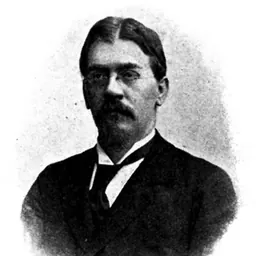
Lived 1895 – 1963 (aged 67). Leonard Rotter was a sculptor and painter.
Leonard Rotter (September 14, 1895, Vienna-Floridsdorf - July 14, 1963, Prague) was a Czech sculptor, woodcarver, and watercolour painter.
He is distinct from the landscape painter who signed as L. B. Rotter from Uherské Hradiště, whose oil paintings are often presented in auctions under the identity of Leonard Rotter.
Biography
Early life Young sculptor Leonard Rotter, standing next to his absolvent work, a portrait of a woman. Leonard (Leonhard) Rotter was born on September 14, 1895, in Floridsdorf (Austria), which later became a part of Vienna, to Leonhard and Albine Rotter. In 1900, the family moved to Prague (Czech Republic). He was trained as a woodcarver by František Liška (1909—1912) and later studied at the State Technical School in Prague under professors Jan Maudr and Alois Bouda. Between 1914 and 1917 he studied sculpture at the School of Applied Arts in Prague under the guidance of professors Ludvík Wurzel, Štěpán Zálešák, and Josef Drahoňovský, where he focused on portraits and busts.
From World War I to World War II During the First World War, Leonard Rotter was seriously injured as a soldier resulting in severe nerve damage. After the end of the war he returned to Prague to continue in sculpture art. He started to work independently, initially in a provisional studio situated in a laundry and later in his own studio in Hradčany in Na Valech.
In 1926 the sculptor settled with his family in Žižkov and moved his studio first to Dlouhá Street; later moving to the Old Town to the Kinský Palace. However, he had to vacate after the Nazi occupation of Czechoslovakia in 1939. He acquired a new space in the Tyrš House in Malá Strana, where he worked until his death in 1963. and 1925/1926, respectively, as well as a portrait of the prominent Czech Egyptologist Professor František Lexa. He also created portraits of historical figures, such as the 17th century's Czech revolutionary leader Jan Sladký Kozina, and many others.
Since the beginning of his artistic career, free creation has remained the core of his work - he created a number of smaller sculptures with philosophical themes such as Eternal Question, Life and Love, Desire, Twilight, and others. He also cooperated with a Czech lodge of Freemasons and created for them several works with the symbolism of order.
His red marble (slivenec) statue of the Czech poet Karel Hynek Mácha, based on several designs created for the Society for the Restoration of Karel Hynek Mácha's Memorial, was elevated and ceremonially unveiled in 1936 at the north coast of the Mácha Lake in Staré Splavy near Doksy, on the top of Jarmilina skála, the rock where Jarmila, one of the main figures in the poet's most famous work - Máj, jumped into the lake and ended her life. In 1939, however, the statue was torn down by Sudeten German Party (Sudetendeutsche Heimatfront of Konrad Henlein) during the fascist occupation of the area. Later, it was requested by Bělá pod Bezdězem and relocated further from the lake on top of Hůrka, where it remains until today, although the locality does not have the original context to the Society's intent. The original design is now stored in the Museum in Česká Lípa.
In 1937, his 2.5 meter-high clay sculpture of a blacksmith was installed on the front of the house of a famous Czech engineer, Emil Kolben, at his residence in Břevnov at the street Na Vypichu (today's Bělohorská No. 1202) . The statue was destroyed during the reconstruction of the house in 1979.
Fine art and watercolours In the late thirties (1930s), Leonard Rotter embraced the technique of watercolour, as the demand of plastic art generally declined due to the difficult war times. His watercolour paintings mostly depicted various alleys and monuments of Prague. He dedicated many years to create paintings of the Convent of St. Agnes. In 2011, an exhibition of Leonard Rotter's aquarelles depicting Prague Kampa quarter was held in Komunitní centrum Kampa 2015, Gallery of Česká Lípa, Memorial of K. H. Mácha, Doksy
Selection of works Desire, 1940s
Eternal question, 1940s
Life and Love, 1930s
Twilight, 1930s
Globus
K. H. Mácha, 1936
Blacksmith, 1937
Emil Zátopek
Convent of St. Agnes, 1959
Prague Venice, 1959
Funambulists at St. Castulus, 1949
References and sources
Don’t just read it —
keep it.
Full-length biographies made to live with: read them, listen on the way to work, watch them tonight.
- E-book
- Audio
- Video
Instant download · yours to keep · every purchase keeps this site free
Important facts
People in Leonard Rotter's life
Named in this biography and alive at the same time

Related people
Same field, nearest in time

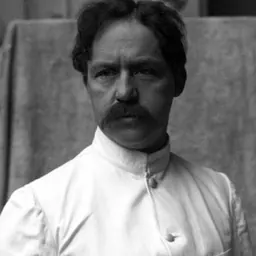
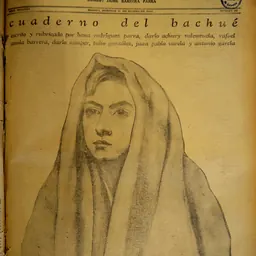



Contemporaries
People whose lives overlapped Leonard Rotter's
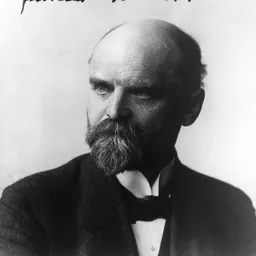
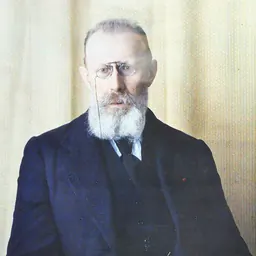

Frequently asked questions
Who was Leonard Rotter?
Czech painter, sculptor and artist (1895-1963)
When was Leonard Rotter born?
Leonard Rotter was born on 14 September 1895 in Vienna.
When did Leonard Rotter die?
Leonard Rotter died on 14 July 1963 in Prague.
What was Leonard Rotter's occupation?
Leonard Rotter was a sculptor and painter.
Sources & further reading
Cite this page
APA: Biography.guide. (2026). Leonard Rotter. https://biography.guide/leonard-rotter/
MLA: "Leonard Rotter." Biography.guide, https://biography.guide/leonard-rotter/.
Chicago: "Leonard Rotter." Biography.guide. https://biography.guide/leonard-rotter/.
Data last updated: 2026-09-25 · Spot an error? Report a correction.
Page generated 2026-09-27 05:10 UTC