
About Léonard Bourdon
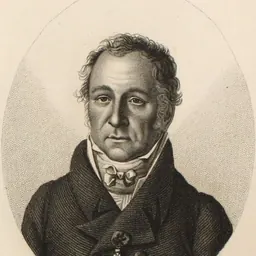
Lived 1754 – 1807 (aged 52). Léonard Bourdon was a French politician, lawyer, headmaster in France, administrator, pedagogue and prosecutor.
Louis Jean Joseph Léonard Bourdon de la Cronière (6 November 1754, Alençon – 29 May 1807, Breslau) was a French politician of the French Revolution. He was president of the National Constituent Assembly and substitute for the procureur of the Commune de Paris.
Despite his depiction in the traditional historiography, where he is presented as "a fanatical Montagnard, a fierce terrorist, a violent man, thirsty for blood, corrupt and decadent", he is depicted more sympathetically by modern historians.
Biography He was born in 1754 in Alençon, Normandy, in the large family of a wealthy administrative officer who was among the king's advisers. He studied law in Orleans and in 1779 achieved the position of avocat aux conseils, a lawyer with the right of representing litigants before the Council of State and Court of Cassation. In 1785, he settled in the Faubourg Saint-Marcel quarter of Paris, ceasing any activity as a lawyer.
In 1788 he publishes a pamphlet called Plan d’un établissement d’éducation nationale, which lays out his plans for various educational reforms. This made him the recipient of the royal letters patent placing him in charge of a new learning institution, the Société Royale d'Émulation, which closed down after only two years.
He was elected to the Estates General of 1789, where he continued his educational proselytism, proposing a national education plan, both in the Paris department and in the new legislative assembly. In the committee of public education he supported a new plan of national public instruction. He also submitted an economic project of "granaries of plenty", to fight against food scarcity and speculation on the grain and flour trade.
As the tension within the Jacobins mounted towards height of the Reign of Terror, he fell out of grace with Robespierre, who denounced him as an "intriguer despised by all".
During the Thermidor Reaction, he joined in the actions that lead to the arrest and execution of Robespierre, but this crisis was also the end of his political career. In April 1795 he was arrested as a conspirator and imprisoned in the fortress of Ham. He was released in October 1795, as part of an amnesty.
For the next few years, he would be entrusted several small administrative or diplomatic jobs, while he was still trying to propose a reform of education. Finally, in 1800 he abandoned these plans and managed to join the board of directors of the Toulon military hospital.
This position led him in the wake of the Grand Armée, as director of military hospitals, to Breslau (now Wrocław, Poland), where he died on May 29, 1807.
Don’t just read it —
keep it.
Full-length biographies made to live with: read them, listen on the way to work, watch them tonight.
- E-book
- Audio
- Video
Instant download · yours to keep · every purchase keeps this site free
Important facts
Related people
Same field, nearest in time



Contemporaries
People whose lives overlapped Léonard Bourdon's





Frequently asked questions
Who was Léonard Bourdon?
French politician (1754-1807)
When was Léonard Bourdon born?
Léonard Bourdon was born on 6 November 1754 in Alençon.
When did Léonard Bourdon die?
Léonard Bourdon died on 29 May 1807 in Wrocław.
What was Léonard Bourdon's occupation?
Léonard Bourdon was a politician, lawyer, headmaster in France, administrator, pedagogue and prosecutor.
What nationality was Léonard Bourdon?
Léonard Bourdon was French.
Sources & further reading
Cite this page
APA: Biography.guide. (2026). Léonard Bourdon. https://biography.guide/leonard-bourdon/
MLA: "Léonard Bourdon." Biography.guide, https://biography.guide/leonard-bourdon/.
Chicago: "Léonard Bourdon." Biography.guide. https://biography.guide/leonard-bourdon/.
Data last updated: 2026-09-20 · Spot an error? Report a correction.
Page generated 2026-09-27 05:19 UTC