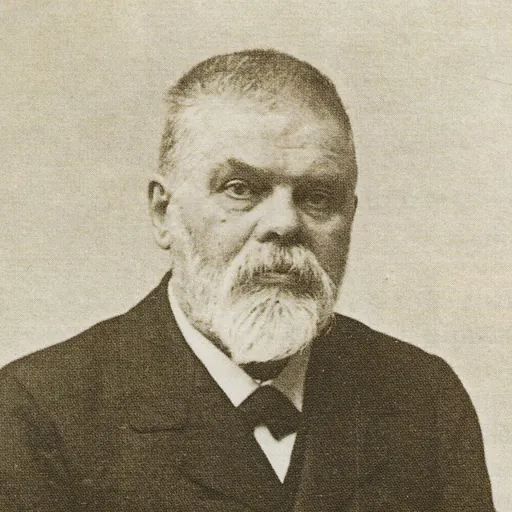
About Leon Warnerke
Lived 1827 – 1900 (aged 73). Leon Warnerke was a Russian photographer, inventor and engineer.
Leon Warnerke (26 May 1837 – 7 October 1900) was a Polish civil engineer and inventor in the field of photography, independence activist, revolutionary and successful forger. Leon Warnerke was a pseudonym; his real name was Władysław Małachowski.
Early career
Małachowski was born in the Kobryń district of the Grodno Governorate in the Russian Empire to Julian Malachowski and Theophilia . Whilst his date of birth is unconfirmed, sources have referred to 1827, 1830 and 1839. Małachowski, whilst using the name Warnerke, claimed to have been born in Weißkirchen in the Austrian Empire, on the 27 May 1837. He graduated from the Institute of Communication Engineers in St. Petersburg in 1859, then worked in Vilnius on the construction of the Petersburg-Warsaw Railway. In 1863 he joined the January Uprising and then became a member of the National Government in Vilnius. After the collapse of the uprising, the police, on the orders of general M. Murawjow, issued an arrest warrant for Małachowski with a reward of 10 thousand zlotys, as a result of which he was forced to flee the country. He escaped with his wife on board an English ship to Great Britain, carrying a false passport in the name of Warnerke. Around 1870, he settled with his wife and daughter in London, and under a changed name - Leon Warnerke, began research and design in the field of photography. He lived in both London and St Petersburg, establishing a factory, the "Photographic Laboratory Varnerke and Co.", St. Petersburg, at 31 Voznesensky Ave., which manufactured his photographic materials.
Inventor
Roll film
Warnerke is credited in 1875 with discovering the tanning effect of pyrogallic acid when used in the development of collodion, and an improvement of "dry" collodion emulsion, which he poured on a paper substrate in the form of a film layer. He covered the smooth tissue paper successively with several layers of pure collodion and a solution of gum arabic, which through the formed a base for a photosensitive collodion or gelatin emulsion thick enough to be easily separated from the paper and permanently transferred to a moistened glass plate. The negative thus obtained could be used to make a positive, just like a glass negative. This photosensitive material was produced by Warnerke's own company in sheets and rolls, from which rolls were cut into 100 photos for a single loading. Though, Warnerke achieved satisfactory results, the high production costs mitigated against greater than moderate commercial success.
In 1875, Warnerke constructed a camera equipped with a special cassette for the film he produced in loads of 100 photos. A monorail bellows camera, it was one of the first cameras in the world that permitted taking such a large number of photos on a single load. Warnerke's construction was 9 years ahead of the 1884 invention of roll film by George W. Eastman and Fr. Hannibal Goodwin. Warnerke's camera had a small window of orange glass in the rear wall through which could be read the number of the negative's frame and position each precisely as the film was wound through; a device commonly used in later, modern cameras.
In 1881, Warnerke constructed another model of a photographic film camera, this time reduced to 40 negatives. The film used in this model was perforated with small holes at intervals of one shot. Because the sensitive gelatin emulsion had no paper backing, the orange window had to be replaced in this model with a tiny alarm bell triggered by an electrical contact being made through the perforations, which sounded after each frame moved to the appropriate point for taking a photo. The battery was inside the film roll. Warnerke's idea was later used by Eastman's company.
Sensitometry Warnerke's achievements include the sensitometer, the first effective means of measuring plate speed, developed in 1880, which in the following year was recognized as a standard by a special commission and became the basis for standardisation in the field of photosensitive materials. A reliable speed rating number for a given emulsion could be calculated against the known sensitivity of a collodion plate. Apart from his inventive and entrepreneurial activity, Warnerke maintained contacts with other designers and inventors in the field of photography, or the Gabriel Lippmann interference method.
Forger Warnerke was a successful forger of several eastern European currencies, Russian roubles in particular, for which he was charged in Marseilles, though not convicted. His supposed death in 1900 at the age of 63 he may also have faked to avoid arrest.
Legacy
In the 1990s a previously unknown archive of Warnerke's correspondence, forgeries, and personal documents was discovered by workers demolishing a building in London. The collection was subsequently split into two parts and auctioned by Phillips and Spink in 1991 and 2008 respectively.
Awards Malachowski was awarded the Progress Medal of the Photographic Society of Great Britain (known as Royal Photographic Society today) in 1882.
Don’t just read it —
keep it.
Full-length biographies made to live with: read them, listen on the way to work, watch them tonight.
- E-book
- Audio
- Video
Instant download · yours to keep · every purchase keeps this site free
Important facts
People in Leon Warnerke's life
Named in this biography and alive at the same time


Related people
Same field, nearest in time

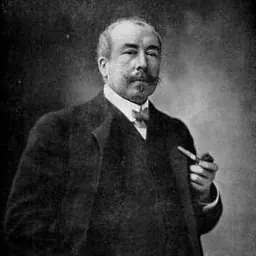
Contemporaries
People whose lives overlapped Leon Warnerke's
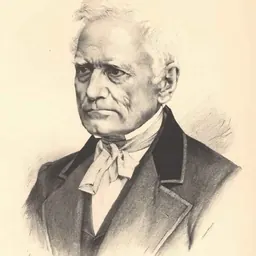




Frequently asked questions
Who was Leon Warnerke?
English inventor
When was Leon Warnerke born?
Leon Warnerke was born on 26 May 1827 in Macy.
When did Leon Warnerke die?
Leon Warnerke died on 7 October 1900 in Geneva.
What was Leon Warnerke's occupation?
Leon Warnerke was a photographer, inventor and engineer.
What nationality was Leon Warnerke?
Leon Warnerke was Russian.
Sources & further reading
Cite this page
APA: Biography.guide. (2026). Leon Warnerke. https://biography.guide/leon-warnerke/
MLA: "Leon Warnerke." Biography.guide, https://biography.guide/leon-warnerke/.
Chicago: "Leon Warnerke." Biography.guide. https://biography.guide/leon-warnerke/.
Data last updated: 2026-09-22 · Spot an error? Report a correction.
Portrait: Wikimedia Commons · author & licence
Page generated 2026-09-27 05:02 UTC