
About Léon Ollé-Laprune
Lived 1839 – 1898 (aged 58). Léon Ollé-Laprune was a French philosopher and university teacher.
Léon Ollé-Laprune (25 June 1839, Paris – 19 February 1898, Paris) was a French Catholic philosopher. He was a proponent of French spiritualism.
Life
Under the influence of the philosopher Elme Marie Caro and of Auguste Joseph Alphonse Gratry's book Les Sources, Ollé-Laprune, after exceptionally brilliant studies at the École Normale Supérieure (1858 to 1861), devoted himself to philosophy. His life was spent in teaching, first in the lycées and then in the Ecole Normale Supérieure from 1875.
As Frédéric Ozanam had been a Catholic professor of history and foreign literature in the university, Ollé-Laprune's aim was to be a Catholic professor of philosophy there. Théodore de Regnon, the Jesuit theologian, wrote to him:
"I am glad to think that God wills in our time to revive the lay apostolate, as in the times of Justin and Athenagoras; it is you especially who give me these thoughts."
The Government of the Third Republic was now and then urged by a certain section of the press to punish the "clericalism" of Ollé-Laprune, but the repute of his philosophical teaching protected him. For one year only (1881–82), after organizing a manifestation in favour of the expelled congregations, he was suspended from his chair by Jules Ferry, and the first to sign the protest addressed by his students to the minister on behalf of their professor was the future socialist deputy Jean Jaurès, then a student at the Ecole Normale Supérieure.
The Academy of Moral and Political Sciences elected him a member of the philosophical section in 1897, to succeed Vacherot. Some months after his death William P. Coyne called him "the greatest Catholic layman who has appeared in France since Ozanam" ("New Ireland Review", June, 1899, p. 195).
Work Ollé-Laprune's first important work was La Philosophie de Malebranche (1870). Ten years later to obtain the doctorate he defended before the Sorbonne a thesis on moral certitude. As against Cartesian rationalism and positivistic determinism, he investigated the part of the will and the heart in the phenomenon of belief. This work resembles in many respects John Henry Newman's Grammar of Assent.
In his "Essai sur la morale d'Aristote" (1881) Ollé-Laprune defended the "eudaemonism" of the Greek philosopher against the Kantian theories; and in "La philosophie et le temps présent" (1890) he vindicated, against deistic spiritualism, the right of the Christian thinker to go beyond the data of "natural religion" and illuminate philosophy by the data of revealed religion.
One of his most influential works was the "Prix de la vie" (1894), wherein he shows why life is worth living. The advice given by Pope Leo XIII to the Catholics of France found in Ollé-Laprune an active champion. His brochure "Ce qu'on va chercher à Rome" (1895) was one of the best commentaries on the papal policy.
His articles and conferences attest his growing influence in Catholic circles. He became a leader of Christian activity, consulted and heard by all until his premature death when he was about to finish a book on Théodore Jouffroy (Paris, 1899). Many of his articles have been collected by Goyau under the title "La Vitalité chrétienne" (1901). Here will also be found a series of his unedited meditations, "Omnia instaurare in Christo". Victor Delbos of the University of Paris published in 1907 the course which Ollé-Laprune had given on reason and rationalism (La raison et le rationalisme).
Don’t just read it —
keep it.
Full-length biographies made to live with: read them, listen on the way to work, watch them tonight.
- E-book
- Audio
- Video
Instant download · yours to keep · every purchase keeps this site free
Important facts
People in Léon Ollé-Laprune's life
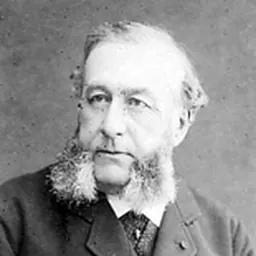
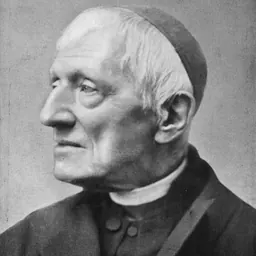
Named in this biography and alive at the same time





Related people
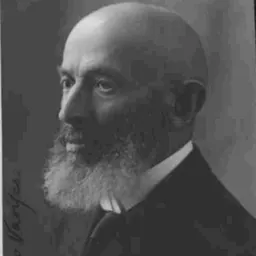
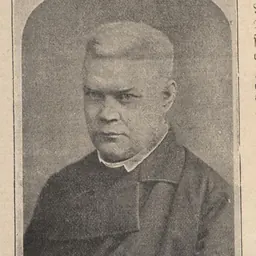
Same field, nearest in time

Contemporaries
People whose lives overlapped Léon Ollé-Laprune's

Frequently asked questions
Who was Léon Ollé-Laprune?
French philosopher (1839–1898)
When was Léon Ollé-Laprune born?
Léon Ollé-Laprune was born on 25 July 1839 in Paris.
When did Léon Ollé-Laprune die?
Léon Ollé-Laprune died on 13 February 1898 in Paris.
What was Léon Ollé-Laprune's occupation?
Léon Ollé-Laprune was a philosopher and university teacher.
What nationality was Léon Ollé-Laprune?
Léon Ollé-Laprune was French.
Sources & further reading
· Wikipedia: Léon Ollé-Laprune
Cite this page
APA: Biography.guide. (2026). Léon Ollé-Laprune. https://biography.guide/leon-olle-laprune/
MLA: "Léon Ollé-Laprune." Biography.guide, https://biography.guide/leon-olle-laprune/.
Chicago: "Léon Ollé-Laprune." Biography.guide. https://biography.guide/leon-olle-laprune/.
Data last updated: 2026-09-20 · Spot an error? Report a correction.
Page generated 2026-09-27 05:31 UTC