
Leon M. Lederman
American mathematician and physicist
About Leon M. Lederman
Lived 1922 – 2018 (aged 96). Leon M. Lederman was an American particle physicist, university teacher and physicist, known for Bottom quark and Neutrino.
Early life and education Lederman was born in New York City, New York, to Morris and Minna (Rosenberg) Lederman. His parents were Ukrainian-Jewish immigrants from Kyiv and Odesa. Lederman graduated from James Monroe High School in the South Bronx, and received his bachelor's degree from the City College of New York in 1943. during World War II, intending to become a physicist after his service. Following his discharge in 1946, he enrolled at Columbia University's graduate school, receiving his Ph.D. in 1951.
Academic career Lederman became a faculty member at Columbia University, and he was promoted to full professor in 1958 as Eugene Higgins Professor of Physics. Resigning from Columbia (and retiring from Fermilab) in 1989, he then taught briefly at the University of Chicago. He then moved to the physics department of the Illinois Institute of Technology, where he served as the Pritzker Professor of Science.
Lederman, rare for a Nobel Prize winning professor, took it upon himself to teach physics to non-physics majors at The University of Chicago.
Lederman served as president of the board of sponsors of the Bulletin of the Atomic Scientists, and at the time of his death was chair emeritus. He also served on the board of trustees for Science Service, now known as Society for Science & the Public, from 1989 to 1992, and was a member of the JASON defense advisory group. Lederman was also one of the main proponents of the "Physics First" movement.
Lederman was an early supporter of Science Debate 2008, an initiative to get the then-candidates for president, Barack Obama and John McCain, to debate the nation's top science policy challenges. In October 2010, Lederman participated in the USA Science and Engineering Festival's Lunch with a Laureate program where middle and high school students engaged in an informal conversation with a Nobel Prize-winning scientist over a brown-bag lunch. Lederman was also a member of the USA Science and Engineering Festival's advisory board.
Academic work In 1956, Lederman worked on parity violation in weak interactions. R. L. Garwin, Leon Lederman, and R. Weinrich modified an existing cyclotron experiment, and they immediately verified the parity violation. They delayed publication of their results until after Wu's group was ready, and the two papers appeared back-to-back in the same physics journal. Among his achievements are the discovery of the muon neutrino in 1962 and the bottom quark in 1977.
As the director of Fermilab, Lederman was a prominent supporter of the Superconducting Super Collider project, which was endorsed around 1983, and was a major proponent and advocate throughout its lifetime. Also at Fermilab, he oversaw the construction of the Tevatron, for decades the world's highest-energy particle collider. Lederman later wrote his 1993 popular science book The God Particle: If the Universe Is the Answer, What Is the Question? – which sought to promote awareness of the significance of such a project – in the context of the project's last years and the changing political climate of the 1990s. The increasingly moribund project was finally shelved that same year after some $2 billion of expenditures.
In 1988, Lederman received the Nobel Prize for Physics along with Melvin Schwartz and Jack Steinberger "for the neutrino beam method and the demonstration of the doublet structure of the leptons through the discovery of the muon neutrino".
Personal life and death
Lederman's best friend during his college years, Martin J. Klein, convinced him of "the splendors of physics during a long evening over many beers". He was known for his sense of humor in the physics community. He answered questions such as "What is the strong force?" and "What happened before the Big Bang?".
Lederman was an atheist. Lederman began to suffer from memory loss in 2011 and, after struggling with medical bills, he had to sell his Nobel Prize medal for $765,000 to cover the costs in 2015. He died of complications from dementia on October 3, 2018, at a care facility in Rexburg, Idaho, at the age of 96.
Honors and awards Election to the National Academy of Sciences, 1965. National Medal of Science, 1965. Elliott Cresson Prize of the Franklin Institute, 1976. Wolf Prize in Physics, 1982. Nobel Prize in Physics, 1988. Medallion, Division of Particles and Fields, Mexican Physical Society, 1999. Asteroid 85185 Lederman, discovered by Eric Walter Elst at La Silla Observatory in 1991, was named in his honor. Portraits of Great American Scientists by Leon M. Lederman, et al. Symmetry and the Beautiful Universe by Leon M. Lederman and Christopher T. Hill "What We'll Find Inside the Atom" by Leon Lederman, an essay he wrote for Newsweek, September 15, 2008 Quantum Physics for Poets by Leon M. Lederman and Christopher T. Hill Beyond the God Particle by Leon M. Lederman and Christopher T. Hill
Don’t just read it —
keep it.
Full-length biographies made to live with: read them, listen on the way to work, watch them tonight.
- E-book
- Audio
- Video
Instant download · yours to keep · every purchase keeps this site free
Important facts
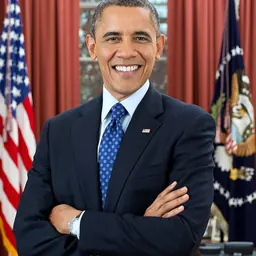
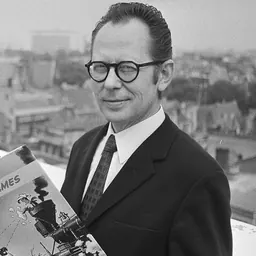
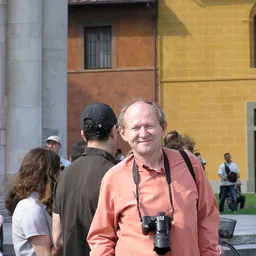
People in Leon M. Lederman's life
Named in this biography and alive at the same time




Related people
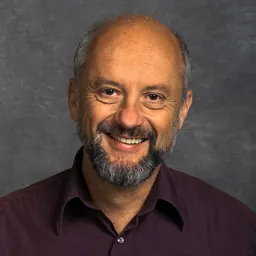
Same field, nearest in time



Contemporaries
People whose lives overlapped Leon M. Lederman's


Frequently asked questions
Who was Leon M. Lederman?
American mathematician and physicist
When was Leon M. Lederman born?
Leon M. Lederman was born on 15 July 1922 in Buffalo, New York City.
When did Leon M. Lederman die?
Leon M. Lederman died on 3 October 2018 in Rexburg.
What was Leon M. Lederman's occupation?
Leon M. Lederman was a particle physicist, university teacher and physicist.
What was Leon M. Lederman known for?
Leon M. Lederman was known for Bottom quark and Neutrino.
What nationality was Leon M. Lederman?
Leon M. Lederman was American.
Sources & further reading
Cite this page
APA: Biography.guide. (2026). Leon M. Lederman. https://biography.guide/leon-m-lederman/
MLA: "Leon M. Lederman." Biography.guide, https://biography.guide/leon-m-lederman/.
Chicago: "Leon M. Lederman." Biography.guide. https://biography.guide/leon-m-lederman/.
Data last updated: 2026-09-26 · Spot an error? Report a correction.
Page generated 2026-09-27 05:16 UTC