
About Leo Segedin
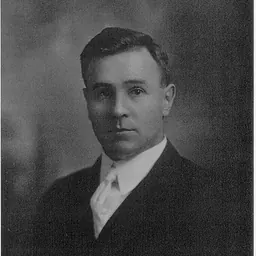
Lived 1927 – 2025 (aged 97–98). Leo Segedin was an American artist.
Leopold Segedin (March 22, 1927 – January 7, 2025) was an American artist and educator based in Chicago. He is best known as an urban figurative painter, who portrayed humanist scenes of life in mid-20th century Chicago. He exhibited for over 70 years, including retrospectives at the Chicago Cultural Center, His art has received awards from the Art Institute of Chicago, Terry Art Institute, Corcoran Gallery of Art (juried by George Grosz), and American Jewish Arts Club. Segedin was one of Art in America’s 1956 "New Talent in the U.S.A." artists and has been featured in The Washington Post, Chicago Tribune, The Philadelphia Inquirer, Chicago Daily News, and Chicago Sun-Times, among many publications. Chicago Tribune critic Alan Artner characterized Segedin's work as a "distinguished example" of magic realism; in visual terms, critics have often noted his vivid color, dynamic illusionist space, and rendering of light and surfaces that portray the passage of time.
Segedin was an educator, most notably at Northeastern Illinois University, where he taught for over three decades. He was also a prolific essay writer and public lecturer, and was a frequent panelist, exhibition juror, and active participant in Chicago's art community as a member of the Chicago Society of Artists and American Jewish Art Club (president, one term), and as co-founder and president of Chicago's first post-war, artist-run cooperative gallery, Exhibit A. After graduating from Crane Technical High School, he attended the University of Illinois Urbana-Champaign, intending to go into chemical or aeronautical engineering. A self-described "Eureka!" moment his junior year, however, convinced him to choose art (BFA, 1948; MFA 1950). In 1952, Segedin began military service and taught drafting at the U.S. Army Engineer School at Fort Belvoir, Virginia until 1954. In 1956, Art in America selected him as one of 36 artists in its annual "New Talent in the U.S.A." survey. Segedin was one of eleven influential Illinois artists recognized the Illinois State Museum's "Luminous Ground: Artists with Histories" (2011), and was in the Muskegon Museum of Art's "Moments of Grace: New Regional Painting" (1999–2000). He is included in Harvest of Freedom: A Survey of Jewish Artists in America (1989) by Louise Dunn Yochim.
Segedin was married to his wife, Jan (née Steinberg), for over 45 years, until her death in 2005. Segedin pursued diverse cultural interests throughout his life: writing, lecturing, an ongoing monthly discussion group, and membership in a theater performance group spanning five decades. His painting Hey Kid (1988) inspired Michael Smith's song of the same title, as well as Segedin's inclusion as a character alongside legendary artists, in the painting-inspired folk revue, Hello Dali: From the Sublime to the Surreal (1998). Reviewing the revue's staging at Chicago's Victory Gardens Theater, Chicago Sun-Times theater critic Hedy Weiss called Segedin's "haunting vision" of Chicago streets "the great revelation of the show." Leopold Segedin, Elevated Station, oil on panel, 48" x 36", 1956.
Segedin worked well into his 90s and was at work on a new painting at the time of his death. He died on January 7, 2025, at the age of 97.
Work Segedin was a humanist representational painter, depicting life amid Chicago's storied elevated ("L") trains, brick storefronts, schoolyards, alleyways and cobblestone streets, often glimpsed from two-flat back porches and transit platforms. He sometimes flirted with abstraction, particularly in cityscapes (such as Elevated Station, 1959), that critics noted for their effectively flat, linear compositions and patterning. which was also recognized by the Art Institute of Chicago.
For a decade beginning in 1967, Segedin, in his words, "got hung up on social issues." viewed the dehumanization of the Vietnam War through the lens of the Holocaust.
In the 1980s, Segedin returned to the cityscapes of his early life and work, in paintings and drawings of Chicago building facades, interiors, "L" platforms, and rush-hour crowds. By 1987, he began to focus on single or paired figures—often youthful self-portraits—exploring coming-of-age themes, such as play and fantasy (Pilots, 1989 or the later "Games" series, 2015–6, see right) or peril (Hey Kid I and II, 1988 and 1989). considered both, using the game as an existential metaphor for one's public versus private self, and the desire to know the true nature of others. Alan Artner described these works of "magic realism" as meticulously rendered and naturalistic, with an intensity of mood and color, whose "force comes from a strangeness based on past time and its modes of life." in celebratory fashion in the "Old Men Dancing" series (2008–10), and more soberly in his extensive, ongoing series of self-portraits (2012–8), such as Self-Portrait (2017). Segedin served as the gallery's first president. The gallery stands out as a pioneer of the cooperative concept—unique at the time—and served as a model for others that sprung up in Chicago in the 1970s. artists and aging, visual thinking, and race, gender and ethnicity in the artworld, among others. He has delivered lectures on subjects including Marshall McLuhan, bipolar disorder and art, and painting as information, among others. In 2017, at age 90, he delivered "Making/Teaching Art: The Dangers of Teaching Art" as the keynote address to the Colorado Art Education Association's Fall Conference.
Don’t just read it —
keep it.
Full-length biographies made to live with: read them, listen on the way to work, watch them tonight.
- E-book
- Audio
- Video
Instant download · yours to keep · every purchase keeps this site free
Important facts
People in Leo Segedin's life
Named in this biography and alive at the same time

Related people
Same field, nearest in time





Contemporaries
People whose lives overlapped Leo Segedin's


Frequently asked questions
Who was Leo Segedin?
American artist and educator
When was Leo Segedin born?
Leo Segedin was born in 1927 in Chicago.
When did Leo Segedin die?
Leo Segedin died on 7 January 2025.
What was Leo Segedin's occupation?
Leo Segedin was an artist.
What nationality was Leo Segedin?
Leo Segedin was American.
Sources & further reading
Cite this page
APA: Biography.guide. (2026). Leo Segedin. https://biography.guide/leo-segedin/
MLA: "Leo Segedin." Biography.guide, https://biography.guide/leo-segedin/.
Chicago: "Leo Segedin." Biography.guide. https://biography.guide/leo-segedin/.
Data last updated: 2026-09-20 · Spot an error? Report a correction.
Page generated 2026-09-27 05:20 UTC