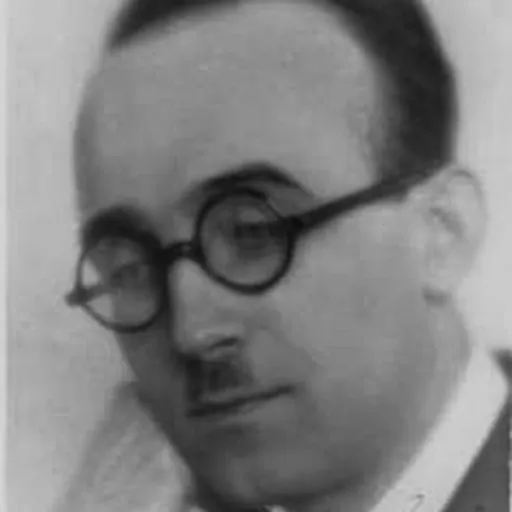
About Léo-Pol Morin
Lived 1892 – 1941 (aged 48). Léo-Pol Morin was a Canadian composer, pianist, music educator and music critic.
Léo-Pol Morin (13 July 1892 – 29 May 1941) was a Canadian pianist, music critic, composer, and music educator. He composed under the name James Callihou, with his most well known works being Suite canadienne and Three Eskimos for piano. He also composed works based on Canadian and Inuit folklore/folk music and harmonized a number of French-Canadian folksongs. Victor Brault notably transcribed his Inuit folklore inspired Chants de sacrifice for choir and 2 pianos.
As a writer, Morin displayed a heavy interest in the music of Canada and the use of various folklore traditions within music composition. He wrote musical criticism for several Canadian publications and also published a book and a collection of essays. As a pianist, he played a major role in advocating music by French composers in his native country; notably performing the Canadian premieres of works by Claude Debussy, Gabriel Fauré, Darius Milhaud, Francis Poulenc, Maurice Ravel, Albert Roussel, and Erik Satie among others. He likewise was an exponent of works by Canadian composers in France, including pieces by François Brassard, Claude Champagne, Henri Gagnon, Émiliano Renaud, Léo Roy, and Georges-Émile Tanguay. Composer Rodolphe Mathieu notably dedicated two of his works to him: Trois Préludes (1921) and Sonata (1927).
Later life and career: 1925–1941 Morin moved from his home in Paris back to Montreal in the fall of 1925, where he quickly began advocating new French music through his concerts and writings; sometimes with protest from his peers. He began including his own works in his recitals in 1927, disguising them under the pseudonym James Callihou. With Victor Brault he put together the first festival in North America dedicated to the works of Debussy in December 1927. The festival notably included performances by mezzo-soprano Cédia Brault and the violinist Robert Imandt. For La Patrie critic Marcel Valois wrote in his review of Morin's recital at that festival: "[Morin is] always the incomparable interpreter of Debussy, and all who heard, in Montreal or Paris, his performance of the Cathédrale engloutie, retain a keepsake of this beautiful work carved in memory."
In 1926 Morin was appointed secretary of the Montreal chapter of the Pro-Musica Society of New York and in 1928 he appeared alongside Ravel in concerts in Montreal. From 1926 to 1929 he was a music critic for La Patrie, and from 1929 to 1931 he taught on the faculty of the Conservatoire national in Montreal. He also contributed articles to other Canadian periodicals during the 1920s and early 1930s, including Canadian Forum, Vie canadienne, and Opinions Musicologist. Andrée Desautels wrote in The Canadian Encyclopedia, "Both his writings and his concerts showed Morin to be ahead of his time. [He was] a caustic spirit, an original, a personality compounded of intelligence and sensibility."
In 1931 Morin moved back to Paris where he spent most of his time up through the spring of 1936. In Paris he was active as a concert pianist, lecturer on music, and music critic for various periodicals. He returned to Montreal for a few months in 1933 during which time he performed a concert of contemporary French music at the Stella Theatre (now the Théâtre du Rideau Vert). He returned to the city again to perform Felix Mendelssohn's Capriccio brilliant in B minor for the inaugural performance of the Montreal Symphony Orchestra on 14 January 1935. In 1934 he gave a recital tour in the United States and in 1936 he gave recitals in Spain and Morocco.
Morin moved backed to Montreal in 1936 to join the faculty of the École de musique Vincent-d'Indy where he taught until his death in 1941 in an automobile accident in the Laurentians. He also served during that time as the music critic for Le Canada. His notable students included Paule-Aimée Bailly, François Brassard, Jean Papineau-Couture, and Alfred Mignault. He made one final trip to Europe in the summer of 1939 which was cut short by the outbreak of World War II. He performed in several concerts and gave lectures for the Canadian Broadcasting Corporation during the late 1930s; notably being a regular participant on the CBC Radio quiz show S.V.P.
Don’t just read it —
keep it.
Full-length biographies made to live with: read them, listen on the way to work, watch them tonight.
- E-book
- Audio
- Video
Instant download · yours to keep · every purchase keeps this site free
Important facts
People in Léo-Pol Morin's life
Named in this biography and alive at the same time

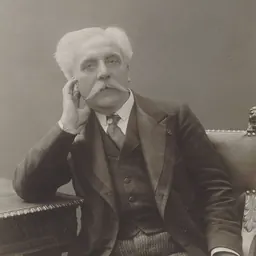



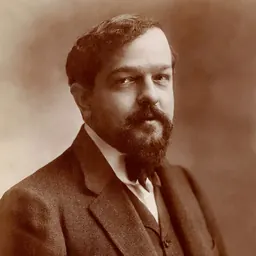
Related people
Same field, nearest in time
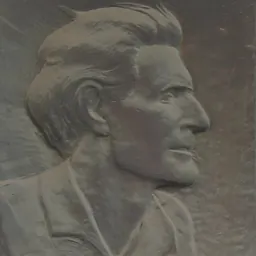

Contemporaries
People whose lives overlapped Léo-Pol Morin's




Frequently asked questions
Who was Léo-Pol Morin?
Pianist and composer (1892–1941)
When was Léo-Pol Morin born?
Léo-Pol Morin was born on 13 July 1892 in Quebec.
When did Léo-Pol Morin die?
Léo-Pol Morin died on 29 May 1941 in Montreal.
What was Léo-Pol Morin's occupation?
Léo-Pol Morin was a composer, pianist, music educator and music critic.
What nationality was Léo-Pol Morin?
Léo-Pol Morin was Canadian.
Sources & further reading
Cite this page
APA: Biography.guide. (2026). Léo-Pol Morin. https://biography.guide/leo-pol-morin/
MLA: "Léo-Pol Morin." Biography.guide, https://biography.guide/leo-pol-morin/.
Chicago: "Léo-Pol Morin." Biography.guide. https://biography.guide/leo-pol-morin/.
Data last updated: 2026-09-20 · Spot an error? Report a correction.
Page generated 2026-09-27 05:09 UTC