
About Leo Harrison
Lived 1922 – 2016 (aged 94). Leo Harrison was a British cricketer.
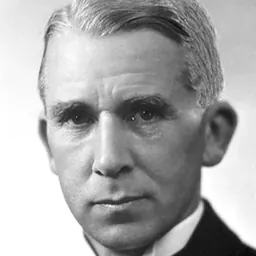
Leo Harrison (8 June 1922 – 12 October 2016) was an English first-class cricketer who played for Hampshire from 1939 to 1966. Making his debut in the County Championship before the Second World War, Harrison played initially as a batsman and reserve wicket-keeper to Neil McCorkell, an arrangement which continued until McCorkell's retirement in 1951, and Hampshire's brief experiment with Ralph Prouton as first-choice wicket-keeper, after which Harrison assumed the role of first-choice wicket-keeper after 1953. He played 387 first-class appearances for Hampshire, out of a total of 396 career first-class matches, and was a member of Hampshire's 1961 County Championship winning team.
During his career, he scored nearly 9,000 runs and took over 680 dismissals in the field, including 103 stumpings as wicket-keeper. Despite failing eyesight, which had kept him out of frontline service during the Second World War, Harrison was known as a wicket-keeper who would often stand up the stumps to fast bowlers, most notably Derek Shackleton. After retiring from playing, Harrison succeeded Arthur Holt as Hampshire coach in 1965, an appointment he would hold until 1970 when he left to go into business.
Early left and pre-war cricket The son of a builder, Harrison was born in Mudeford (then in Hampshire) in June 1922. He was educated at Twynham School, and joined the Hampshire ground staff straight after completing his education in 1937. he made his first-class debut for Hampshire against Worcestershire at Bournemouth in the 1939 County Championship, with him playing in the following fixture against Yorkshire. Harrison served in the Royal Air Force during the Second World War, but failed the eyesight test to become a pilot, and instead spent the war making flying instruments for Bomber Command in Slough, as well as serving on airfields in Yorkshire and East Anglia.
Post-war cricket Understudy to Neil McCorkell During the war his eyesight had continued to deteriorate, necessitating him to wear spectacles. He made the same number of appearances in 1948, but generally struggled with the bat, scoring 256 runs at an average of 8.82; he did however find increased wicket-keeping opportunities when deputising for McCorkell. He stood as an umpire in a first-class match between the Combined Services and Hampshire in 1949. He featured just ten times in 1950, and once again struggled with the bat in scoring 152 runs at an average of 9.50. The 1951 season would prove to be successful for Harrison, with him passing a thousand runs in a season for the first time, with 1,189 at an average of 30.48 from thirty matches. which he followed up with 108 against Middlesex at Portsmouth, which spared Hampshire from an innings defeat; Harrison had been awarded his county cap following his innings against Worcestershire.
Succeeding McCorkell McCorkell retired from first-class cricket following the 1951 season, in order to take up a coaching post in South Africa. Despite his retirement, Harrison did not immediately become Hampshire's first-choice wicket-keeper, despite media speculation that he would. making 153 in Hampshire's first innings. He alternated the wicket-keeping duties with Prouton in 1953, and became first-choice wicket-keeper from 1954. Cricket historian David Frith proffered that his transition to full-time wicket-keeping duties had deprived Hampshire of a superb outfielder. Cyril Washbrook was of the opinion that Harrison should have been reserve wicket-keeper to Godfrey Evans for England's 1954–55 tour of Australia.
As his career progressed, his failing eyesight led to diminishing returns with the bat. this was the closest he would come to gaining a Test cap, with Tom Graveney being preferred over Harrison for selection for the Third Test of the series against South Africa. He remained Hampshire's first-choice wicket-keeper throughout the 1950s, with his diminished returns with the bat being complimented by his good work behind the stumps. He was afforded a benefit match ahead of the 1957 season, which was chosen to be played against Northamptonshire at Bournemouth in August. His benefit helped to raise £3,000, which he and his father used to build Harrison a house in Mudeford. Harrison's 82 victims from behind the stumps in 1959 were a Hampshire record. Harrison was a member of Hampshire's 1961 County Championship winning team, He continued as Hampshire's wicket-keeper the following season, making 27 appearances and scoring 509 runs at an average of 18.85, which included two final half centuries. Alongside his coaching duties, he continued to act as Hampshire's reserve wicket-keeper and played in the Second XI Championship until 1970. In 1966, an injury crisis at Hampshire necessitated his return to County Championship action at the age of 43, against Surrey at Basingstoke. This appearance took his number of first-class appearances for Hampshire to 387, in which he scored 8,708 runs at an average of 17.66, making six centuries and 27 half centuries. In all first-class appearances (396), he took 681 dismissals, 103 of them stumpings. He remained as Hampshire coach until 1970, when he left citing the "dreadful pay", and instead joined a local building firm as its director, where he would remain until his retirement in 1987. The pair would often holiday together, and when Arlott retired to Alderney, Harrison would be a regular visitor; He was the guest of honour at the unveiling of The Cricket Society's plaque commemorating Arlott's residency at the Old Sun in New Alresford in 2009.
Harrison died at Mudeford on 12 October 2016. His wife, Joan, whom he had married in 1944, predeceased him in 1995. He was survived by two daughters and a son. Following his death, his Hampshire teammate John Manners (1914–2020) became the only surviving player to have played first-class county cricket before the Second World War.
Don’t just read it —
keep it.
Full-length biographies made to live with: read them, listen on the way to work, watch them tonight.
- E-book
- Audio
- Video
Instant download · yours to keep · every purchase keeps this site free
Important facts
People in Leo Harrison's life
Named in this biography and alive at the same time






Related people
Same field, nearest in time


Contemporaries
People whose lives overlapped Leo Harrison's

Frequently asked questions
Who was Leo Harrison?
English cricketer (1922-2016)
When was Leo Harrison born?
Leo Harrison was born on 5 June 1922 in Mudeford.
When did Leo Harrison die?
Leo Harrison died on 12 October 2016.
What was Leo Harrison's occupation?
Leo Harrison was a cricketer.
What nationality was Leo Harrison?
Leo Harrison was British.
Sources & further reading
Cite this page
APA: Biography.guide. (2026). Leo Harrison. https://biography.guide/leo-harrison/
MLA: "Leo Harrison." Biography.guide, https://biography.guide/leo-harrison/.
Chicago: "Leo Harrison." Biography.guide. https://biography.guide/leo-harrison/.
Data last updated: 2026-09-20 · Spot an error? Report a correction.
Page generated 2026-09-27 05:10 UTC