
About Léo Ferré
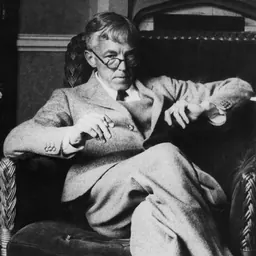
Lived 1916 – 1993 (aged 76). Léo Ferré was a Monegasque and French songwriter, singer-songwriter, writer, radio personality, conductor and pianist.
Léo Ferré (; 24 August 1916 – 14 July 1993) was a Monégasque poet and composer, and a dynamic and controversial live performer. He released some forty albums over this period, composing the music and the majority of the lyrics. He released many hit singles, particularly between 1960 and the mid-1970s. Some of his songs have become classics of the French chanson repertoire, including "Avec le temps", "C'est extra", "Jolie Môme" and "Paris-Canaille".
Early life
Ferré was the son of Joseph Ferré, French staff manager at Monte Carlo Casino, and Marie Scotto, a Monégasque dressmaker of Italian descent from Piedmont; he had a sister, Lucienne, two years older.
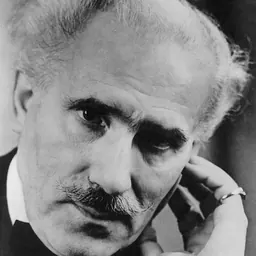
Ferré had an early interest in music. At age seven, he joined the choir of the Monaco Cathedral and discovered polyphony through singing pieces by Giovanni Pierluigi da Palestrina and Tomás Luis de Victoria. His uncle, former violinist and secretary at the Casino, used to bring him to performances and rehearsals at the Monte Carlo Opera. Ferré listened to such musicians as bass singer Feodor Chaliapin, discovered Beethoven under the baton of Arturo Toscanini (Coriolanus), and was deeply moved by the Fifth Symphony. But it was the sweet presence of composer Maurice Ravel during L'Enfant et les Sortilèges rehearsals that impressed him the most.
At age nine, Ferré entered Saint-Charles College of Bordighera, run by the Brothers of the Christian Schools in Italy. He remained there for eight long years of severe discipline and boredom. He wrote about this lonely and caged childhood in an autofiction (Benoît Misère, 1970). He graduated from high school in Monaco, but his father did not let him attend the Conservatory of Music.
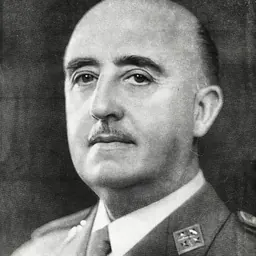
In 1950, to submit Verdi examination at La Scala in Milan, he wrote the libretto and music of an opera called La Vie d'artiste (same title as the song). It transposed his past years' experience into a kind of a black comedy but Ferré did not seem to like it much, finally abandoning it for other projects. He began to sing in larger venues such as l'Olympia, as the opening act of Josephine Baker in 1954. In the early 1960s, he denounced the French prosecution of the Algerian War in the songs Regardez-les, Les Temps difficiles and Mon général. He also wrote anti-Francoist songs, condemning the dictatorship of Francisco Franco in Franco, la muerte and L'Espoir. Martin Newell and Benjamin Clementine.
In March 1968, Ferré did not return home after a gig. In his absence, Ferré's chimpanzee Pépée suffered a fall and refused to be approached. Eventually, Madeleine asked a hunter neighbour to put the chimpanzee out of its misery. Ferré's requiem for the primate would be his eponymous song "Pépée". The singer blamed his wife for Pépée's death and they would divorce after lengthy procedures.
During the civil unrest of May 1968, Ferré was invited by radical students to speak before a political demonstration, but he declined the offer. Ferré's sympathies with anarchism were well known and a recurring theme in his songs, but he was not a political activist; his anarchism was a purely personal philosophy. After the May 1968 uprising, he released songs invoking revolution L’Été 68 and Comme une fille.
In 1969, Ferré settled in Tuscany, in Italy. The huge success of "C'est extra", an erotic ballad, greatly expanded his audience, especially among the French youth, who recognized in the poet the "prophet" of his own rebellion.
In 1975 Ferré conducted successively the orchestra of the Institut des Hautes Études Musicales in Montreux, the Orchestre Philharmonique de Liège, and the Pasdeloup Orchestra at the Palais des congrès de Paris. It was a perilous challenge for Ferré, who conducted the orchestra and sang at the same time. He mixed Ravel's piano concerto for the Left Hand and Beethoven's Coriolan Overture with his own compositions and reversed the placement of the orchestra. 140 musicians and choir singers were on stage. This was an unprecedented performance, breaking free from conventions and blending separated worlds. Concerts were sold out for five weeks, but critics from the classical music field rejected this hybrid show.
In 1976, Ferré signed with CBS Records International. From then until the end of his career the majority of his recordings would be made with the Milan-based RAI National Symphony Orchestra under his conducting. CBS soon dropped Ferré, whose commercial potential was estimated too low (his new aesthetics of symphonic down-tempo being against the current of all musical trends, it was complicated to put the artist on the radio and reduced the possibility of a hit). Being dropped by the "professionals", and disgusted for good with being "a merchandise for producers", Ferré refused to accept French song prizes. He also refused the proposal to enter the Ordre des Arts et des Lettres (at the highest grade) and to support President of France François Mitterrand in his reelection campaign in exchange for leading and conducting of a first-class symphonic orchestra. He refused being guest of honor in the Victoires de la musique (Music's Victories), annual French award ceremony recognizing the best musical artists of the year. Ferré used to say: "The only honor for an artist is not getting any".
Léo Ferré died at his home in July 1993 at the age of 76. He was buried at the Monaco Cemetery.
Discography
Studio albums
1953: Paris-Canaille 1954: Chansons de Léo Ferré 1954: Le Piano du pauvre 1956: Le Guinche (Huit Chansons nouvelles) 1956: Poète... vos papiers ! 1957: Les Fleurs du mal 1957: La Chanson du mal-aimé 1958: Encore... du Léo Ferré 1960: Paname 1961: Les Chansons d'Aragon 1962: La Langue française 1964: Ferré 64 1964: Verlaine et Rimbaud (2×LP) 1966: Léo Ferré 1916-19… 1967: Cette chanson (La Marseillaise) 1967: Léo Ferré chante Baudelaire (2×LP) 1969: L'Été 68 1969: Les Douze Premières Chansons de Léo Ferré
1970: Amour Anarchie (2×LP) 1971: La Solitude 1972: La Chanson du mal-aimé 1972: La Solitudine 1973: Il n'y a plus rien 1973: Et… basta ! 1974: L'Espoir 1975: Ferré muet... dirige 1976: Je te donne 1977: La musica mi prende come l'amore 1977: La Frime 1979: Il est six heures ici et midi à New York 1980: La Violence et l'Ennui 1982: Ludwig-L'imaginaire-Le bateau ivre (3×LP) 1983: L'Opéra du pauvre (4×LP) 1985: Les Loubards 1986: On n'est pas sérieux quand on a dix-sept ans (2×LP) 1990: Les Vieux Copains 1991: Une saison en enfer
Live albums 1955: Récital Léo Ferré à l'Olympia 1958: Léo Ferré à Bobino 1961: Récital Léo Ferré à l'Alhambra 1963: Flash ! Alhambra – A.B.C. 1969: Récital 1969 en public à Bobino (2×LP) 1973: Seul en scène (Olympia 1972) (2×LP) 1984: Léo Ferré au Théâtre des Champs-Élysées (3×LP) 1988: Léo Ferré en public au TLP Déjazet
Posthumous releases 1993: Alors, Léo... (live at the TLP Déjazet 1990, 2xCD) 2000: Métamec (unreleased album demo tapes) 2000: Le Temps des roses rouges (78s songs from 1950) 2001: Sur la scène... (live at Lausanne 1973, 2×CD) 2001: Un chien à Montreux (live at Montreux 1973, EP) 2003: Les Chansons interdites… et autres (songs from 1961 previously published on Eps) 2004: De sac et de cordes (radio drama from 1951) 2004: Maudits soient-ils ! (Verlaine et Rimbaud album demo tapes, 2×CD) 2006: La Mauvaise Graine (radio sessions & interviews from 1959) 2008: Les Fleurs du mal (suite et fin) (unreleased album demo tapes, 1976–77) 2018: Je parle à n'importe qui (unreleased album demo tape, 1977)
Boxed sets, compilations, and rarities 2013: L'Indigné (20xCD) 2018: La Vie moderne: intégrale 1944-1959 (14CD covering the 15 first artist's years) 2020: L'Âge d'or: intégrale 1960-1967 (16CD covering the next eight artist's years) 2021: La Solitude: intégrale 1968-1974 (18CD covering the next seven artist's years) 2022: La Marge : intégrale 1975-1991 (20CD covering the last sixteen active artist's years)
Don’t just read it —
keep it.
Full-length biographies made to live with: read them, listen on the way to work, watch them tonight.
- E-book
- Audio
- Video
Instant download · yours to keep · every purchase keeps this site free
Important facts
People in Léo Ferré's life
Named in this biography and alive at the same time




Related people
Same field, nearest in time


Contemporaries
People whose lives overlapped Léo Ferré's



Frequently asked questions
Who was Léo Ferré?
French-born Monégasque poet and singer
When was Léo Ferré born?
Léo Ferré was born on 24 August 1916 in Monaco.
When did Léo Ferré die?
Léo Ferré died on 14 July 1993 in Castellina in Chianti.
What was Léo Ferré's occupation?
Léo Ferré was a songwriter, singer-songwriter, writer, radio personality, conductor and pianist.
What nationality was Léo Ferré?
Léo Ferré was Monegasque and French.
Sources & further reading
Cite this page
APA: Biography.guide. (2026). Léo Ferré. https://biography.guide/leo-ferre/
MLA: "Léo Ferré." Biography.guide, https://biography.guide/leo-ferre/.
Chicago: "Léo Ferré." Biography.guide. https://biography.guide/leo-ferre/.
Data last updated: 2026-09-20 · Spot an error? Report a correction.
Page generated 2026-09-27 05:19 UTC