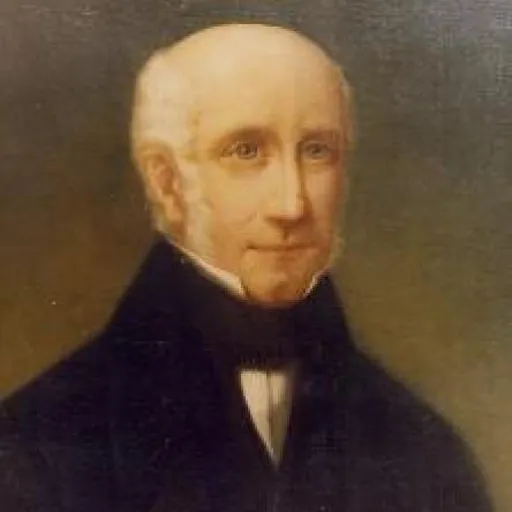
Leo Dupont
French venerated Catholic
About Leo Dupont
Lived 1797 – 1876 (aged 79). Leo Dupont was a French.
Leo Dupont (24 January 1797 – 18 March 1876), also known as "the holy man of Tours" or "the apostle of the Holy Face", was a Roman Catholic layman who helped spread various devotions such as that of the Holy Face of Jesus and the nightly Eucharistic adoration. He was declared venerable by Pope Pius XII.
Early life Leon Papin Dupont was born 24 January 1797 on the family sugar plantation in Martinique. His father was Nicholas Dupont, a wealthy and slave-owning French planter, his mother was a creole from Martinique, Marie-Louise Gaigneron de Marolles. His father died when Leo was six years old. Leon was schooled in Martinique and then for two years at a boarding school in the United States while the French Revolution went on. He was then sent to France to further his education at the College of Pontlevoy, near the Chateau of Chissay, which belonged to his maternal uncle, the Comte Gaigneron de Marolles. He was religious from an early age, but along with his one brother Theobald he studied law in Paris. He had inherited a considerable fortune from his father.
During this period, Dupont met a number of religious figures including Saint Madeleine Sophie Barat, foundress of the Society of the Sacred Heart. Upon finishing his law degree, not having seen his mother for six years, he returned to Martinique, where he received an appointment as a councilor of the court. His younger brother Theobald died of a fever in 1823 when Leo was about twenty-four years old.
In 1827, Leo Dupont married Caroline d'Andiffredi and, in 1832, they had a daughter, Henrietta. Caroline died about a year after Henrietta was born. After the death of his wife, Dupont and his mother moved to France and, in 1834, settled in Tours, where the physician Pierre Bretonneau was a neighbor. He also made the acquaintance of William Palmer. Dupont established a law practice and became administrator of the Cathedral property.
Religious focus
In July 1837, Dupont, his mother, and daughter visited his maternal uncle at the castle of Chissay-en-Touraine, where while gazing at a picture of Teresa of Ávila, he reportedly experienced a spiritual enlightenment. Dupont joined the recently formed Society of Saint Vincent de Paul, contributing large sums of money to it. Through his involvement with the society, he became involved in teaching night classes to tradesmen. Thereafter he remained a frequent contributor to the Little Sisters' charity for the poor and the elderly.
In 1849, he helped establish nightly Eucharistic adoration in Tours, with friends from the Society of Saint Vincent de Paul. His reputation as a Catholic activist and a helper of the poor spread within France and he was in contact with other French Catholics such as Saint Peter Julian Eymard, who was also an active proponent of spreading devotion to the Holy Eucharist. Dupont's charitable works and religious stance became so well known in France that he received many letters, often addressed to "The Holy Man of Tours" and the postmen knew where to deliver them.
When Dupont came to Tours, the cult of Martin of Tours had almost completely fallen into disuse. Two roads covered the location of St Martin's tomb, purposely constructed to obliterate the memory of St. Martin. Martin of Tours was, for Leo Dupont, the model of charity, and he desired to restore devotion to the Bishop of Tours, and begin the process for the eventual rebuilding of his basilica that had been destroyed by the Revolutionaries. Around 1848, following the suggestions of Mr. Dupont, the Cathedral of Tours began to restore the festivities surrounding the Feast of St. Martin on 11 November. He helped rebuild the Basilica of Saint Martin, Tours (which traces back to 472).
Dupont also promoted the use of the Saint Benedict Medal. He was never without several on his person, which he would give to those he might meet. He purchased them by the thousands and distributed them widely. Dupont used that image because the existence of a clear image on the Shroud of Turin was not known to anyone at that time for the somewhat faded image of the face on the Shroud can not easily be seen with the naked eye and was only observed in May 1898 via the negative plate of Secondo Pia's first photograph.
In 1851, Dupont formed the Archconfraternity of the Holy Face in Tours. He prayed for and promoted the case for a devotion to the Holy Face of Jesus for around 30 years. In 1874 Charles-Théodore Colet was appointed Archbishop of Tours. Archbishop Colet examined the documents pertaining to the life of Mary of Saint Peter and the devotion and in 1876 gave permission for them to be published and the devotion encouraged, shortly before Dupont died. After Dupont's death, the archbishop turned his oratory into a chapel, the Oratory of the Holy Face.
Death and veneration
By the end of his life, Dupont had donated most of his fortune to a number of charities, from the Carmelites to various orphanages, Society of Saint Vincent de Paul and the Little Sisters of the Poor.
Leo Dupont died in 1876, aged 79. Upon his death, his house on Rue St. Etienne was purchased by the Archdiocese of Tours and turned into the Oratory of the Holy Face. Archbishop Colet approved of a congregation, called the Priests of the Holy Face, to administer to the chapel. The congregation was canonically erected in 1876 and Father Peter Javier, a friend of Dupont, was appointed as its director.
Father Javier wrote a biography of Dupont and one of Mary of St Peter and the devotion to the Holy Face. These books were widely distributed and started the spread of the devotion. Years later, the books influenced Therese of Lisieux. The devotion to the Holy Face of Jesus was approved by Pope Leo XIII in 1885.
Dupont's spiritual writings were approved by theologians on 3 February 1937. The case for his canonization was presented to the Congregation for the Causes of Saints on 21 June 1939, granting him the title of Servant of God.
1950 saw the foundation of the Benedictine Sisters of Reparation of the Holy Face, whose aim is an "unceasing effort to stand beside the endless crosses on which the Son of God continues to be crucified".
Dupont's efforts in spreading the devotion to the Holy Face of Jesus are chronicled in the book The Holy Man of Tours, of A.D.1990, by Dorothy Scallan. Events of his life are also recorded by Abbé Pierre-Désiré Janvier in The Holy Man of Tours: Or the life of Léon Papin-Dupont of A.D. 1882.
Don’t just read it —
keep it.
Full-length biographies made to live with: read them, listen on the way to work, watch them tonight.
- E-book
- Audio
- Video
Instant download · yours to keep · every purchase keeps this site free
Important facts
People in Leo Dupont's life
Named in this biography and alive at the same time

Contemporaries
People whose lives overlapped Leo Dupont's






Frequently asked questions
Who was Leo Dupont?
French venerated Catholic (1797-1876)
When was Leo Dupont born?
Leo Dupont was born on 24 January 1797 in Le Lamentin.
When did Leo Dupont die?
Leo Dupont died on 18 March 1876 in Tours.
What nationality was Leo Dupont?
Leo Dupont was French.
Sources & further reading
Cite this page
APA: Biography.guide. (2026). Leo Dupont. https://biography.guide/leo-dupont/
MLA: "Leo Dupont." Biography.guide, https://biography.guide/leo-dupont/.
Chicago: "Leo Dupont." Biography.guide. https://biography.guide/leo-dupont/.
Data last updated: 2026-09-22 · Spot an error? Report a correction.
Portrait: Wikimedia Commons · author & licence
Page generated 2026-09-27 05:03 UTC