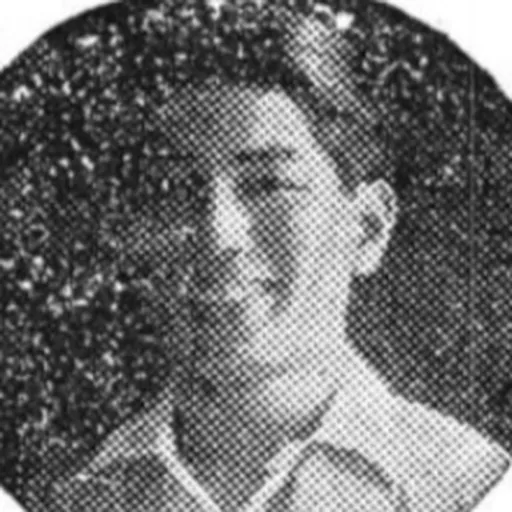
About Lee Quede
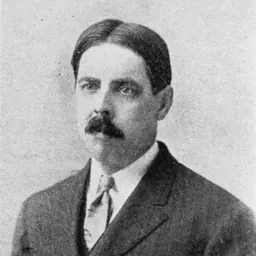
Lived 1913 – 1965 (aged 52). Lee Quede was a Japanese, South Korean and North Korean painter and visual artist.
Lee Quede (; 1913 – February 2, 1965), also known as Lee Qoede, Lee Kwae-dae, and Yi Kwae-dae., was a North Korean modernist painter, known for his figurative oil paintings. He was among the earliest adopters of modern Western style painting in Korea.
Toward the end of the Korean War Lee defected to North Korea, leading to the prohibition of his artwork in South Korea. In 1988, the South Korean government lifted the ban and allowed the exploration and study of his art.
Early life Lee Quede was born in 1913, on the eastern side of colonial Korea in Chilgok, Keishōhoku-dō. He studied painting under the artist Chang Bal. When Lee graduated from Whimoon High School, he went to Japan to study art at Teikoku Art School from 1933 to 1938, which is currently called Musashino Art University, and began learning art techniques based on Western still-life and figures. and he was considered one of the best figure painters of 1930s and 40s Korea.
In 1932, Lee's painting, Still Life, was selected to be shown at the 11th Joseon Art Exhibition.
Artwork
Paintings Lee Quede is renowned for his figural paintings created between 1920 and 1940. According to the Daegu Art Museum, Lee depicted many self-portraits, of which four have survived. Art historians like Yeon, Shim Chung, the author of Vernacular Modernism in Modern Korea argues that hyangtosaek is a referred to the political use of Korean landscapes to evoke traditional customs and scenery of the countryside in pre colonial Korea; it ignores the bleak social realities of colonial Korea and provide the land with exotic and primitive characteristics. This term became a norm throughout Korean art and was encouraged and promoted by the Japanese colonial government in the Joseon Art Exhibition.
Notable artworks Source: Self-portrait in Traditional Coat People People 4 (circa 1948) Dahlia Horse Dancer's Recess (1930s) Destiny (1930s) Evening Picnic (1930s) Couple Playing Cards (late 1930s) Spring Maiden (late 1940s)
Legacy As the Korean War was coming to a close in 1953, Lee decided to defect to North Korea, leaving his wife and four children behind in South Korea. While it has been suggested that his choice was influenced by the government's restrictions on his art and political beliefs, the precise reasons for his decision remain inconclusive. Consequently, his name was censored and omitted from public discourse by the South Korean government. It was not until 1988 that the South Korean government lifted the ban on Lee's name, initiating the exploration and study of his artistic contributions. Although Lee Quede's work was banned, his family managed to keep his artwork in South Korea, which allowed his work to eventually receive acknowledgement and appreciation from the public eyes.
In 2015, the National Museum of Modern and Contemporary Art held an exhibition featuring approximately 400 works created by Lee during his time in South Korea, between 1930 and 1950. In addition, there are two full text books that contain all of Lee's drawings and notes. The books are over 48 pages with a table of content, starting from the body portions, human skeleton, and muscles, and ending with the head.
Don’t just read it —
keep it.
Full-length biographies made to live with: read them, listen on the way to work, watch them tonight.
- E-book
- Audio
- Video
Instant download · yours to keep · every purchase keeps this site free
Important facts
Related people
Same field, nearest in time


Contemporaries
People whose lives overlapped Lee Quede's




Frequently asked questions
Who was Lee Quede?
Korean artist (1913–1965)
When was Lee Quede born?
Lee Quede was born on 15 January 1913.
When did Lee Quede die?
Lee Quede died on 20 February 1965 in North Korea.
What was Lee Quede's occupation?
Lee Quede was a painter and visual artist.
What nationality was Lee Quede?
Lee Quede was Japanese, South Korean and North Korean.
Sources & further reading
Cite this page
APA: Biography.guide. (2026). Lee Quede. https://biography.guide/lee-quede/
MLA: "Lee Quede." Biography.guide, https://biography.guide/lee-quede/.
Chicago: "Lee Quede." Biography.guide. https://biography.guide/lee-quede/.
Data last updated: 2026-09-22 · Spot an error? Report a correction.
Portrait: Wikimedia Commons · author & licence
Page generated 2026-09-27 05:01 UTC