
About Lee Kwang-jae
Born 1965. Lee Kwang-jae is a South Korean politician.
Lee Kwang-jae (, born 28 February 1965) is a South Korean activist, labourer and politician. He was the former Governor of Gangwon from 2010 to 2011. He has been the Member of the National Assembly for Wonju A constituency since 2020 and was previously MP for Taebaek-Yeongwol-Pyeongchang-Jeongseon from 2004 to 2010.
Born in Pyeongchang, Lee studied chemical engineering and law at Yonsei University. He worked as a secretary to Roh Moo-hyun before being elected to the National Assembly at the 2004 election. He contested for Gangwon governorship at the 2010 elections and defeated Yi Kye-jin, making him as the first non-conservative governor. His term was, however, only up to 7 months after he was found guilty of corruption allegations.
Despite being barred from running for any elections for 10 years, Lee was pardoned by the President Moon Jae-in on 30 December 2019, and thus paved a way for him to make a comeback. He then contested for Wonju A constituency at the 2020 election, where he successfully defeated the former Deputy Governor of Jeju Park Jung-ha. He had been widely considered as a potential candidate for the 2022 presidential election.
Early life Lee Kwang-jae was born in Cheonbyeon-ri, Pyeongchang-eup, Pyeongchang, Gangwon in 1965, as the eldest (and the only one) son and the 2nd child in a family of 7 children. His father, Lee Kang-won, was a civil servant, Initially, he entered Hamback Secondary School, but then transferred to Pyeongchang Secondary School, and then to Wonju Secondary School as advised by his father "to go to urban areas". On 11 March 1988, he was sentenced to 2 years in prison and 3 years probation, but was pardoned on 21 December. When Roh was elected to the National Assembly in 1988, Lee became his secretary; he was the youngest secretary to an MP during that time. He contested for Taebaek-Yeongwol-Pyeongchang-Jeongseon at the 2004 election and was elected. Then, he was appointed one of the deputy parliamentary leaders of the Uri Party. He also organised the Parliamentary Politics Research Centre, along with 11 other MPs.
Under the Roh government, Lee was a person putting efforts to hold the Winter Olympic Games in Pyeongchang, where he was born. As a part of his efforts, the Korean Sport & Olympic Committee (KOC) confirmed Pyeongchang as the South Korean candidate city for the 2014 Winter Olympics. His birthplace could held the games in 2018.
The Grand National Party (GNP) presidential candidate Lee Myung-bak was elected the new president in 2007 amid the low popularity of the Roh government. Lee Kwang-jae, however, was re-elected to his constituency at the 2008 election. Nevertheless, on 26 March 2009, he was detained over the allegations of receiving 160,000,000 won (£100,940) from Park Yeon-cha and Jung Dae-geun. He announced his resignation as an MP, as well as retirement from politics.
Governor of Gangwon (2010–2011)
On 22 April 2010, Lee announced his intention to run for the Gangwon governorship at the 2010 local elections. 2 days later, he was confirmed as the Democratic candidate for the position. On 26 May, Lee became the opposition unity candidate of the Democratic Party and the Democratic Labour Party (DLP) to fight against the then ruling GNP candidate Yi Kye-jin.
Initially, various polls showed that Lee came far behind to Yi. However, the final result ended up with an upset victory, Lee also became the first non-conservative governor of the conservative stronghold province. The GNP's analyses have suggested that senses of alienation among people, lack of "competent" candidates, and Lee's caring towards people, provoked the surprise outcome.
Court trial and removal While he was running for and elected at the election, his corruption cases were on trial, where the 2nd trial was ongoing. At the first trial, he was sentenced 8 months in prison, 2 years probation, and 148,140,000 won (£94,113) in compensation, which was equivalent to void the election. and therefore he took an oath while being suspended from conducting duties. He filed a constitutional appeal, and the Constitutional Court ordered him to return to the office on 2 September.
Nevertheless, on 27 January 2011, the Supreme Court confirmed the original verdict of the 2nd trial, and Lee was removed from his office. He was also barred from running for any elections for 10 years. The annulment of the election provoked the by-election in April, where Choi Moon-soon was elected.
After returning to South Korea, Lee became the assistant director of Future Consensus Institute in 2016, and was promoted to the Director in 2017.
Comeback (2019-) On 30 December 2019, Lee was given a special amnesty by the President Moon Jae-in, along with Kwak No-hyun and Han Sang-kyun. He subsequently became a co-chairman of the Election Committee of the Democratic Party prior to the 2020 election. On 2 March 2020, he announced he would stand for Wonju 1st constituency at the election. He contested against the United Future Party (UFP) candidate Park Jung-ha, the former Spokesperson of the Office of the President and the former Deputy Governor of Jeju.
Lee was successful in his bid to return to parliament, winning a four-year term in the National Assembly. He, therefore, made a political comeback after 9 years.
2022 presidential election On 11 May 2021, Lee said that he is currently preparing for the 2022 presidential election. He indicated that he was inspired by Sejong the Great, who conducted an opinion polling to collect data from about 170 thousands people in Gyeongsang Province and Jeolla Province areas to gradually introduce a tax policy. He said that the country needs a political revolution with a change of era, generation and "players". During an interview with The Dong-A Ilbo in 2003, Lee explained that his forefinger was cut while using a press machine at a factory in Bupyeong. In the end of the year, he said at the National Assembly Proceeding Hall that the incident occurred during the university life. As the issue became controversial, the GNP urged him to tell the truth. Kim Hyong-o, a GNP MP, compared Lee to An Jung-geun, saying, "No one doubt a patriotism for An's short finger. At least he left a finger to use a gun when the country is under crisis."
Lee explained, "It's meaningless to talk about my finger without considering the year of 1986, when I could be tortured if I was enlisted. If I mentioned the names of my comrades to avoid tortures, they would be victimised. I couldn't even accept it." He also clarified that the event was "on purpose" to write in blood on a Taegukgi to "not betray his colleagues".
Regional remarks On 31 March 2021, prior to the 2021 by-elections, Lee provoked a controversy for his remarks. He said, "Daegu has the weakest economy in Korea despite about 40 years under the President Park Chung Hee, Chun Doo-hwan, Roh Tae-woo, Lee Myung-bak and Park Geun-hye. Why? It's because they always vote based on their political parties, not the actual people."
The Democratic Party faced crushing defeats at the by-elections, where it lost Seoul and Busan mayorship to the PPP.
Personal life Lee was married to Lee Jung-sook; they have a daughter and a son. but she refused to do so.
He is a Buddhist.
Works Books Dream of a Spring Water (2004) Book Report of Lee Kwang-jae (2008) I Can't Dip My Feet Twice in a Same River (2010) Asking China: Superpower DNA of the 21st Century (2012) Where Should Korea Go To? (2014) Roh Moo-hyun Was Correct (2020)
Film Our President (2017)
Election results General elections Year Elections Constituency Political party Votes (%) Remarks 2004 17th National Assembly General Election Taebaek-Yeongwol-Pyeongchang-Jeongseon (Gangwon) Uri 39,061 (46.66%) Won 2008 18th National Assembly General Election Taebaek-Yeongwol-Pyeongchang-Jeongseon (Gangwon) UDP 42,321 (54.57%) Won 2020 21st National Assembly General Election Wonju A (Gangwon) Democratic 45,224 (48.56%) Won 2024 22nd National Assembly General Election Seongnam Bundang A (Gyeonggi) Democratic 76,578 (46.72%) Lost 2026 2026 By-election Hanam A (Gyeonggi) Democratic 44,216 (49.68%) Won
Local elections Governor of Gangwon Year Elections Constituency Political party Votes (%) Remarks 2010 5th Iocal Election Gangwon(Governoral Elections) Democratic 388,443 (54.36%) Won 2022 8th Iocal Election Gangwon(Governoral Elections) Democratic 347,766 (45.92%) Lost
Don’t just read it —
keep it.
Full-length biographies made to live with: read them, listen on the way to work, watch them tonight.
- E-book
- Audio
- Video
Instant download · yours to keep · every purchase keeps this site free
Important facts
People in Lee Kwang-jae's life
Named in this biography and alive at the same time

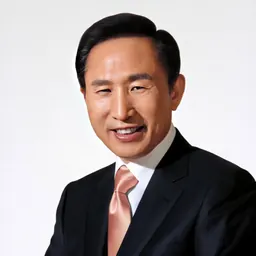
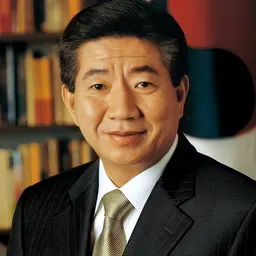
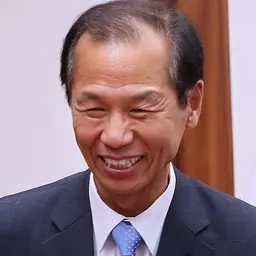

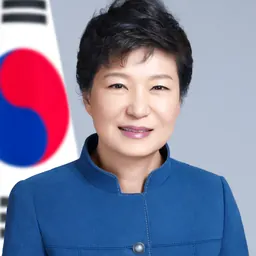

Related people
Same field, nearest in time




Contemporaries
People whose lives overlapped Lee Kwang-jae's


Frequently asked questions
Who is Lee Kwang-jae?
South Korean politician
When was Lee Kwang-jae born?
Lee Kwang-jae was born on 28 February 1965 in Gangwon Province (South Korea), Pyeongchang County, Pyeongchang-eup, South Korea.
What is Lee Kwang-jae's occupation?
Lee Kwang-jae is a politician.
What nationality is Lee Kwang-jae?
Lee Kwang-jae is South Korean.
Sources & further reading
· DBpedia: Lee Kwang-jae (politician)
Cite this page
APA: Biography.guide. (2026). Lee Kwang-jae. https://biography.guide/lee-kwang-jae/
MLA: "Lee Kwang-jae." Biography.guide, https://biography.guide/lee-kwang-jae/.
Chicago: "Lee Kwang-jae." Biography.guide. https://biography.guide/lee-kwang-jae/.
Data last updated: 2026-09-20 · Spot an error? Report a correction.
Page generated 2026-09-27 05:30 UTC