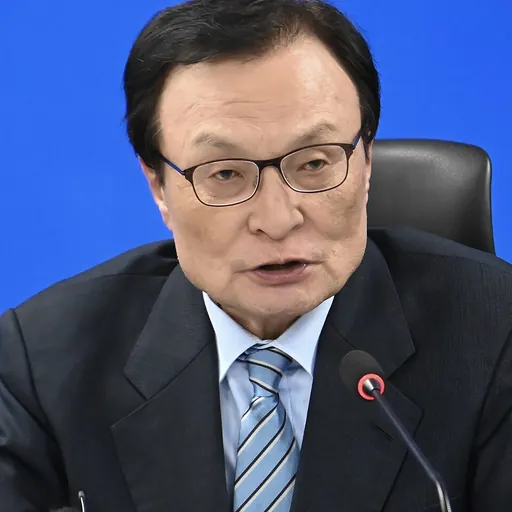
About Lee Hae Chan
Lived 1952 – 2026 (aged 73). Lee Hae Chan was a South Korean politician, journalist and head of government.
Lee Hae-chan (; 10 July 1952 – 25 January 2026) was a South Korean activist and politician who served as the prime minister of South Korea from 2004 to 2006 and as the leader of the Democratic Party of Korea from 2018 to 2020.
Born in Jangpyeong-myeon, Lee was imprisoned twice for organizing protests against the Park Chung-hee and Chun Doo-hwan dictatorships during his time at Seoul National University. After the June Democratic Struggle, he entered politics and served as a member of the National Assembly for the Gwanak District from 1988 to 1995 and 1996 to 2008. Between his terms as a legislator, Lee held office as the deputy mayor of Seoul in 1995.
Lee served as Minister of Education under President Kim Dae-jung from 1998 to 1999. He presided over controversial education reforms including revamping the college entrance process and lowering the retirement age of teachers. He later served under President Roh Moo-hyun as Prime Minister of South Korea from July 2004 to March 2006. During his premiership, he played a key role in advancing the Sejong administrative city project and finalizing Gyeongju as the site of the Wolseong Low- and Intermediate-Level Radioactive Waste Disposal Center. He resigned in 2006 following public criticism over his handling of a nationwide transport strike.
On 27 August 2018, Lee was elected the leader of the Democratic Party of Korea. He led the party to a landslide victory in the 2020 South Korean legislative election and remained an influential senior figure within the party. A close political mentor to Lee Jae Myung, he served as the vice chairman of the Peaceful Unification Advisory Council from October 2025 until his death in January 2026. Over the course of his career, Lee held senior political positions under all four liberal presidents of South Korea since the democratic transition in 1987—Kim Dae-jung, Roh Moo-hyun, Moon Jae-in, and Lee Jae Myung. He was posthumously awarded the Mugunghwa Medal of the Order of Civil Merit by President Lee Jae Myung.
Early life and education Lee was born on 10 July 1952 in Cheongyang County, South Chungcheong. His father, Lee In-yong, served as a local town head. In his memoirs, Lee described his childhood as comfortable.
He moved to Seoul for his education, graduating from Yongsan High School before entering Seoul National University in 1971 as a textile engineering major. He soon dropped out to pursue social activism and reenrolled the following year as a sociology major. In 1979, the year of the 12 December military coup by Major General Chun Doo-hwan, he founded the publishing house Dolbegae.
Lee graduated from college in 1985, 14 years after his initial enrollment. Lee was subsequently re-elected in the 1992, 1996, 2000 and 2004 elections in Gwanak, and for Sejong in the 2012 and 2016 National Assembly elections, never losing an election, earning him the sobriquet "the king of elections".
During the 1997 presidential election, Lee oversaw campaign strategy for the Kim Dae-jung campaign. Kim valued Lee's ability to analyze demographics, voter turnout and generational trends. After Kim's victory, Lee was appointed education minister at age 45.
His nomination as prime minister was met with some resistance due to his record as minister of education, which many considered a failure. After taking office, however, Lee proved an able prime minister, being described by some as the most powerful prime minister South Korea had seen. The president focused on long-term strategic leadership while Lee took full command of state administration and policy implementation. By coordinating ministries and driving complex decisions to closure, Lee effectively popularized the concept of a powerhouse prime minister or "silse chongri" in Korean.
2007 presidential bid Lee ran for the nomination of the Grand Unified Democratic New Party for the 2007 South Korean presidential election, emerging in third place of the party primary.
Party leaderships Lee then served as leader of the Democratic United Party from June to November 2012, which ended early amid deadlocked negotiations to unify the presidential bids of Moon Jae-in and Ahn Cheol-soo for the 2012 presidential election.
Death Lee died on 25 January 2026 at the age of 73 while attending a meeting of the Peaceful Unification Advisory Council in Vietnam, becoming one of a few South Korean prime ministers to die abroad. He reportedly collapsed while waiting for his flight at Tan Son Nhat International Airport in Ho Chi Minh City on 23 January. Diagnosed with myocardial infarction, Lee underwent stent insertion followed by extracorporeal membrane oxygenation treatment but was unable to recover despite significant medical assistance after suffering two cardiac arrests.
Lee's body was repatriated aboard a Korean Air flight from Tan Son Nhat International Airport, landing on the morning of 27 January at Incheon International Airport. Lee's body was welcomed at the airport by Prime Minister Kim Min-seok, National Assembly Speaker Woo Won-shik, Democratic Party leader Jung Chung-rae, floor leader Han Byung-do, Interior and Safety Minister Yoon Ho-jung, Unification Minister Chung Dong-young, and Cho Kuk, leader of the Rebuilding Korea Party.
Escorted by military honor guard, Lee's wake was held at the memorial altar of Seoul National University Hospital. President Lee Jae Myung posthumously awarded Lee Hae-chan the Mugunghwa Medal of the Order of Civil Merit on 27 January 2026.
The main funeral ceremony was then held at 9 a.m. at the National Assembly on 31 January, attended by President Lee with prime minister Kim Min-seok and National Assembly speaker Woo Won-shik giving the eulogy. Lee was cremated at 11 a.m. at Seoul Memorial Park in Seocho District, southern Seoul. Following the cremation, the procession stopped by the late former prime minister's home in Jeondong-myeon, Sejong. In accordance with his wishes to be laid to rest near his parents, Lee was buried at Eunhasu Park Cemetery in Sejong.
Election results Year Elections Constituency Political party Votes (%) Results 1988 13th National Assembly General Election Gwanak B (Seoul) PDP 39,950 (31.18%) Won 1992 14th National Assembly General Election Gwanak B (Seoul) Democratic 64,035 (44.69%) Won 1996 15th National Assembly General Election Gwanak B (Seoul) NCNP 54,049 (44.74%) Won 2000 16th National Assembly General Election Gwanak B (Seoul) MDP 48,751 (47.45%) Won 2004 17th National Assembly General Election Gwanak B (Seoul) Uri 49,673 (41.11%) Won 2012 19th National Assembly General Election Sejong (Sejong) DUP 22,192 (47.88%) Won 2016 20th National Assembly General Election Sejong (Sejong) Independent 46,187 (43.72%) Won
National honours (2026)
Don’t just read it —
keep it.
Full-length biographies made to live with: read them, listen on the way to work, watch them tonight.
- E-book
- Audio
- Video
Instant download · yours to keep · every purchase keeps this site free
Important facts
People in Lee Hae Chan's life
Named in this biography and alive at the same time




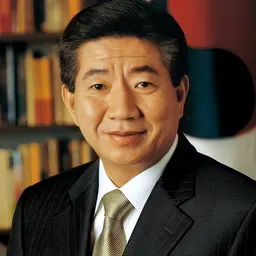


Related people
Same field, nearest in time



Contemporaries
People whose lives overlapped Lee Hae Chan's


Frequently asked questions
Who was Lee Hae Chan?
South Korean politician (1952-2026)
When was Lee Hae Chan born?
Lee Hae Chan was born on 10 July 1952 in Jangpyeong-myeon.
When did Lee Hae Chan die?
Lee Hae Chan died on 25 January 2026 in Ho Chi Minh City.
What was Lee Hae Chan's occupation?
Lee Hae Chan was a politician, journalist and head of government.
What nationality was Lee Hae Chan?
Lee Hae Chan was South Korean.
Sources & further reading
Cite this page
APA: Biography.guide. (2026). Lee Hae Chan. https://biography.guide/lee-hae-chan/
MLA: "Lee Hae Chan." Biography.guide, https://biography.guide/lee-hae-chan/.
Chicago: "Lee Hae Chan." Biography.guide. https://biography.guide/lee-hae-chan/.
Data last updated: 2026-09-21 · Spot an error? Report a correction.
Portrait: Wikimedia Commons · author & licence
Page generated 2026-09-27 05:01 UTC