
About Kim Min-seok
Born 1964. Kim Min-seok is a South Korean politician.
Kim Min-seok (; born 29 May 1964) is a South Korean politician, activist and educator who served as the prime minister of South Korea from 2025 to 2026. A member of the Democratic Party of Korea (DPK), he served as the party's leader since 2026, and as member of the National Assembly for Yeongdeungpo District B from 1996 to 2002 and again since 2020.
Born in Seoul, Kim has degrees from Seoul National University, Harvard University, Tsinghua University, and Rutgers University. He was detained for occupying the American Culture Centre in Seoul, but was pardoned by President Roh Tae-woo. Kim was elected to the National Assembly in the 1996 election, and was regarded as one of rising stars of the Democratic Party during that period. However, his loss in the Seoul mayoral election in 2002 to Lee Myung-bak contributed to a decline in his popularity. Kim's career suffered further following corruption convictions in 2002 and 2010, which contributed to additional losses in the 2004, 2008, and 2016 South Korean legislative elections.
Kim was able to make a political comeback when he was once again elected as the MP for the Yeongdeungpo District 2nd constituency in the 2020 election, marking a return to the National Assembly after 18 years. A close ally of President Lee Jae Myung, he was nominated as prime minister in June 2025 and confirmed the following month despite a boycott from the opposition People Power Party.
Early life and education
Kim Min-seok was born on 29 May 1964 in Seoul, the youngest of three children born to Kim Joo-wan and Kim Choon-ok. His oldest brother, Kim Min-woong, is the Pastor of Gillbott Church in River Edge, New Jersey, United States. His second eldest brother, Kim Min-hwa, due to a traffic collision.
He attended and studied sociology at Seoul National University. In 1982, his brother Kim Min-woong went to the United States to study political science at the University of Delaware but soon changed his mind to be a pastor. due to the breach of the National Security Act.
Kim received a Juris Master degree from Tsinghua University in China in 2010.
Early political career (1990–92) Kim started his political career in 1990 when he joined the Democratic Party, known as the Little Democrats, led by Lee Ki-taek. He demanded a recount but the margin was slightly widened for 25 votes. and Cho was elected to the position.
National Assembly (1996–2002) In the 1996 election, Kim was nominated the candidate of the National Congress for New Politics (NCNP) for Yeongdeungpo District 2nd and faced off with Choi Young-han, an actor, broadcaster and the nominee of the ruling New Korea Party (NKP). He contested under the slogan, "Kim to the Parliament, Choi to the Stage" (김민석을 국회로, 최불암은 무대로). Though he could not receive any replies from the CEO Jeong, he proved that the testimonies of Jeong was widely manipulated. In January 2000, he was again chosen as one of the "100 Global Leaders in 2000" by the World Economic Forum (WEF).
Kim was re-elected in the 2000 election, but his MDP and the coalition partner, the Alliance of Liberal Democrats (ALDE), fell short of a majority. Nevertheless, on 17 May 2000, he and some other MPs provoked a controversy when they went to a karaoke bar named Millennial NHK after the eve memorial ceremony of the Gwangju Uprising. He was also criticised in the end of year when he denounced the party's minority wing and supported the majority wing for the party's reform. He, instead, made a decision to stand for the Mayor of Seoul, as he was ineligible to run for presidential election due to the age restrictions; being just 38 years old, any presidential candidates must be at least 40 years old.
For the 2002 local election, the MDP was planning to nominate the then Mayor Goh Kun as its candidate, but he declared to not seek re-election. Should Goh not stand, Kim was one of the "new faces" of the party, along with Choo Mi-ae. On 25 February 2002, he announced he would participate in the MDP preselection. On 2 April, he received 52.1% and defeated Lee Sang-su.
He ran under 2 slogans, "The new era needs a new leader" and "New start, now the quality of life". When the campaign was officially begun, some supporters worried if Kim would lose to Lee due to low turnout. On 13 June, amid the 2002 FIFA World Cup and the corruption scandal of the President's sons, Kim only received 43.02% and came behind to Lee (52.28%). His constituency, in which he resigned in order to participate in the mayoral election, was taken over by the GNP candidate Kwon Yeong-se.
On 17 October 2002, Kim announced his departure from the MDP and participation as the Council for a Unity Candidate, where its members had withdrawn their supports to the MDP candidate Roh Moo-hyun and backed the National Unity 21 candidate Chung Mong-joon. His decision was harshly criticised in public, Because of his actions, he was given a nickname "migratory bird" , a term that refers to politicians who like to change their minds or party membership for their own benefit. In a later interview, he rued his decision. Just after a month, he was arrested for allegations of corruption relating to conduct during the 2002 local elections. He was sentenced to eight months in jail with a stay of execution for four years. Due to this, his bid for the 2008 election was refused by the United Democratic Party (UDP). Despite his election as the Vice President at the 6 July leadership election, he was again arrested in the end of year for corruption allegations. In May 2010, he contested the Democratic preselection for Busan mayorship while he was amid a trial, but was defeated by Kim Chŏng-gil. Three months later, he was sentenced a 6-million-won (~ 6,000 US$) fine and was prohibited from participating in politics for five years.
In 2014, Kim joined as a consultant for the newly-formed Democratic Party, known as the Extra-parliamentary Democrats aka Democratic (K). On 30 January 2016, he was elected the co-President of the party, alongside the former Governor of South Jeolla Province . For the 2016 election, he ran 2nd in his party list but was not elected as the party did not pass the 3% threshold. In September, the party announced its merger into the Democratic Party of Korea (DPK).
Return to the National Assembly (2020–2025) On 16 January 2020, Kim declared his candidacy for Yeongdeungpo District 2nd in the 2020 election. From his declaration, he said that he was supposed to restart from his home constituency although he still had opportunities to run for other constituencies. Ironically, Sin became the first incumbent MP to lose at DPK preselection. the word ildeung means the "1st place" in Korean. He pledged to restore Daebangcheon, which was inspired from a manifesto of Lee Myung-bak (to restore Chunggyecheon) whom he used to face off against 18 years ago. Nevertheless, the official result showed that Kim received 50.2% and defeated Park with a majority of 5.9%.
Kim argued that anti-discrimination law with LGBTQ protection infringes on the freedom of religion and expression of the Christian community. He said, "If homosexuality is chosen by all people, humanity cannot sustain," and "Therefore, it cannot be a universal value or a relativistic area that can be advocated even if the position changes." He also argued that "There may be cases where people come into contact with homosexuality due to existential concerns, but looking at recent reality, it is clear that there are cases where people come into contact with or spread it due to the social atmosphere." He argued, "At the very least, sexual attempts swept away by the atmosphere should be prevented, and religious freedom to point out and criticize such things should be guaranteed."
Premiership (2025–2026)
Following Lee Jae Myung's election as President of South Korea in the 2025 South Korean presidential election, Kim was appointed as Prime Minister of South Korea. His nomination awaited approval from the South Korean National Assembly. His two day parliamentary confirmation hearing began on 24 June 2025. The second and final confirmation hearing for Kim at the National Assembly was held on 25 June 2025. The National Assembly approved Kim's nomination on 3 July 2025 following a 173-3 vote and a boycott by the opposition People Power Party.
Kim meets Indonesian foreign minister Sugiono at Prime Minister's Office in Seoul on 21 August 2025. On 7 July 2025, Kim was officially inaugurated as Prime Minister at the Government Complex in Sejong City. In his inauguration ceremony speech, he will "become a chief aide" who will "usher in a new era for the great Republic of Korea, great people and a great president by overcoming the scars of insurrection and a second IMF (1997 Asian financial crisis) crisis."
Since taking the office as Prime Minister, Kim has bearing the official nickname as "Early Morning Prime Minister" , which emphasize that he is a early-morning person who early to work for state affairs since dawn.
On 13 January 2026, Kim officially ordered a comprehensive joint investigation into what he described as "pseudoreligious cults," specifically naming the Unification Church and the Shincheonji Church of Jesus. Speaking at the first extraordinary Cabinet meeting of 2026, Kim labelled these groups a "social evil" and directed all government ministries to collaborate on active measures to eradicate their harm.
On 30 June 2026, Kim officially stepped down from office after President Lee Jae Myung approved the National Assembly's confirmation of Han Seong-sook as prime minister.
After his premiership, on 7 July 2026, Kim announced his candidacy for the leader of the Democratic Party. On 17 August, Kim was elected as the leader of the party, defeating incumbent leader Jung Chung-rae with around 54 percent of the vote.
Personal life Kim Min-seok was first married to , a newsreader known for World Trend Music, whom he met at a coffee shop at the new wing of Korean Broadcasting System (KBS) in June 1992. and had a son and a daughter. In March 2015, it was reported they had already divorced in December 2014.
On 24 November 2019, Kim posted on his Facebook that he would remarry on 12 December.
Electoral history General elections Year Elections Constituency Political party Votes (%) Remarks 1992 14th National Assembly General Election Yeongdeungpo B (Seoul) Democratic 48,151 (40.95%) Defeated 1996 15th National Assembly General Election Yeongdeungpo B (Seoul) NCNP 49,657 (48.87%) Won 2000 16th National Assembly General Election Yeongdeungpo B (Seoul) MDP 50,438 (60.39%) Won 2004 17th National Assembly General Election Yeongdeungpo A (Seoul) MDP 21,033 (20.88%) Defeated 2016 20th National Assembly General Election PR (2nd) Democratic (K) 209,872 (0.88%) Not Elected 2020 21st National Assembly General Election Yeongdeungpo B (Seoul) Democratic 47,075 (50.26%) Won 2024 22nd National Assembly General Election Yeongdeungpo B (Seoul) Democratic 49,651 (50.18%) Won
Local elections Mayor of Seoul Year Elections constituency Political party Votes (%) Remarks 2002 3rd Iocal Election Seoul(Mayoral Elections) MDP 1,496,754 (43.02%) Defeated
Don’t just read it —
keep it.
Full-length biographies made to live with: read them, listen on the way to work, watch them tonight.
- E-book
- Audio
- Video
Instant download · yours to keep · every purchase keeps this site free
Important facts
Family & relationships
People in Kim Min-seok's life
Named in this biography and alive at the same time

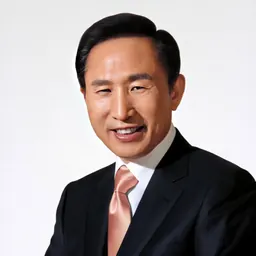

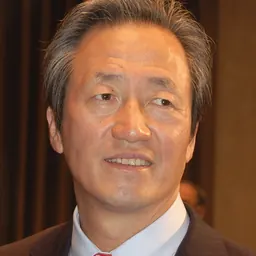


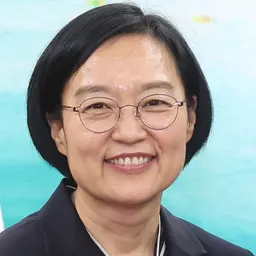

Related people
Same field, nearest in time
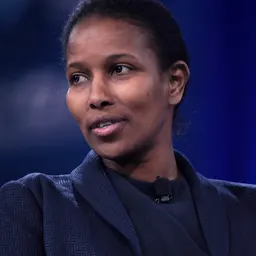




Contemporaries
People whose lives overlapped Kim Min-seok's



Frequently asked questions
Who is Kim Min-seok?
South Korean politician
When was Kim Min-seok born?
Kim Min-seok was born on 29 May 1964 in Yeongdeungpo District.
What is Kim Min-seok's occupation?
Kim Min-seok is a politician.
What nationality is Kim Min-seok?
Kim Min-seok is South Korean.
Sources & further reading
· DBpedia: Kim Min-seok (politician)
Cite this page
APA: Biography.guide. (2026). Kim Min-seok. https://biography.guide/kim-min-seok-politician/
MLA: "Kim Min-seok." Biography.guide, https://biography.guide/kim-min-seok-politician/.
Chicago: "Kim Min-seok." Biography.guide. https://biography.guide/kim-min-seok-politician/.
Data last updated: 2026-09-20 · Spot an error? Report a correction.
Page generated 2026-09-27 05:21 UTC