
Ledell Lee
American convicted of murder
About Ledell Lee
Lived 1965 – 2017 (aged 51). Ledell Lee was an American.
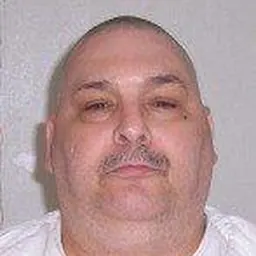
Ledell Lee (July 31, 1965 – April 20, 2017) was an American convicted murderer, suspected serial killer, and serial rapist who was executed for the 1993 murder of his neighbor, Debra Reese. He was convicted in 1995, and the Arkansas Supreme Court affirmed the conviction in 1997, but numerous questions have been raised about the justice of his trial and post-conviction representation. an unknown male. The weapon was a tire iron which the victim's husband had given her as a form of protection.
The same test also "found moderate support" that blood found on Lee's left shoe had belonged to Reese.
DNA evidence linked Lee, who had recently been paroled for burglary and theft, to three other attacks, including the 1989 abduction, rape, and murder of Christine Lewis. Lee was tried for Lewis's murder in 1994, but a mistrial was declared after it was discovered that one of the jurors was convicted felon who was related to Lee. Lee was never retried for Lewis's murder after being sentenced to death for the murder of Reese, but was sentenced to life in prison plus 150 years for two separate rapes. Lewis was abducted from her home. She was later raped, strangled, and eventually killed. Her body was found inside a closet at an abandoned home. After Lee was convicted and sentenced to death for Reese's murder, county prosecutors decided against retrying him for the alleged murder of Lewis. The victim testified that she was home alone with her three-year-old nephew and three-month-old niece on the evening of the assault. She stated that while she was rocking her niece, Lee came up behind her, put an arm around her neck, struck her on the head and face with an iron, forced her out of the house and into a wooded area, where he raped her, choked her, then held her head under water in a ditch until she lost consciousness. She testified that when she regained consciousness, she was lying face up in the ditch, wearing only a bra and a tee shirt. She returned home and was taken to a hospital emergency room where the rape examination was performed. The victim described her attacker as a tall, black man with large hands. The FBI agent who performed the DNA analysis concluded that the probability of the assailant being someone other than Lee was one in 83 million from the black population. Lee received a 60-year sentence in this case.
On October 19, 1995, Lee was convicted of the kidnapping, rape, and robbery of a 50-year-old woman on March 7, 1991. That evening, the victim returning home from the grocery store when she noticed Lee following her. When she stepped off the sidewalk to let Lee pass, he grabbed her around the neck and began strangling her, causing her to drop her groceries. Lee began rummaging through her purse in an attempt to find money. Warning the victim to remain silent if she wanted to live, Lee then dragged her to the back of the school building. When the woman attempted to cry out for help, Lee strangled her to the point of near-unconsciousness, then removed the victim's belt and bound her hands with it. After dumping out the contents of her purse, Lee found an apron that he used to cover her face. He then removed her clothes and demanded oral sex. When woman refused, he raped her and left her with her hands still bound and her face still blindfolded. Lee was sentenced to life in prison plus 150 years in this case.
Lee's prior convictions were cited by the prosecution at the sentencing phase of his capital murder trial. The judge described him as a "hunter" whose "prey were the people of Jacksonville from 1990 to 1993."
Death row Lee was placed on death row in 1995. During most of that time, he was kept in solitary confinement, with extremely limited social contact. This is customary for death row prisoners. Lee was interviewed by the BBC before his execution. He said, "My dying words will always be, as it has been: I am an innocent man".
Appeals Lee maintained his innocence until the time of his death. Before he was executed, Lee was working with his lawyers at the Innocence Project and ACLU to conduct DNA analysis on blood and hair evidence collected from the 1993 crime scene. It had never been previously tested in the case. The state of Arkansas denied the defense request to have the analysis done. Lee's counsel had argued that they should be allowed to locate crime scene evidence collected in 1993, including a single hair and a Converse shoe with a pinhead-sized spot of human blood on it, for modern DNA testing. They hoped testing could prove that another man had been at the crime scene, and that evidence did not match Lee's DNA. During the hearing, Lee's attorney Lee Short made the case that prior counsel in the Reese case failed Lee by not insisting on modern DNA testing of the items prior to that time. He said that Lee had contacted the Innocence Project in 1996, asking for them to take up his case, but was told they did not have the staff or funding.
Controversy over judge's conflict of interest According to the ACLU:
Additionally, Lee was tried by a judge who concealed his own conflict of interest: an affair with the assistant prosecutor, to whom the judge was later married. Mr. Lee's first state post-conviction counsel introduced the evidence of the affair by calling the judge's ex-wife, who testified about the affair after opposing the subpoena. That lawyer, however, was so intoxicated at the hearing that the state moved for him to be drug tested after he slurred, stumbled, and made incoherent arguments. The inebriated lawyer also represented Lee briefly in federal court, where he raised the important claim that Lee was ineligible for execution because of intellectual disability. Lee won new proceedings because of the lawyer's drunkenness, though his representation did not improve afterward. His next lawyers failed to introduce evidence of the affair, giving up one of many of Lee's important arguments, and never pursued his innocence or intellectual disability claims.
Throughout the legal challenges, the family of Debra Reese hoped that the execution would go through as scheduled. He had no last words.
At 11:44 p.m., Lee was given the lethal injection. His eyes closed three minutes later and he did not appear to show signs of discomfort, according to Sean Murphy, a reporter with the Associated Press and one of three media witnesses.
Lethal injection controversy in Arkansas In April 2017, Arkansas planned to execute eight death row inmates including Ledell Lee, along with Don W. Davis, Stacey Johnson, Jack Harold Jones, Jason McGehee, Bruce Earl Ward, Kenneth Williams, and Marcel Williams, before the stocks of the sedative midazolam expired at the end of April. Because Europe has prohibited export of these drugs to the United States and the major manufacturer is there, states in the US have been struggling with supplies.
A federal judge initially issued an injunction preventing the executions, but the Arkansas Supreme Court overturned the ruling. The United States Supreme Court rejected a claim that the accelerated execution schedule was "cruel and unusual punishment" under the constitution. At one point in the evening of April 20, 2017, the United States Supreme Court briefly delayed the execution as it reviewed appeals. It voted 5–4 to allow the state to proceed with the execution. On April 20, 2017, at about 11:30p.m. CDT, the state of Arkansas was allowed to proceed with Lee's execution.
In his first vote since being appointed to the US Supreme Court, Justice Neil Gorsuch voted in favor of the execution. At 11:56p.m. CDT, four minutes prior to the expiration of his execution warrant, Ledell Lee was executed. About 30 minutes after the high court's ruling, Lee was pronounced dead.
"The governor knows the right thing was done tonight," said J.R. Davis, a spokesman for Arkansas Governor Asa Hutchinson, who scheduled the multiple executions. "Justice was carried out." The state has proceeded with executions in order to avoid the expiration of drugs used in lethal injections. On April 24, 2017, the state executed Jack Harold Jones and Marcel Williams, in the first double execution in the United States in 17 years.
Post-execution DNA testing In April 2021, new DNA testing found "unknown male" DNA on the murder weapon and bloody clothes found at the scene. However, the test also "found moderate support" that blood on Lee's left shoe could have belonged to Reese.
Don’t just read it —
keep it.
Full-length biographies made to live with: read them, listen on the way to work, watch them tonight.
- E-book
- Audio
- Video
Instant download · yours to keep · every purchase keeps this site free
Important facts
People in Ledell Lee's life
Named in this biography and alive at the same time





Contemporaries
People whose lives overlapped Ledell Lee's



Frequently asked questions
Who was Ledell Lee?
American convicted of murder (1965-2017)
When was Ledell Lee born?
Ledell Lee was born on 31 July 1965 in Blytheville.
When did Ledell Lee die?
Ledell Lee died on 20 April 2017 in Cummins Unit.
What nationality was Ledell Lee?
Ledell Lee was American.
Sources & further reading
Cite this page
APA: Biography.guide. (2026). Ledell Lee. https://biography.guide/ledell-lee/
MLA: "Ledell Lee." Biography.guide, https://biography.guide/ledell-lee/.
Chicago: "Ledell Lee." Biography.guide. https://biography.guide/ledell-lee/.
Data last updated: 2026-09-20 · Spot an error? Report a correction.
Page generated 2026-09-27 05:13 UTC