
About Learmonth White Dalrymple
Lived 1827 – 1906 (aged 79). Learmonth White Dalrymple was a New Zealand suffragette.
Learmonth White Dalrymple (c.1827–26 August 1906) was a New Zealand educationalist who campaigned for girls' secondary education in Dunedin and for women to be admitted to the University of Otago. This was the first Australasian university to agree to this and the school is said to be the first public high school for girls in the Southern hemisphere.
Early life She was born in Coupar Angus, Angus, Scotland about 1827, the eldest of nine children. Her unusual name most likely comes from the Learmonth family, which married into the Dalrymple family. Her mother Janet (née Taylor) died on 23 February 1840, leaving eight surviving children. Her father William Dalrymple, an ironmonger and trader in minerals, manure and grain, remarried Margaret Saunders, but she died within a year or two. Learmonth travelled extensively in Europe and learned fluent French, but also took over much of the work of raising her siblings.
William decided to emigrate to Wellington, New Zealand, and sailed on the Rajah from Gravesend on 14 June 1853 with Learmonth and three other of his children. A fifth joined them in New Zealand some years later. The trip was an eventful one, as they encountered a pirate ship. All women and children were issued weapons and brought on deck, which deterred the pirates. Near Tasmania, the Rajah was damaged in a storm, with a wave sweeping over the decks, carrying away the boats and cooking galley, and doing extensive damage to the stern. The ship stopped at Dunedin for two months for repairs before continuing to Wellington. The Dalrymples decided to return to Otago, where they settled first at Goodwood Richardson and William Reynolds moved in the Provincial Council that a scheme for girls' education should be presented to the next session. The motion passed unanimously, but nothing resulted from it.
Dalrymple organised a public meeting in Dunedin in November 1865. She felt unable to chair the meeting because it was not appropriate for an unmarried woman to do so, but persuaded a Mrs Thomas to take that position on the understanding that Dalrymple would do all the talking. About thirty women attended, but the meeting was disrupted by a couple of interruptions, and then had to be abandoned because a German band practising outside made speech impossible. The petition was presented to the Provincial Council in early December 1865. It was passed to a Select Committee on Education, which praised it and recommended it be implemented, but no action was taken. wrote numerous letters over the next two years (between 700 and 800 over the seven-year campaign)
Later life Dalrymple worked to improve kindergarten education, writing a pamphlet and requesting to Parliament that they establish the Frobel system of pre-school learning. She also became a member of the Association for Promoting the Practice and Study of Economics in the Schools of the Colony, which advocated setting up savings banks in schools. She continued to support the Girls' School, donating a prize to it each year and founded a scholarship for women at the university. By 1896 she was living south of Feilding in Levin where she continued to participate in civic activities such as voting and education reform. She was the organizing president of the Levin chapter of the WCTU NZ as well as the national Superintendent of the Bible in Schools department. By 1902 she also served as the WCTU NZ Superintendent of Peace and Arbitration. However, she did not stop addressing the youth-oriented justice issues close to her heart: Bible in schools, boys and smoking, savings banks in schools, as well as the problem of barmaids as degrading for young women and being used to lure young men to drink to excess.
Death and legacy She returned to Dunedin about 1901 as her health failed, and died there on 26 August 1906.
Otago Girls' High School hung a portrait of her in the school hall in 1896, and named the Dalrymple Block, a specialist building, after her in 1960.
Don’t just read it —
keep it.
Full-length biographies made to live with: read them, listen on the way to work, watch them tonight.
- E-book
- Audio
- Video
Instant download · yours to keep · every purchase keeps this site free
Important facts
People in Learmonth White Dalrymple's life
Named in this biography and alive at the same time

Related people
Same field, nearest in time
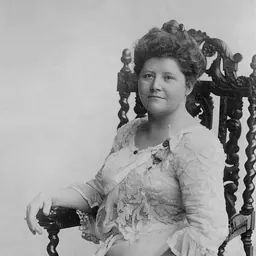


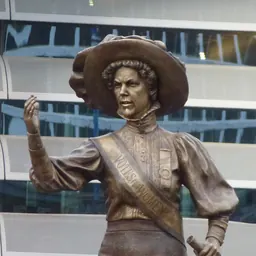
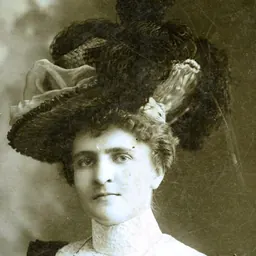

Contemporaries
People whose lives overlapped Learmonth White Dalrymple's





Frequently asked questions
Who was Learmonth White Dalrymple?
educationalist (1827-1906)
When was Learmonth White Dalrymple born?
Learmonth White Dalrymple was born on 21 July 1827 in Coupar Angus.
When did Learmonth White Dalrymple die?
Learmonth White Dalrymple died on 26 August 1906 in Dunedin.
What was Learmonth White Dalrymple's occupation?
Learmonth White Dalrymple was a suffragette.
What nationality was Learmonth White Dalrymple?
Learmonth White Dalrymple was New Zealand.
Sources & further reading
· Wikipedia: Learmonth White Dalrymple
· DBpedia: Learmonth White Dalrymple
Cite this page
APA: Biography.guide. (2026). Learmonth White Dalrymple. https://biography.guide/learmonth-white-dalrymple/
MLA: "Learmonth White Dalrymple." Biography.guide, https://biography.guide/learmonth-white-dalrymple/.
Chicago: "Learmonth White Dalrymple." Biography.guide. https://biography.guide/learmonth-white-dalrymple/.
Data last updated: 2026-09-25 · Spot an error? Report a correction.
Page generated 2026-09-27 05:13 UTC