
About Lázaro Báez
Born 1956. Lázaro Báez is an Argentine businessperson.
Lázaro Báez (born 11 February 1951) is an Argentine businessman. Báez is a central figure in the corruption scandal known as The Route of the K-Money, surrounding former Argentine presidents Néstor Kirchner and Cristina Fernández de Kirchner; the case was also known as Lázarogate.
Báez became a friend of Kirchner in 1991, and in 2003 founded a construction company, Austral Construcciones, which was awarded many government contracts during Kirchner's presidency. In 2011 Báez built Kirchner's mausoleum. He has been called "the main beneficiary of public works in Patagonia".
In custody since 2016, in 2021 he was sentenced to 12 years in prison for money laundering. In December 2022, he was sentenced to six years in prison for an unlawful business partnership with former Argentine president Cristina Fernández de Kirchner while she was in office.
Early life and education Báez was born in 1951 in San Luis del Palmar, Corrientes, Argentina, to a family of Peronists. His family moved to Río Gallegos, Santa Cruz, in Patagonia, in 1962. The move was reportedly caused by political persecution, his father having apparently had to leave his home province following the coup against President Arturo Frondizi.
In 1984 he married Norma Beatriz Calismonte, who worked as tutor assistant in a public secondary school.
Beginning in 2005, Austral and other firms owned by Báez were awarded the majority of the contracts offered by the province of Santa Cruz during the presidency of Néstor Kirchner and 12% of the contracts awarded by the Ministry of Planning under Minister Julio de Vido. Over a five-year period, the firm received 4 billion dollars in federal contracts and 1.2 billion dollars in contracts for the province of Santa Cruz. His firm Southern Building was investigated in Liechtenstein for money laundering.
Other business activities After 2006, Báez began to buy properties along the Santa Cruz River. He ultimately paid more than $28 million for 10 properties totaling 200,000 acres. Later he contracted with Kirchner to construct the Cóndor Cliff-La Barrancosa Dams which would flood those lands. One commentator wrote in 2012 that Báez had plainly purchased the properties knowing that they would be made valuable by the dam project. "In any serious country this would be called the use of privileged information, influence peddling, [and] corruption."
Báez built himself a mansion outside of Rio Gallegos. In recent years he has expanded his interests into the oil business and properties along the Santa Cruz River.
Báez also owns the oil firms Misahar SA and Epsur SA,
He has two sons, Martín Antonio Báez and Leandro Martín Báez. The former, who has his own mansion in Rio Gallegos, is considered Báez's likely successor as head of his empire. Kirchner reportedly ate his last dinner with Báez and with the two men's wives. It was Báez, moreover, who built Kirchner's massive mausoleum in the Rio Gallegos Cemetery.
Jorge Lanata program On April 14, 2013, journalist Jorge Lanata of Periodismo para todos ("Periodismo para todos"), a news program aired on Argentina's Channel 13, presented a report entitled "La ruta del dinero K" ("The K Money Trail"), with "K" standing for the late Argentinian president Néstor Kirchner. Lanata's report included a videotaped testimony by financier Federico Elaskar and a hidden-camera recording of businessman Leonardo Fariña in which these men described large-scale illegal financial manipulations by members of the Kirchner circle, including Báez, that involved the transfer of about 55 million euros over a six-month period to Switzerland and other foreign tax havens. The men indicated that Kirchner himself was directly involved in these maneuvers.
Allegedly, at Báez's direction, Fariña orchestrated a plan whereby the funds were sent abroad via Elaskar's financial firm, SGI. More than fifty companies were purportedly created with the express purpose of facilitating these transfers. Also supposedly involved in this scheme was Fabián Rossi, who was said to have funneled the money through Panama banks. According to Elaskar, silver from Patagonia was shipped to Switzerland by way of Montevideo, Uruguay.
Asked on hidden camera whether Báez was an associate of Kirchner's, Fariña said yes, and added that "in politics there are no front men, only operators." Elaskar said that he had been cheated and threatened with death by business associates of Báez.
Legal case After the Lanata program was aired, several opposition legislators called on public prosecutor Carlos Gonella to investigate the accusations against Báez. They also called for the freezing of Báez's assets.
A judicial investigation of Báez on charges of money laundering, conspiracy, and cover-up was initiated on April 17. Martín Irurzun of the Federal Court appointed Sebastián Casanello as the judge in the case.
On the same date, and again in early May, raids were carried out on SGI's offices at "La Rosadita" by la Policía de Seguridad Aeroportuaria (Airport Security Police, PSA) on the orders of Casanello. In early June, Báez's possessions and safety boxes were raided by the National Gendarmerie, also on Casanello's orders. Báez was described as being "visibly upset" by the raids, which he described as "unnecessary show."
Other persons charged in the case included Elaskar, Fariña, Rossi, Báez's son Leandro Martín Báez, and Daniel Perez Gadin.
On May 3, after Elaskar and Fariña had already been charged, federal prosecutor William Marijuan filed money laundering charges against Báez.
Judge Casanello called Lárazo Báez for inquiry in 2016. He took a plane with unknown destination, so the judge ordered his detention, fearing an attempt to escape.
Báez lawsuits against Elaskar and Farina It was reported on May 5 that Báez was suing Elaskar and Fariña for the statements they had made about him on Lanata's program. Báez called the accusations part of "a smear campaign...with a clear political agenda." On May 22, Báez said that he had never worked with Fariña, and that Fariña had, rather, worked for the firm Pluscarga, which did business with Báez's businesses. He also denied any involvement in money laundering or any business relationship with Kirchner.
Báez's lawsuit against Fariña and his wife, Karina Jelinek, on charges of slander was dismissed in early July by judge Raúl García.
Further revelations In December 2013, the Argentinian newspaper La Nacion reported that seven Báez companies had signed documents agreeing to rent 935 rooms a month at the Alto Calafate Hotel throughout 2010 and 2011, whether or not they were occupied. regardless of whether in fact employees were staying there. La Nacion additionally revealed that Báez had paid at least $3.2 million to Kirchner in "rent" for Las Dunas, an inn in El Calafate, and that he had paid a total of $14.5 million in "rent" for the two hotels, plus the La Aldea Hotel, during 2010 and 2011, even as Báez was receiving large sums from the federal government for public works projects.
It also emerged in December 2013 that Báez, during the previous ten years, in Santa Cruz alone, had purchased tracts of land amounting to at least 263,000 hectares, or 13 times the size of the Federal District.
December 2013 raid On the orders of tax court judge Javier López Biscayart, who was investigating Báez on charges of tax evasion and money laundering, the Argentinian federal police raided the offices of Austral Construcciones in Buenos Aires in late December 2013.
Security measures In January 2014, it was reported that Báez traveled with such a level of security that it was "as if he were the President of the United States in a war zone."
Swiss investigation It was reported in August 2013 that the investigation of Báez's financial dealings in Switzerland was stalled because that country's Department of Justice was refusing to release information about Swiss bank accounts held in the name of one of Báez's sons.
The Swiss ambassador to Argentina, Johannes Matyassy, said in January 2014 that a criminal investigation into Báez's financial activities in Switzerland was progressing. Matyassy said that this was the first case in which Switzerland and Argentina had collaborated in such a manner under a new cooperative agreement.
Uruguayan investigation It was reported in late January 2014 that a Uruguayan investigation into the money laundering charges against Báez had not progressed, owing to the failure of Argentinian authorities to cooperate with the investigation.
Don’t just read it —
keep it.
Full-length biographies made to live with: read them, listen on the way to work, watch them tonight.
- E-book
- Audio
- Video
Instant download · yours to keep · every purchase keeps this site free
Important facts
People in Lázaro Báez's life
Named in this biography and alive at the same time


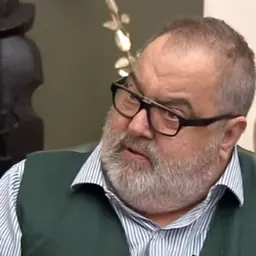
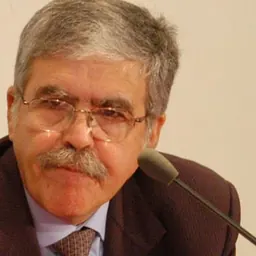

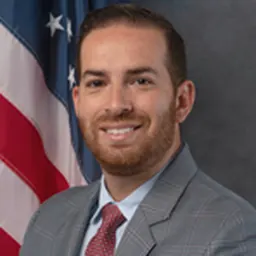


Related people
Same field, nearest in time




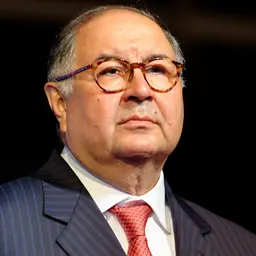

Contemporaries
People whose lives overlapped Lázaro Báez's
Frequently asked questions
Who is Lázaro Báez?
Argentine businessman
When was Lázaro Báez born?
Lázaro Báez was born on 11 February 1956 in Corrientes.
What is Lázaro Báez's occupation?
Lázaro Báez is a businessperson.
What nationality is Lázaro Báez?
Lázaro Báez is Argentine.
Sources & further reading
Cite this page
APA: Biography.guide. (2026). Lázaro Báez. https://biography.guide/lazaro-baez/
MLA: "Lázaro Báez." Biography.guide, https://biography.guide/lazaro-baez/.
Chicago: "Lázaro Báez." Biography.guide. https://biography.guide/lazaro-baez/.
Data last updated: 2026-09-20 · Spot an error? Report a correction.
Page generated 2026-09-27 05:19 UTC