
Lawrence Kubie
American neurologist and psychotherapist
About Lawrence Kubie
Lived 1896 – 1973 (aged 76–77). Lawrence Kubie was an American neurologist, psychotherapist and psychiatrist.
Lawrence Schlesinger Kubie (17 March 1896 – 27 October 1973) was an American psychiatrist and psychoanalyst who practiced in New York City from 1930 to 1959. Kubie had several celebrity patients, including Tennessee Williams, Leonard Bernstein, Moss Hart, Kurt Weill, Vivien Leigh , and Sid Caesar.
Life After graduating from Harvard College in 1916, Kubie took a medical degree from Johns Hopkins University in 1921 and later became a Freudian psychoanalyst. though John Lahr's biography of Williams disputes the claim.
Kubie married Susan Hoch in 1921 and had three children by her, one of whom died in infancy. In 1938, Kubie remarried the writer Eleanor Gottheil Benjamin; they divorced in 1949. From 1962 to 1963, Kubie was married to Evelyn Bigelow Clark. Kubie died on October 27, 1973, in Baltimore.
Partial list of publications A Theoretical Application to Some Neurological Problems of the Properties of Excitation Waves Which Move in Closed Circuits, Brain 53(2): 166–177, 1930. « Repetitive Core of Neuroses », in Psychoanal. Quart., 1941 « The use of induced hypnagogic reveries in the recovery of repressed amnesic data », in Bull Menninger Clin, 7, 1943 « Communication between sane and insane : Hypnosis » in Cybernetics: Transactions of the Eighth Conference; Josiah Macy Jr. Foundation, New York (Heinz von Foerster, Margaret Mead, Hans Lukas Teuber), 1952 « Psychiatric and psychoanalytic considerations of the problem of consciousness » in J.F. Delafresnay (dir.) Brain mechanisms and consciousness, a symposium, Springfield, 1954 Neurotic Distortion of the Creative Process, New York : Noonday Press, 1958 « L'hypnotisme. Terrain de choix pour les recherches psychophysiologiques et psychanalytiques » in Arch. gen. Psychiat., 1961, repris dans Rev. Ned. Psychosom., 1963 « Theoretical aspects of sensory deprivation » in P. Solomon (dir.) Sensory Deprivation: A Symposium Held at Harvard Medical School, 1961 « The concept of dream deprivation : A critical analysis », Psychosom. Med., 1962 « Missing and wanted : Heterodoxy in psychiatry and psychoanalysis : Editorial », J. nerv. ment. Dis., 1963 « The relation of psychotic disorganization to the neurotic process », L. Amer. psychoanal. Ass., 1967 « The nature of psychological change and its relation to cultural change », in B. Rothblatt (dir.), Changing perspectives on man, Chicago, 1968 « Multiple fallacies in the concept of schizophrenia », J. nerv. ment. Dis., 1971 (fr)« L'illusion et la réalité dans l'étude du sommeil, de l'hypnose, de la psychose et du réveil », in The International Journal of Clinical and Experimental Hypnosis, 1972, repris dans Revue médicale psychosomatique, 2, 1976 et dans Léon Chertok (dir) Résurgence de l'Hypnose: une bataille de deux cents ans, 1984
With Milton H. Erickson
« The use of automatic drawing in the interpretation and relief of a state of acute obsessional depression », Psychoanalytic Quarterly, 7, 1938, p. 443-466 « The permanent relief of an obsessional phobia by means of communications with an unsuspected dual personality », Psychoanalytic Quarterly, 8, 1939, p. 471-509 « The translation of the cryptic automatic writing of one hypnotic subject by another in a trance-like dissociated state », Psychoanalytic Quarterly, 9, 1940, p. 51-63 « The successful treatment of a case of acute hysterical depression by a return under hypnosis to a critical phase of childhood », Psychoanalytic Quarterly, 10, 1941, p. 583-609
With Sydney G. Margolin
(fr) « A physiological method for the induction of states of partial sleep, and securing free association and early memories in such states », Trans. Amer. Neurol. Ass., 68, 1942, p. 136-139 « An apparatus for the use of breath sounds as a hypnagogic stimulus », American journal of psychiatry, 100, 1944, p. 610 « The process of hypnotism and the nature of the hypnotic state », American journal of psychiatry, 100, 1944, p. 611-
Don’t just read it —
keep it.
Full-length biographies made to live with: read them, listen on the way to work, watch them tonight.
- E-book
- Audio
- Video
Instant download · yours to keep · every purchase keeps this site free
Important facts
People in Lawrence Kubie's life
Named in this biography and alive at the same time
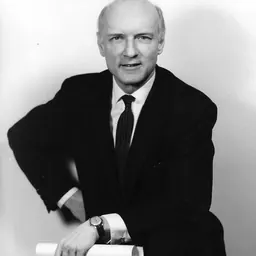
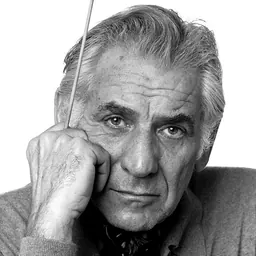
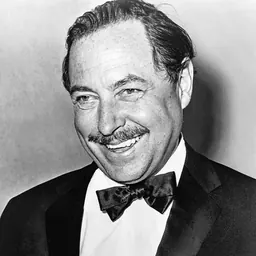

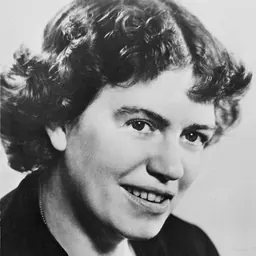

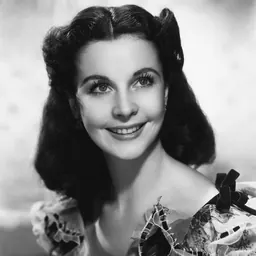
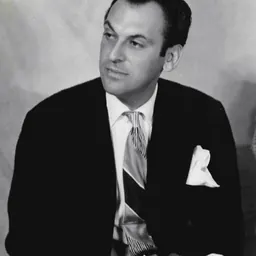
Related people
Same field, nearest in time
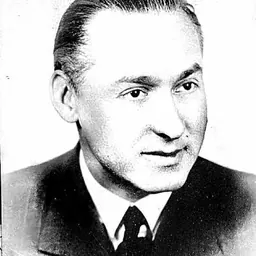

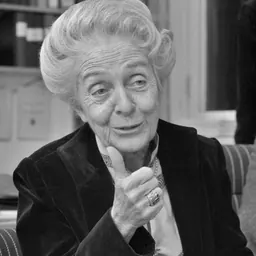

Contemporaries
People whose lives overlapped Lawrence Kubie's





Frequently asked questions
Who was Lawrence Kubie?
American neurologist and psychotherapist (1896–1973)
When was Lawrence Kubie born?
Lawrence Kubie was born in 1896 in Manhattan.
When did Lawrence Kubie die?
Lawrence Kubie died in 1973 in Towson.
What was Lawrence Kubie's occupation?
Lawrence Kubie was a neurologist, psychotherapist and psychiatrist.
What nationality was Lawrence Kubie?
Lawrence Kubie was American.
Sources & further reading
Cite this page
APA: Biography.guide. (2026). Lawrence Kubie. https://biography.guide/lawrence-kubie/
MLA: "Lawrence Kubie." Biography.guide, https://biography.guide/lawrence-kubie/.
Chicago: "Lawrence Kubie." Biography.guide. https://biography.guide/lawrence-kubie/.
Data last updated: 2026-09-20 · Spot an error? Report a correction.
Page generated 2026-09-27 05:11 UTC