
About Lawrence H. Keeley
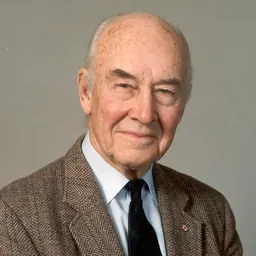
Lived 1948 – 2017 (aged 69). Lawrence H. Keeley was an American archaeologist and university teacher.
Lawrence H. Keeley (August 24, 1948 – October 11, 2017) was an American archaeologist best known for pioneering the field of microwear analysis of lithics. He is also known for his 1996 book, War Before Civilization: The Myth of the Peaceful Savage. Keeley worked as a professor of archaeology at the University of Illinois Chicago.
Early life
Keeley was born and raised in Cupertino, California, where he attended Cupertino High School. After high school, he went on to earn his B.A. in Anthropology from San José State University in 1970. Keeley initially pursued graduate education at the University of Oregon, but his professors encouraged him to enroll in a British university. After transferring, Keeley earned his Ph.D. in Archaeology at the University of Oxford in 1977. Microwear analysis is one of two primary methods (the other being use-wear analysis) for identifying the functions of artifact tools. Both methods rely on examination of the smoothed down sections of blades, called "polishes," formed on the working edges of lithics. Microwear differs from use-wear because of the scale at which the analysis happens; microwear analysis is the use of microscopy to evaluate and understand these polishes. Keeley is considered to be a pioneer of microwear analysis, and microwear analysis has become a vital method of archaeological research. Running a blind test granted their results objectivity and turned the experiment into an argument for the general use of microwear analysis in archaeological research. As a result of these original results and similar tests, microwear has enjoyed consistent use and development across the field of Paleolithic archaeology since 1977.
Despite Keeley's successful identification of the majority of the lithics provided by Newcomer and subsequent similar blind tests by other archaeologists, Newcomer wrote critically of microwear analysis in 1986. He wrote of a series of blind tests run by London University, "there has been no convincing demonstration that anyone can consistently identify worked materials by polish type alone." However, other archaeologists have defended Keeley's contribution and even criticized Newcomer's skepticism.
Koobi Fora study
Keeley worked with Nicholas Toth in 1981 to analyze oldowan tools from Koobi Fora, Kenya. Using microwear and use-wear analysis, the pair narrowed their research to 54 lithic flakes from among the oldowan, which they used to understand the at least 1.4 million year-old civilization. Nine of these 54 exhibited signs of wear in their analysis, which involved high power microscopy at 50-400x magnification. Keeley discovered that these nine flakes, which would have been overlooked by most traditional studies, were actually used as stone tools themselves and were not simply debitage from the creation of lithic cores. Their conclusion was that flakes themselves were the desired tool in lithic reduction, which was supported by their identification of flakes used for butchery, woodworking, and standard cutting of plant matter. At the time of publishing, this use theory ran counter to a competing theory that lithic cores were the primary intended tools. Since publishing, however, their theories have become widely known and have found support in several other studies. Their joint study was published in Nature and has been widely cited as an example of hominid behavioral reconstruction.
War Before Civilization According to War before Civilization, modern western societies are significantly less violent than various historical groups.
Keeley's best known work is War Before Civilization: The Myth of the Peaceful Savage, published by the Oxford University Press in 1996. This book was an empirical rebuttal of the popular romantic anthropological idea of the "noble savage."
The findings of this book have been the subject of some criticism, including a short 2014 article reprinted by Indian Country Today. Keith F. Otterbein, an anthropology professor, criticized Keeley's book in American Anthropologist, explaining that Keeley was right to identify two competing theories on human nature, but that he did not capture the full scope of historical developments by disregarding the idea of peaceful prehistoric hominids. Neil L. Whitehead, another notable anthropologist and someone identified by Keeley as a proponent of the myth of the peaceful savage, sympathized with Otterbein but saw other ways to challenge Keeley's "peculiar view" of anthropology.
Books Experimental Determination of Stone Tool Uses: A Microwear Analysis (University of Chicago Press, 1980); War Before Civilization: The Myth of the Peaceful Savage (Oxford University Press, 1996);
Don’t just read it —
keep it.
Full-length biographies made to live with: read them, listen on the way to work, watch them tonight.
- E-book
- Audio
- Video
Instant download · yours to keep · every purchase keeps this site free
Important facts
People in Lawrence H. Keeley's life
Named in this biography and alive at the same time
Related people
Same field, nearest in time
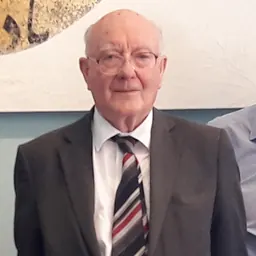
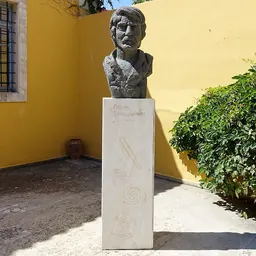

Contemporaries
People whose lives overlapped Lawrence H. Keeley's

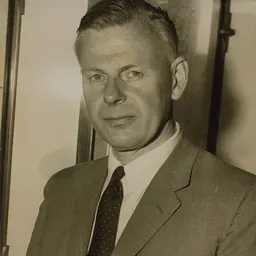

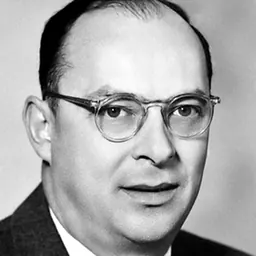

Frequently asked questions
Who was Lawrence H. Keeley?
American archeologist (1948-2017)
When was Lawrence H. Keeley born?
Lawrence H. Keeley was born on 24 August 1948 in Cupertino.
When did Lawrence H. Keeley die?
Lawrence H. Keeley died on 11 October 2017.
What was Lawrence H. Keeley's occupation?
Lawrence H. Keeley was an archaeologist and university teacher.
What nationality was Lawrence H. Keeley?
Lawrence H. Keeley was American.
Sources & further reading
· Wikipedia: Lawrence H. Keeley
Cite this page
APA: Biography.guide. (2026). Lawrence H. Keeley. https://biography.guide/lawrence-h-keeley/
MLA: "Lawrence H. Keeley." Biography.guide, https://biography.guide/lawrence-h-keeley/.
Chicago: "Lawrence H. Keeley." Biography.guide. https://biography.guide/lawrence-h-keeley/.
Data last updated: 2026-09-20 · Spot an error? Report a correction.
Page generated 2026-09-27 05:20 UTC