
Lauritz Sand
Norwegian resistance member
About Lauritz Sand
Lived 1879 – 1956 (aged 77). Lauritz Sand was a Norwegian topographer, chief officer and dutch East Indies.
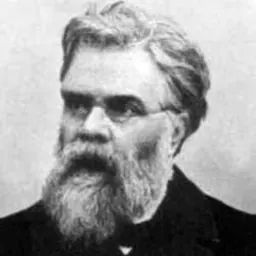
Lauritz Sand (1 October 1879 – 17 December 1956) was a Norwegian topographer, military officer in the Dutch army, estate owner in the Dutch East Indies, business man and resistance pioneer of World War II. He was called the hardest tortured person in Norway during the war, and came to be an important symbol of the resistance against the Nazi regime.
Early and personal life Sand was born in Trondheim, as a son of Fritz Julius Sand and his wife Anna Bergithe Kavli. He studied architecture at Stockholms tekniske skole in Sweden from 1897 to 1899. Architecture was not his main interest, and he wanted to be an artist. He tried his way as a sculptor at the age of nineteen, but received negative criticism, and then immediately started on a military career. He married Dutch citizen Annie Elisabeth Maria Moll in Java in 1911.
Career
Military and plantation career Sand had a military career in the Royal Dutch East Indies Army. He followed military education in Harderwijk and Batavia. When the war broke out, he became a pioneer in the resistance work. He was active in several areas, but eventually focused on intelligence, particularly photographing and mapping of German military installations. Sand distinguished himself amongst the early resistance as "dynamic and outward, with temperament and inspiration."
Sand was arrested in September 1941, having been turned in by Abwehr agent Laura Johannessen, who had befriended Sand and infiltrated his group. Through several friendly meetings with Sand at the restaurant Theatercaféen at Oslo's Hotel Continental Johannesen had acquired a good insight into the activities of Sand and his companions. He carried compromising documents at the time of the arrest. and was brought to Grini "more dead than alive", seriously wounded in the head and back, and with broken arms and legs. New, violent interrogations followed. It was said he was the hardest tortured person in Norway, and his example became a symbol of the resistance against the Nazi regime. In the late phase of the war he was told that his execution by gunshot was planned for 17 May 1945; however he was saved when the Nazis surrendered on 8 May.
Sand was haunted by pains, stress, nightmares and hallucinations after the liberation, but worked for war veterans for the rest of his life. He was decorated as a Knight of the Royal Norwegian Order of St. Olav in 1945. A bust of Sand, with the single word "Nei" , was revealed at Griniveien near Eiksmarka in 1952, with the presence of both King Haakon and Crown Prince Olav. The word "Nei" was inscribed on the bust because this was the only answer Sand would give his interrogators during the four years of captivity and torture, despite having "every bone in his body" systematically broken, and being left to die several times. Sand died, from the wounds he sustained during World War II captivity, on 17 December 1956 in Bærum. The bust was moved slightly in 1980.
Don’t just read it —
keep it.
Full-length biographies made to live with: read them, listen on the way to work, watch them tonight.
- E-book
- Audio
- Video
Instant download · yours to keep · every purchase keeps this site free
Important facts
Related people
Same field, nearest in time




Contemporaries
People whose lives overlapped Lauritz Sand's


Frequently asked questions
Who was Lauritz Sand?
Norwegian resistance member (1879-1956)
When was Lauritz Sand born?
Lauritz Sand was born on 1 October 1879 in Trondheim, Trondheim municipality.
When did Lauritz Sand die?
Lauritz Sand died on 17 December 1956 in Bærum Municipality.
What was Lauritz Sand's occupation?
Lauritz Sand was a topographer, chief officer and dutch East Indies.
What nationality was Lauritz Sand?
Lauritz Sand was Norwegian.
Sources & further reading
Cite this page
APA: Biography.guide. (2026). Lauritz Sand. https://biography.guide/lauritz-sand/
MLA: "Lauritz Sand." Biography.guide, https://biography.guide/lauritz-sand/.
Chicago: "Lauritz Sand." Biography.guide. https://biography.guide/lauritz-sand/.
Data last updated: 2026-09-20 · Spot an error? Report a correction.
Page generated 2026-09-27 05:28 UTC