
About Lauritz Peter Holmblad
Lived 1815 – 1890 (aged 75). Lauritz Peter Holmblad was a Danish merchant and judge.
Lauritz Peter Holmblad (8 July 1815 – 16 November 1890), often referred to as L. P. Holmblad, was a Danish industrialist and philanthropist. His company, which was simply known as L. P. Holmblad, had activities in dyes, soap, glue and playing cards. Holmblad was also part of the circle around Carl Frederik Tietgen, co-founding several of his companies.
Holmblad is associated with Amager, Copenhagen, where Holmbladsgade is named after him.
Family background
L. P. Holmblad was born into a family of industrialists on 8 July 1815. His great-grandfather, Jacob Holmblad, a Swedish dyer who emigrated to Denmark in about 1766, introduced new production methods at the Royal Textile Factory where he used Rubia plants to produce the red dye for the Royal Life Guards' gala uniforms. In 1777 he obtained a royal privilege to set up his own dye factory. It was situated in Sølvgade (No. 38, now Holmblad House) but later moved to the corner of Gothersgade and Regnegade. The enterprise was later taken over by his son, Lauridz Holmblad, who also founded a soap factory in 1805 and started Denmark's first real production of paint in 1819. L. P. Holmblad's father Jacob Holmblad inherited the soap factory in 1827 while his uncle Carl Frederik Holmblad took over the paint factory, the future Sadolin & Holmblad.
Jacob Holmblad's soap factory on the corner of Gothersgade and Regnegade also comprised productions of both lacquer and playing cards. His activities also comprised a glue factory and a marrow oil factory in Amager.
L. P. Holmblad
L. P. Holmblad's oil mill and candle manufactory, built 1842–46. Painted by F.C. Kiærskou in 1851
After his father's death in 1837, L. P. Holmblad took over the management of the companies on behalf of his mother. In 1841, he established a whale oil plant. After his mother ceded the companies to him in 1842, he also founded a candle factory, which was the first in Denmark to use stearin in the manufacture of candles. His former candle factory on Blegdamsvej is located at No. 104. The expansion (1880) was designed by Hans Jørgen Holm (windows have been changed). His villa on Holmbladsgade was acquired by Nathanael's Church and adapted for use as a parish house in 1988. His country house Skovbakken is in Skodsborg, north of Copenhagen (Strandvej 253). The house was designed by Ferdinand Meldahl in the style of a "Norwegian cottage" and built in 1859.
Don’t just read it —
keep it.
Full-length biographies made to live with: read them, listen on the way to work, watch them tonight.
- E-book
- Audio
- Video
Instant download · yours to keep · every purchase keeps this site free
Important facts
People in Lauritz Peter Holmblad's life
Named in this biography and alive at the same time

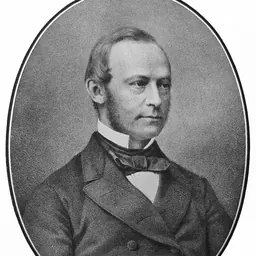

Related people
Same field, nearest in time
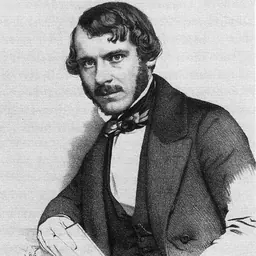
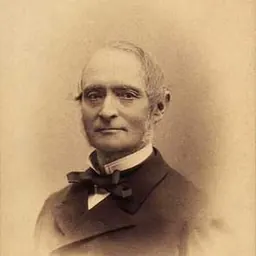
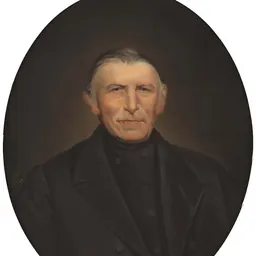
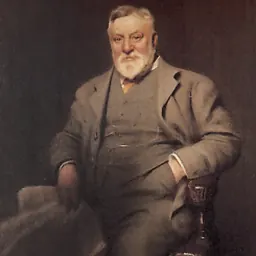

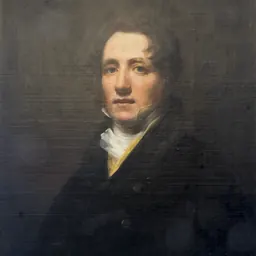
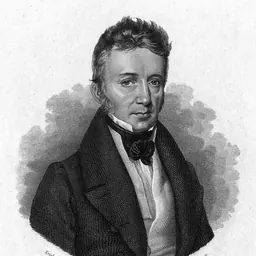
Contemporaries
People whose lives overlapped Lauritz Peter Holmblad's




Frequently asked questions
Who was Lauritz Peter Holmblad?
Danish industrialist (1815-1890)
When was Lauritz Peter Holmblad born?
Lauritz Peter Holmblad was born on 8 July 1815 in Copenhagen.
When did Lauritz Peter Holmblad die?
Lauritz Peter Holmblad died on 16 November 1890 in Copenhagen.
What was Lauritz Peter Holmblad's occupation?
Lauritz Peter Holmblad was a merchant and judge.
What nationality was Lauritz Peter Holmblad?
Lauritz Peter Holmblad was Danish.
Sources & further reading
· Wikipedia: Lauritz Peter Holmblad
· DBpedia: Lauritz Peter Holmblad
Cite this page
APA: Biography.guide. (2026). Lauritz Peter Holmblad. https://biography.guide/lauritz-peter-holmblad/
MLA: "Lauritz Peter Holmblad." Biography.guide, https://biography.guide/lauritz-peter-holmblad/.
Chicago: "Lauritz Peter Holmblad." Biography.guide. https://biography.guide/lauritz-peter-holmblad/.
Data last updated: 2026-09-22 · Spot an error? Report a correction.
Page generated 2026-09-27 05:24 UTC