
Laurence Howell
Howell, Laurence (c.1664–1720), nonjuring Church of England clergyman
About Laurence Howell
Lived 1664 – 1720 (aged 55–56). Laurence Howell was an English and British cleric.
Life Howell was born about 1664 at Deptford and received his education at Lewisham Grammar School, where he was a foundation scholar, and Jesus College, Cambridge, where he graduated BA in 1684 and MA in 1688. He was a zealous member of the nonjuring party, and probably left the university in 1688. In 1708 the Lord Mayor ordered that the Oath of Abjuration should be tendered to him. On 2 October 1712 he was ordained priest by George Hickes, suffragan bishop of Thetford, in his oratory at St. Andrew's, Holborn. In the list of nonjurors at the end of Kettlewell's Life it is stated that Howell was at the Revolution master of the school at Epping, and curate of Estwich, Suffolk, but there is no such parish in that county, and Eastwick, Hertfordshire, may be meant. He composed the speech which William Paul, a nonjuring clergyman, who was convicted of taking part in the rebellion, delivered at his execution on 13 July 1716. He also wrote a pamphlet for private circulation entitled The Case of Schism in the Church of England truly stated. In this seditious work George I was denounced as a usurper, and all that had been done in the church, subsequently to Archbishop Sancroft's deprivation, was condemned as illegal and uncanonical. Howell was arrested at his house in Bull Head Court, Jewin Street, and about a thousand copies of the pamphlet were seized there. A prosecution was first instituted against Redmayne, the printer, who was sentenced to pay a fine of 500l., to be imprisoned for five years, and to find security for his good behaviour for life. Howell was tried at the Old Bailey on 28 February 1716–17 before the Lord Mayor and Justices Powys and Dormer. The jury found him guilty, and two days afterwards he was sentenced to pay a fine of 500l., to be imprisoned for three years without bail, to find four sureties of 500l. each, and himself to be bound in 1,000l. for his good behaviour during life, and to be twice whipped. On his hotly protesting against the last indignity on the ground that he was a clergyman, the court answered that he was a disgrace to his cloth, and that his ordination by the so-called bishop of Thetford was illegal. By the court's direction the common executioner there and then roughly pulled his gown off his back. A few days later, on his humble petition to the King, the corporal punishment was remitted. He died in Newgate on 19 July 1720.
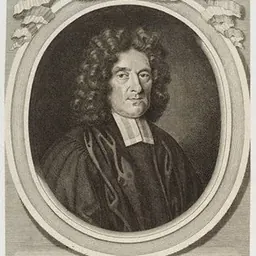
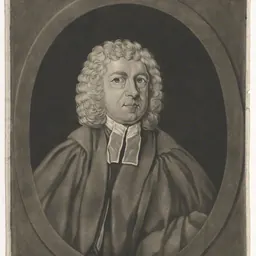
There is an engraving which professes to be a portrait of him, but Noble says the plate was altered from a portrait of Robert Newton, D.D.
Don’t just read it —
keep it.
Full-length biographies made to live with: read them, listen on the way to work, watch them tonight.
- E-book
- Audio
- Video
Instant download · yours to keep · every purchase keeps this site free
Important facts
People in Laurence Howell's life
Named in this biography and alive at the same time

Related people
Same field, nearest in time


Contemporaries
People whose lives overlapped Laurence Howell's





Frequently asked questions
Who was Laurence Howell?
Howell, Laurence (c.1664–1720), nonjuring Church of England clergyman
When was Laurence Howell born?
Laurence Howell was born in 1664 in Deptford.
When did Laurence Howell die?
Laurence Howell died on 19 July 1720 in Newgate Prison.
What was Laurence Howell's occupation?
Laurence Howell was a cleric.
What nationality was Laurence Howell?
Laurence Howell was English and British.
Sources & further reading
Cite this page
APA: Biography.guide. (2026). Laurence Howell. https://biography.guide/laurence-howell/
MLA: "Laurence Howell." Biography.guide, https://biography.guide/laurence-howell/.
Chicago: "Laurence Howell." Biography.guide. https://biography.guide/laurence-howell/.
Data last updated: 2026-09-20 · Spot an error? Report a correction.
Page generated 2026-09-27 05:03 UTC