
About Larry H. Miller
Lived 1944 – 2009 (aged 64). Larry H. Miller was an American entrepreneur, businessperson, performance artist and artist.
Larry H. Miller (April 26, 1944 – February 20, 2009) was an American businessman. He owned the National Basketball Association's (NBA) Utah Jazz and the Salt Lake Bees, a minor league baseball team. Miller and his companies, now known as the Larry H. Miller Company, also owned more than 60 automotive dealerships throughout the western United States, and a variety of other ventures, including Prestige Financial Services, Jordan Commons (a restaurant and entertainment complex), Megaplex Theatres, KJZZ-TV, Miller Motorsports Park, the advertising agency Saxton Horne, and the Delta Center. The Fanzz chain of sports apparel stores was also owned by LHM Group until its sale to Ames Watson Capital in 2018.
Family and early life Miller was born as Lawrence Horne West to Mary Lorille Horne and Howard Hanley West. His parents divorced in 1946, and in June 1948, his mother married Frank Soren Miller. Larry was legally adopted by his stepfather in September 1949, and his surname was changed to Miller. He did not meet his biological father again until he was middle-aged.
Miller earned poor grades in school but was also a National Merit Scholar. Miller graduated from West High School in Salt Lake City. He spent six weeks attending college.
Miller married his high school girlfriend, Gail Saxton, on March 25, 1965, and they became the parents of five children: Gregory Scott, Roger Lawrence (August 21, 1968 – August 18, 2013), Stephen Frank, Karen Rebecca, and Bryan Joseph. He had 21 grandchildren.
Business Car dealerships
Miller worked with his uncle, Reid Horne, to acquire Toyota of Murray in the Salt Lake City suburbs from Hugh Gardner and his partner for $3.5 million. Miller had only $88,000 and difficulty securing bank financing. Horne obtained a loan of $200,000. Gardner and his partner agreed to accept three notes for the remaining balance, with a ten-year repayment term. Miller was deeply worried about the financial burden of the debt on his business. He recognized that the dealership was underperforming and believed he could improve its performance.
In the 2000s, Miller led a successful effort to pass a law prohibiting car dealerships from doing business on consecutive weekend days. An effort to repeal this law failed in 2025.
Television After a failed attempt to start a television station on the last remaining VHF frequency in the Utah market, Miller purchased Salt Lake City independent station KXIV in February 1993. He later changed the call letters to KJZZ-TV as a reference to the Utah Jazz.
Restaurant In July 2000, Miller was sued by Casa Bonita, a Lakewood, Colorado restaurant, for violation of intellectual property rights and unfair competition. The suit alleged that Miller's restaurant, The Mayan, copied the trade dress of Casa Bonita. Allegedly, Miller had visited Casa Bonita several times beginning in 1996, and asked to see the books.
Other businesses Miller also owned Megaplex Theatres, Prestige Financial Services, Miller Motorsports Park, Saxton Horne Communications, Fanzz (a chain of sports clothing & memorabilia outlets), and the Jordan Commons cinema/restaurant complexes along the Wasatch Front. As of 2021, there are 11 Megaplex Theaters located in shopping centers, including ten in Utah: The Gateway mall in downtown Salt Lake City, Jordan Commons in Sandy, The District in South Jordan, The Junction in Ogden, Thanksgiving Point in Lehi, Cedar City, Centerville, Logan, St. George, West Valley City, and Vineyard; as well as one in Mesquite, Nevada. Together the theaters total 191 screens. John Amaechi, a retired center who finished his career with the Utah Jazz in 2003, publicly announced his homosexuality on February 7, 2007. Miller issued a statement the following day, conceding that he had made a bad decision in pulling Brokeback Mountain. He described it as a "knee-jerk reaction" and said that he would probably allow the film to be shown if faced with the same decision again; however he said he was still unsure how he would react to an openly gay player on his basketball team. Miller later explained the cancellation, saying that he was concerned about "getting away from the traditional families," what he called "a very dangerous thing." Miller noted that several individuals purchased automobiles from his dealerships as a form of support for the decision. He also expressed regret for any feelings that were hurt.
Sports Utah Jazz In early 1985, Miller received a letter that had been sent to a total of 40 business leaders to recapitalize the Utah Jazz and keep it in Utah. After being contacted by team management a few weeks later, Miller made an offer of $6.25 million, in response to the team's desire for $8 million, for a 50-percent interest. Miller's offer was rejected but he assisted with the attempts to sell the team. Miller eventually offered the full $8 million to counter an offer that would have moved the team to Miami, Florida. Miller had difficulty obtaining financing since the $8 million was two times his net worth and the team had never made a profit in its entire 11-year lifetime. The Jazz lost $17 million over 11 years and only lost $1 million during its best year. He was able to get a commitment from a consortium of six local banks with just seven minutes before the expiration of the deadline imposed by Jazz owner, Sam Battistone, on April 11, 1985. Battistone had difficulty getting the NBA to approve the purchase, primarily due to Miller's relatively low net worth. Miller became a co-owner of the Utah Jazz when his purchase of a 50% interest in the team was approved by the NBA on May 10, 1985.
Miller had a close relationship with John Stockton. Miller claimed that Stockton considered him a father figure.
Salt Lake Bees Miller was an unpaid consultant in the project to construct Smith's Ballpark (formerly Spring Mobile Ballpark), now the home of the Los Angeles Angels' Triple-A affiliate Salt Lake Bees. He purchased the team in 2003 and changed the name from the Salt Lake Stingers to the Bees.
Philanthropy Miller contributed to a variety of causes and organizations including many projects related to the LDS Church, academic scholarships, American history, preserving historic architecture, planetariums, hospitals, music, art, horticulture, and numerous other forms of public service and philanthropy.
He made a $21 million donation for a law-enforcement training center.
The Larry H. and Gail Miller Salt Lake Community College campus was built with $50 million in donations from Miller.
Miller received a total of five honorary doctorates.
Once he realized his death was imminent, Miller stopped dialysis and returned home. On February 20, 2009, surrounded by family at his home, Miller died of complications from type-2 diabetes.
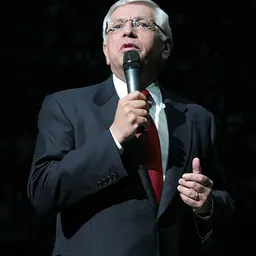
NBA Commissioner David Stern issued a statement on the passing of Miller: "It is with great sadness that I offer condolences to Gail and the Miller family on behalf of the entire NBA family. Larry's legacy extends beyond the NBA as he touched many lives in the Salt Lake City region through his business ventures and charitable endeavors. The NBA lost a great leader, colleague and friend today. We will miss him."
Miller's funeral was held in the Vivint Arena.
Places, buildings, and events named after Miller Larry H Miller Campus of Salt Lake Community College Larry H. Miller Sports Complex Larry & Gail Miller Public Safety Education and Training Center — Salt Lake Community College Miller Campus Miller Automotive Training Center — Salt Lake Community College Miller Campus Miller Corporate Partnership Center — Salt Lake Community College Miller Campus Miller Free Enterprise Center — Salt Lake Community College Miller Campus Miller Professional Development Center — Salt Lake Community College Miller Campus Miller Motorsports Park Larry H. Miller Tour of Utah — bicycle race Larry H. Miller Softball Complex Larry H. Miller Court at Delta Center Miller Cafe, Lassonde Studios, University of Utah Larry H. Miller Dealerships, Murray, Utah.
Don’t just read it —
keep it.
Full-length biographies made to live with: read them, listen on the way to work, watch them tonight.
- E-book
- Audio
- Video
Instant download · yours to keep · every purchase keeps this site free
Important facts
Family & relationships
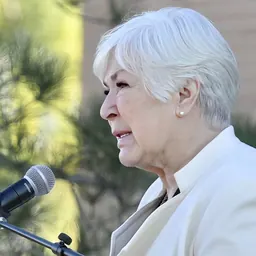
People in Larry H. Miller's life
Named in this biography and alive at the same time


Related people
Same field, nearest in time






Contemporaries
People whose lives overlapped Larry H. Miller's



Frequently asked questions
Who was Larry H. Miller?
American businessman (1944-2009)
When was Larry H. Miller born?
Larry H. Miller was born on 26 April 1944 in Salt Lake City.
When did Larry H. Miller die?
Larry H. Miller died on 20 February 2009 in Salt Lake City.
What was Larry H. Miller's occupation?
Larry H. Miller was an entrepreneur, businessperson, performance artist and artist.
What nationality was Larry H. Miller?
Larry H. Miller was American.
Sources & further reading
Cite this page
APA: Biography.guide. (2026). Larry H. Miller. https://biography.guide/larry-h-miller/
MLA: "Larry H. Miller." Biography.guide, https://biography.guide/larry-h-miller/.
Chicago: "Larry H. Miller." Biography.guide. https://biography.guide/larry-h-miller/.
Data last updated: 2026-09-22 · Spot an error? Report a correction.
Page generated 2026-09-27 05:20 UTC