
About L. K. Advani
Born 1927. L. K. Advani is an Indian politician, lawyer and autobiographer.
Lal Krishna Advani (born 8 November 1927) is an Indian lawyer, journalist, politician and statesman who served as the 7th Deputy Prime Minister of India from 2002 to 2004. He is one of the co-founders of the Bharatiya Janata Party (BJP) and a member of the Rashtriya Swayamsevak Sangh (RSS), a Hindutva nationalist organisation. He was the longest serving Minister of Home Affairs serving for 6 years and 64 days from 1998 to 2004, until his protége Amit Shah overtook him in 2025. He is also the longest serving Leader of the Opposition in the Lok Sabha, as well as the longest serving President of the BJP. He was the BJP's prime ministerial candidate during the 1989, 1991, and 2009 general elections.
Advani was born in Karachi and migrated to India during the Partition of India and settled down in Bombay where he completed his college education. Advani joined the RSS in 1941 at the age of fourteen and worked as a pracharak (RSS officer) in Rajasthan. In 1951, Advani became a member of the Bharatiya Jana Sangh party founded by Syama Prasad Mookerjee and performed various roles, including supervisor of parliamentary affairs, general secretary, and president of the Delhi unit. In 1967, he was elected as the chairman of the First Delhi metropolitan council and served till 1970 while becoming a member of the RSS national executive. In 1970, Advani became a member of the Rajya Sabha for the first time and would go on to serve four terms until 1989. He became the president of Jan Sangh in 1973, and it merged into the Janata Party before the 1977 general election. Following the Janata party's victory in the elections, Advani became the union minister for Information and Broadcasting and leader of the house in Rajya Sabha.
In 1980, Lal Krishna was one of the founding members of the BJP along with Atal Bihari Vajpayee and served as the president of the party three times. He was elected to the Lok Sabha for the first time in 1989 where he served seven terms. In 1992, he was alleged to have been part of the Demolition of the Babri Masjid, but was acquitted by the courts due to lack of evidence. Following the same, he was one of the chief proponents of the movement to build a temple over the disputed Ram Janmabhoomi site in Ayodhya and the subsequent rise of Hindutva, a Hindu nationalist ideology, in the late 1990s. He has served as leader of opposition in both the houses. He was the minister of home affairs from 1998 to 2004 and deputy prime minister from 2002 to 2004. He served in the Indian parliament until 2019 and is credited for rise of BJP as a major political party. In 2015, he was awarded the Padma Vibhushan, India's second highest civilian honour and in 2024, he was conferred with Bharat Ratna, India's highest civilian honour.
Early and personal life
Advani was born on 8 November 1927 in Karachi, British India, in a Sindhi Hindu Lohana family to Kishanchand D. Advani and Gyani Devi.
Advani was educated at St. Patrick's High School, Karachi, and D. G. National College in Hyderabad, Sindh. His family was forced to flee Sindh and came to India during the partition of India and settled in Mumbai, where he graduated in law from the Government Law College.
Advani married Kamla Advani in February 1965, and had a son, Jayant, and a daughter, Pratibha. Pratibha is a television producer who also supported her father during Advani's active politics. His wife died on 6 April 2016 due to old age. Advani resides in Delhi.
Early political career 1941–1951: Early years Advani joined the Rashtriya Swayamsevak Sangh (RSS) in 1941 at the age of fourteen. He became a pracharak (full-time worker) conducting shakhas and became the secretary of the Karachi unit in 1947. After the partition of India, Advani was a pracharak in Rajasthan working across Alwar, Bharatpur, Kota, Bundi and Jhalawar districts until 1952.
1951–1970: Jan Sangh and Delhi council chairman Advani became a member of the Bharatiya Jana Sangh (BJS), a political party founded in 1951 by Syama Prasad Mookerjee in collaboration with the RSS. He was appointed as the secretary to S. S. Bhandari, then general secretary of the Jan Sangh in Rajasthan. In 1957, he moved to Delhi and became the general secretary and later, president of the Delhi unit of the Jana Sangh. From 1966 to 1967 he served as the leader of BJS in the Delhi Metropolitan Council (DMC). After the 1967 Delhi Metropolitan Council election, he was elected as the chairman of the council and served until 1970. He also assisted K. R. Malkani with the publication of Organiser, the weekly newsletter of the RSS and became a member of its national executive in 1966. In 1973, he was elected as the president of BJS at the Kanpur session of the party working committee meeting. In the 1977 election, the Janata Party won a landslide victory due to the widespread unpopularity of the state of emergency imposed by Indira Gandhi. Morarji Desai became the prime minister with Advani becoming the Minister of Information and Broadcasting. The government did not complete its five year term and was dissolved to call fresh elections in 1980 where Janata Party lost to the Indian National Congress. Subsequently, Advani became the leader of opposition in Rajya Sabha. Though the previous government lasted briefly from 1977 till 1980 and was marred with factional wars, the period saw a rise in support for the RSS which culminated into the formation of the BJP. In 1982, he was elected to the Rajya Sabha for the third time from Madhya Pradesh representing the BJP.
Under Advani, BJP became the political face of the Ayodhya dispute over the Ram Janmabhoomi site when the Vishwa Hindu Parishad (VHP) began a movement for the construction of a temple dedicated to the Hindu deity Rama at the site of the Babri Masjid in Ayodhya. The dispute centered on the basis of the belief that the site was the birthplace of Rama, and that a temple once stood there that had been demolished by the Mughal emperor Babur with the Archaeological Survey of India (ASI) supporting the claim. BJP supported the campaign and made it a part of their election manifesto for the 1989 elections, helping it win 86 seats with Advani getting elected to the Lok Sabha for the first time. Advani became the leader of opposition in Lok Sabha when VP Singh formed the National Front government.
1990–1997: Rath yatras and rise of BJP
Advani often organised rath yatras or processions to boost the popularity of the BJP and unify Hindutva ideology. He organised six across the country with the first one in 1990.
Ram Rath Yatra: Advani started his first yatra from Somnath in Gujarat on 25 September 1990 which concluded at Ayodhya on 30 October 1990. The procession was linked to the dispute at Ram Janmabhoomi site at Ayodhya and was stopped in Bihar by then Chief Minister Lalu Yadav with Advani himself being arrested on the orders of V. P. Singh, then Prime Minister of India. Janadesh Yatra: Four processions starting on 11 September 1993 from four corners of country were organised and Advani led the yatra from Mysore in South India. Traversing through 14 states and two Union Territories, the processions were organised with the purpose to seek the people's mandate against the two bills, the Constitution 80th Amendment Bill and the Representation of People (Amendment) Bill and congregated at Bhopal on 25 September. Swarna Jayanti Rath Yatra: The procession was organised between May and July 1997 and was conducted in celebration of 50 years of Indian Independence and to project the BJP as a party committed to good governance. Bharat Uday Yatra: The yatra took place in the run-up to the 2004 election. Bharat Suraksha Yatra: The BJP launched a nationwide mass political campaign from 6 April to 10 May 2006 consisting of two yatras – one led by Advani from Dwaraka in Gujarat to Delhi and the other led by Rajnath Singh from Puri to Delhi. The yatra was focused on fighting left wing terrorism, minority politics, price rise and corruption, protection of democracy. Jan Chetna Yatra: The last of the yatras was launched on 11 October 2011 from Sitab Diara in Bihar for the purposes of mobilising public opinion against perceived corruption of the then-ruling UPA government and promoting the BJP's agenda of good governance and anti-corruption. In 1990, Advani embarked on Ram Rath Yatra, a procession with a chariot to mobilise volunteers for Ram Janmabhoomi movement. The procession began from Somnath in Gujarat and headed to converge at Ayodhya. In the 1991 general election, the BJP became the second largest party after the Congress with Advani winning for the second time from Gandhinagar and becoming the leader of opposition again. In 1992, Babri Masjid was demolished with Advani alleged to have delivered a provocative speech prior to the demolition. Advani was among the accused in the demolition case but was acquitted on 30 September 2020 by a CBI special court. In the judgement, it was mentioned that the demolition was not pre-planned and that Advani was trying to stop the mob and not incite them.
In the 1996 general election, the BJP became the single largest party and was consequently invited by the president to form the government. Advani did not contest the elections over allegations of involvement in the Hawala scandal, and resigned his seat on 16 January 1996, but was later cleared of charges by the Supreme Court. While Vajpayee was sworn in as prime minister in May 1996, the government collapsed after just thirteen days.
1998–2004: Home minister and deputy prime minister In the 1998 general election, the BJP-led National Democratic Alliance (NDA), came to power with Vajpayee returning as prime minister in March 1998. Advani was elected to the Lok Sabha for the third term and became the Home Minister. During 2002 Gujarat riots, Prime minister Vajpayee actually wanted to remove them chief minister of Gujarat-Advani's protegee Narendra Modi from post , but advani prevented him from doing that. In 2003, news reports suggested a tussle within the BJP with regard to sharing of leadership between Prime Minister Atal Bihari Vajpayee and Advani. BJP president Venkaiah Naidu had suggested that Advani must lead the party politically at the 2004 general elections, referring to Vajpayee as vikas purush, Hindi for development man, and Advani as loh purush, iron man. When Vajpayee subsequently threatened retirement, Naidu backtracked, announcing that the party would contest the elections under the twin leadership of Vajpayee and Advani.
2004–2009: Opposition leader
In the 2004 general election, the BJP suffered a defeat with United Progressive Alliance led by the Congress coming to power, with Manmohan Singh as prime minister. Advani won his fifth term to the Lok Sabha and became the leader of opposition. Vajpayee retired from active politics after the 2004 defeat, promoting Advani to lead the BJP. In June 2005, while on a visit to Karachi, Advani described Mohammad Ali Jinnah as a secular leader, which led to criticism from the RSS. Advani was forced to resign as BJP president but withdrew the resignation a few days later. In April 2005, RSS chief K. S. Sudarshan opined that Advani should step aside. At the silver jubilee celebrations of the BJP in Mumbai in December 2005, Advani stepped down as party president and Rajnath Singh from Uttar Pradesh was elected in his place. In March 2006, following a bomb blast at a Hindu shrine at Varanasi, Advani undertook a Bharata Suraksha Yatra ('Sojourn for National Security'), to highlight the alleged failure of the ruling United Progressive Alliance in combating terrorism.
2009–2015: Prime Minister candidacy and later years
In December 2006, Advani stated that as the leader of the opposition in a parliamentary democracy, he considered himself the Prime Ministerial candidate for the next general elections in May 2009. While not everyone was supportive of his candidacy, Vajpayee endorsed Advani's candidacy. On 2 May 2007, BJP President Rajnath Singh stated that Advani is the natural choice for the next prime minister if BJP won the next elections. On 10 December 2007, the Parliamentary Board of BJP formally announced that L. K. Advani would be its prime ministerial candidate for the general elections due in 2009.
Though Advani won his sixth term in Lok Sabha, the BJP lost to Congress and its allies in the 2009 general elections, allowing then incumbent Prime Minister Manmohan Singh to continue in office. Following the defeat in the elections, L. K. Advani handed over the position of leader of opposition to Sushma Swaraj. He was elected working chairman of the National Democratic Alliance in 2010. Advani contested the 2014 general election from Gandhinagar, winning for the fifth consecutive time. Later he was part of the Marg Darshak Mandal (vision committee) of the BJP along with Murli Manohar Joshi and Atal Bihari Vajpayee.
Elections contested Lok Sabha Year ConstituencyParty Votes % OpponentOpponent party Opponent votes % Result Margin % 1989New Delhi 129,256 55.54 V. Mohini Giri 97,415 41.85 31,841 13.691991 93,662 43.4 Rajesh Khanna 92,073 42.66 1,589 0.74Gandhinagar 356,902 57.97 G. I. Patel 231,223 37.56 125,679 20.41 1998 541,340 59.86 P. K. Datta 264,639 29.26 276,701 30.6 1999 453,299 61.14 T. N. Seshan 264,285 35.65 189,014 25.49 2004 516,120 61.04 Gabhaji Mangaji Thakor 298,982 35.36 217,138 25.68 2009 434,044 54.89 Sureshkumar Chaturdas Patel 312,297 39.49 121,747 15.4 2014 773,539 68.12 Kiritbhai Ishvarbhai Patel 290,418 25.58 483,121 42.54
Rajya Sabha ElectionParty Constituency From To Tenure 1970 Delhi 3 April 1970 2 April 1976 1976 Gujarat 3 April 1976 2 April 1982 1982 Madhya Pradesh 3 April 1982 2 April 1988 1988 3 April 1988 27 November 1989
Positions held + Positions held Position Duration Member, Joint Parliamentary Committee on Maintenance ofHeritage Character and Development of Parliament House Complex October 2014 – May 2019 Chairperson, Committee on Ethics 15 September 2014 – 25 May 2019 Member, Standing Committee on Information Technology 1 September 2014 – 25 May 2019 Member, Committee on Public Undertakings August 2014 – May 2019 Member, 16th Lok Sabha June 2014 – May 2019 (7th term) Member, Joint Parliamentary Committee on Maintenance ofHeritage Character and Development of Parliament House Complex December 2009 Member, Standing Committee on Home Affairs August 2009 Member, Committee on Installation of Portraits/Statues of NationalLeaders and Parliamentarians in Parliament House Complex August 2009 Leader of Opposition, Lok Sabha May–December 2009 Member, 15th Lok Sabha Re-elected in 2009 (6th term) Member, Standing Committee on Home Affairs August 2006 – May 2009 Leader of Opposition, Lok Sabha Unspecified Member, 14th Lok Sabha Re-elected in 2004 (5th term) Minister, Personnel, Pensions and Public Grievances(additional charge) January 2003 – May 2004 Minister, Coal and Mines (additional charge) July–August 2002 Deputy Prime Minister June 2002 – May 2004 Minister, Home Affairs October 1999 – May 2004 Member, 13th Lok Sabha Re-elected in 1999 (4th term) Chairman, Committee on Official Language Unspecified Minister, Home Affairs 1998–1999 Member, 12th Lok Sabha Re-elected in 1998 (3rd term) President, BJP 1993–1998 Leader of Opposition, Lok Sabha 1991–1993 Member, 10th Lok Sabha Re-elected in 1991 (2nd term) Chairman, Committee of Parliament on Pay and Allowances April–May 1990 Chairman, Committee to Review the Lok Sabha Secretariat 1990–1991 Leader of Opposition, Lok Sabha Unspecified Leader, BJP parliamentary party, Lok Sabha 1989–1991 Member, 9th Lok Sabha Elected in 1989 Member, Rajya Sabha Re-elected in 1988 (4th term) President, BJP 1986–1991 Member, Rajya Sabha Re-elected in 1982 (3rd term) Leader, BJP, Rajya Sabha Unspecified General Secretary, BJP 1980–1986 Leader of Opposition, Rajya Sabha January–April 1980 Minister, Ministry of Information and Broadcasting 1977–1979 Leader of the House, Rajya Sabha March 1977 – August 1979General Secretary, Janata Party 1977–1980 Member, Rajya Sabha Re-elected in 1976 (2nd term) Leader, BJS, Rajya Sabha 1974–1976 President, BJS 1973–1977 Member, Rajya Sabha Elected in 1970 President, BJS, Delhi 1970–1972 Chairman, Delhi Metropolitan Council 1967–1970 Leader, BJS, Interim Metropolitan Council 1966–1967 Secretary, RSS, Karachi 1947
Awards and honours
Don’t just read it —
keep it.
Full-length biographies made to live with: read them, listen on the way to work, watch them tonight.
- E-book
- Audio
- Video
Instant download · yours to keep · every purchase keeps this site free
Important facts
Family & relationships
People in L. K. Advani's life
Named in this biography and alive at the same time
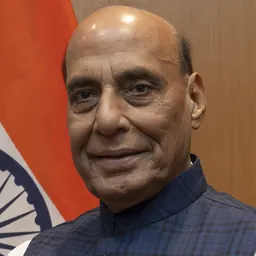
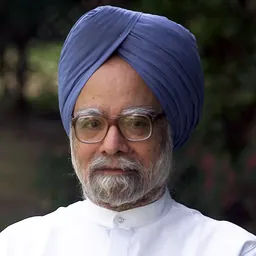
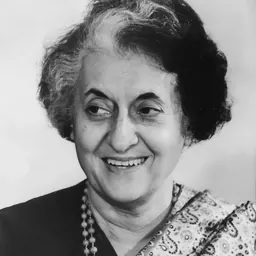
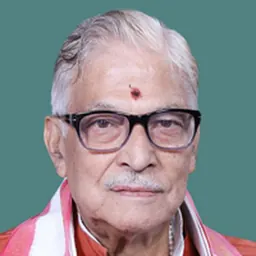


Related people
Same field, nearest in time





Contemporaries
People whose lives overlapped L. K. Advani's


Frequently asked questions
Who is L. K. Advani?
Deputy Prime Minister of India (2002-2004)
When was L. K. Advani born?
L. K. Advani was born on 8 November 1927 in Karachi.
What is L. K. Advani's occupation?
L. K. Advani is a politician, lawyer and autobiographer.
What nationality is L. K. Advani?
L. K. Advani is Indian.
Sources & further reading
Cite this page
APA: Biography.guide. (2026). L. K. Advani. https://biography.guide/l-k-advani/
MLA: "L. K. Advani." Biography.guide, https://biography.guide/l-k-advani/.
Chicago: "L. K. Advani." Biography.guide. https://biography.guide/l-k-advani/.
Data last updated: 2026-09-25 · Spot an error? Report a correction.
Page generated 2026-09-27 05:11 UTC