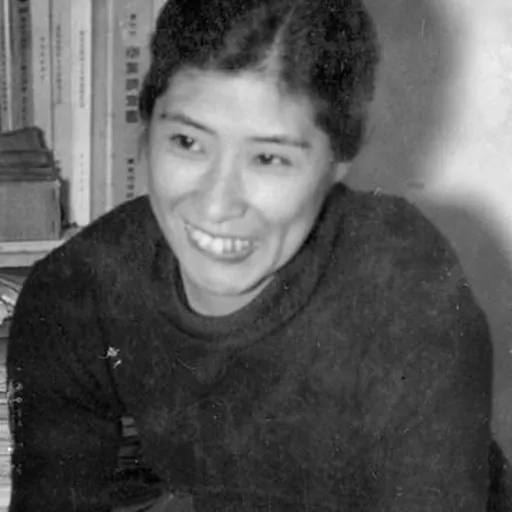
About Kyōko Asanuma
Lived 1904 – 1981 (aged 77). Kyōko Asanuma was a Japanese politician.
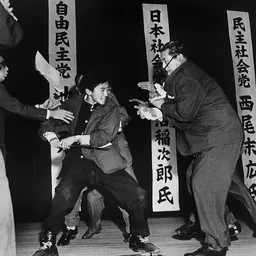
was a Japanese politician of the Shōwa era. She served one term as a member of the House of Representatives for the Japan Socialist Party (JSP) and played a prominent public role following the assassination of her husband, Inejirō Asanuma, then chairman of the JSP, by 17-year-old far-right ultranationalist Otoya Yamaguchi, and after Yamaguchi’s suicide in custody shortly thereafter, she publicly expressed pity for him while condemning the forces that had incited his actions.
Beyond her brief political career, she was known for her efforts in women's activism and fostering diplomatic and cultural ties between Japan and China.
Early life Kyōko Asanuma, née Kyōko Takeda (武田 享子), was born on 1 February 1904, in Hita, Ōita Prefecture, on the island of Kyushu, as the daughter of dentist Tsuneichi Takeda. She graduated from the upper division of Hita Elementary School. At age 17, she married but could not adapt to the overly feudal customs of her husband's family and divorced soon after. She left Kyushu for Tokyo, intending to study dressmaking to support herself.
Marriage and family life Inejirō Asanuma casts his ballot in the 1953 general election, with his wife Kyōko beside him, 19 April 1953. She initially worked at the Kyodokai-kan cafeteria, a gathering spot for socialists, before moving to a café where she met Inejirō Asanuma, then a regular customer and future chairman of the Japan Socialist Party, in 1927. She married him in the fall of 1928.
The couple was known for Inejirō being both a "henpecked husband" and a deeply devoted spouse. Inejirō himself quoted his wife’s wry complaint about their Dōjunkai apartment constantly being filled with political visitors: “Is this apartment a train station?”, a playful jab that played on his famous “human locomotive” nickname.
The couple had no biological children but adopted Kinue, a distant relative of Inejirō Asanuma. Inejirō and Kyōko had hoped to one day supplement their modest apartment life by becoming “Sunday farmers” to get closer to nature once his political career slowed down, but this dream remained unrealized due to his assassination in 1960.
In 1945, she joined the Japan Socialist Party and became a permanent administrator of the Women's Issues Research Committee.
Assassination of her husband and aftermath
Kyōko Asanuma and her daughter Kinue at Inejirō Asanuma's wake following his assassination, 12 October 1960. On his chest rests a mamori-gatana, a ceremonial knife traditionally placed on the deceased as a talisman to ward off evil spirits and protect the soul on its journey to the afterlife. On 12 October 1960, Kyōko's husband Inejirō was assassinated by right-wing youth Otoya Yamaguchi while delivering a speech at Hibiya Public Hall. While watching a tape-delayed broadcast of the debate (which had been preempted by coverage of the Japan Series baseball championships), Kyōko saw a breaking news scroll announcing that her husband had been stabbed. She jumped up, called to her daughter, prepared a change of clothes for him, and rushed by taxi first to Hibiya Hall and then to the hospital, where she learned he had died. In the days that followed, occupied with funeral arrangements and obligations, she had no opportunity to listen to an audio recording of his final speech sent by the television network. Five days later, while preparing to leave for an Assembly Meeting against Terrorism, she saw the assassination footage for the first time on the noon news. The experience shocked her intensely, as if witnessing the event "intimately and intensely" for the first time.
According to former Mainichi Shimbun reporter Michio Ozaki, then a Waseda University student, a group of students spontaneously visited the Asanuma family’s modest rented apartment in Kōtō Ward to pay condolences on the evening of the assassination. A worker-like man greeted them politely with the words "Students, thanks for your trouble" and guided them inside. There, Kyōko Asanuma and her son-in-law Norikuni Nakano (then at Fuji TV) bowed deeply to the visiting mourners in front of the body."
At Inejirō's funeral on 20 October 1960, held at Hibiya Public Hall and attended by over 2,600 representatives, Kyōko Asanuma delivered a reply speech during the ceremony, where condolences from Chinese Premier Zhou Enlai and other international groups were also read. In her speech, she expressed deep sorrow over the circumstances of the assassination and gratitude for the condolences. thumb Kyōko at a press conference following news of Otoya Yamaguchi's suicide, 3 November 1960. On 2 November 1960, Otoya Yamaguchi committed suicide in detention. The next day, 3 November Kyōko Asanuma held a press conference to respond to the news. She stated that she learned of the suicide from the morning newspapers and expressed pity rather than hatred toward the young man, while strongly condemning the forces behind him that incited the act: I first learned of Yamaguchi’s suicide this morning through the newspaper. Rather than feeling hatred toward the boy, I feel more pity for him. My anger is burning up from the bottom of my heart once again toward the unseen forces that instilled such dangerous ideas into a 17-year-old boy and drove him to commit assassination. Her response was widely regarded as an embodiment of the principle of "hating the sin but not the sinner".
Political career
In November of the same year, she ran in the general election in Tokyo's 1st district under the Socialist label. She won her first election, placing second behind former Tokyo Governor Seiichirō Yasui and ahead of Yoshikata Asō of the Democratic Socialist Party. Archived documents from the National Diet Library include election reports, speech drafts, and posters from her successful run in the 29th House of Representatives election, as well as related correspondence. In 1970, she visited China twice: in October, she sent a message read at the rally commemorating the 10th anniversary of her husband's assassination, expressing her determination to continue his anti-imperialist spirit and strengthen Japan–China ties, she also traveled to Beijing to personally attend the memorial rally on 12 October 1970, alongside JSP delegation leader Kuroda Hisao and others. In December, she visited Beijing with her son-in-law Norikuni Nakano (a journalist specializing in pollution issues), where they met Premier Zhou Enlai and Vice Chairman Guo Moruo. Nakano presented Japan's environmental problems (Minamata disease, lead pollution, etc.), contributing to early environmental exchange between the two countries.
Kyoko Asanuma was one of the key initiators for the formation of the "Women's Liaison Committee to Promote Japan-China Diplomatic Normalization and Friendship" (日中国交回復と友好をすすめる婦人連絡会), alongside figures like Tanaka Sumiko, Yamakawa Kikue, Ishigaki Ayako, Sata Ineko, Kubushiro Ochimi, and Sugimura Haruko. This group conducted advocacy activities toward the government to advance normalization.
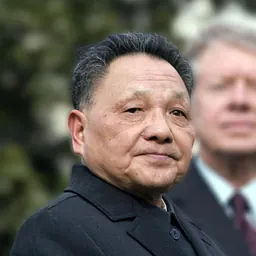
Kyōko Asanuma also met Deng Xiaoping during his state visit to Japan in October 1978. At a reception at the Akasaka State Guest House in Tokyo, she was received alongside Liao Chengzhi (vice chairman of the Standing Committee of the National People's Congress) and Foreign Minister Huang Hua. Deng thanked the families of deceased "old friends" of Japan–China friendship, including Asanuma's widow. On 31 May 1978, she met with Deng Yingchao, Vice Chairperson of the National People's Congress Standing Committee.
Kyōko Asanuma published a personal memoir titled Together with My Husband Inejirō Asanuma (夫 浅沼稲次郎とともに) in the magazine Fujin Kōron in December 1960, recounting 34 years of marriage, shared struggles, and her recovery after the assassination. The text was reprinted in 2010 in a selection of the magazine's archives.
Don’t just read it —
keep it.
Full-length biographies made to live with: read them, listen on the way to work, watch them tonight.
- E-book
- Audio
- Video
Instant download · yours to keep · every purchase keeps this site free
Important facts
People in Kyōko Asanuma's life
Named in this biography and alive at the same time




Related people
Same field, nearest in time





Contemporaries
People whose lives overlapped Kyōko Asanuma's

Frequently asked questions
Who was Kyōko Asanuma?
Japanese politician
When was Kyōko Asanuma born?
Kyōko Asanuma was born on 1 February 1904 in Tokyo.
When did Kyōko Asanuma die?
Kyōko Asanuma died on 10 March 1981.
What was Kyōko Asanuma's occupation?
Kyōko Asanuma was a politician.
What nationality was Kyōko Asanuma?
Kyōko Asanuma was Japanese.
Sources & further reading
Cite this page
APA: Biography.guide. (2026). Kyōko Asanuma. https://biography.guide/kyoko-asanuma/
MLA: "Kyōko Asanuma." Biography.guide, https://biography.guide/kyoko-asanuma/.
Chicago: "Kyōko Asanuma." Biography.guide. https://biography.guide/kyoko-asanuma/.
Data last updated: 2026-09-20 · Spot an error? Report a correction.
Portrait: Wikimedia Commons · author & licence
Page generated 2026-09-27 04:58 UTC