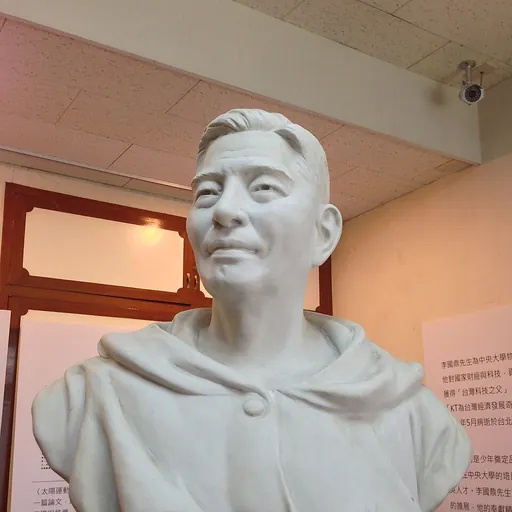
About Kwoh-Ting Li
Lived 1910 – 2001 (aged 91). Kwoh-Ting Li was a Chinese and Taiwanese economist, politician, minister and finance minister.
Li Kwoh-ting (; 28 January 1910 – 31 May 2001) was a Chinese economist and politician best known as the "Father of Taiwan's Economic Miracle" and referred to by the New York Times as the "Godfather of Technology" in Taiwan for his work in transforming Taiwan's economy from an agrarian-based system into one of the world's leading producers of information and telecommunications technology.
Li excelled in mathematics and physics at a young age. At 16 years old, he enrolled at National Central University to study mathematics and physics. After graduating with his Bachelor of Science (B.S.) in physics in 1930, he received a scholarship to pursue doctoral studies in England at the University of Cambridge. He left China for England in 1934 and studied superconductivity at the Cavendish Laboratory under professor Ernest Rutherford. He was a member of Emmanuel College, Cambridge.
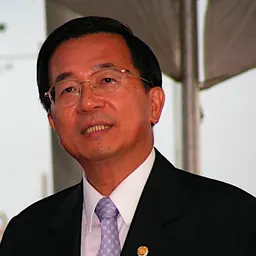
Career Li withdrew from Cambridge and returned to China to support the Chinese war effort when Japan invaded China in 1937. He later fled to Taiwan in July 1948 with the Nationalist Party when the Chinese Communist Party took over China. He became the president of the China Shipbuilding Corporation in Taiwan in 1951 and was appointed as a member of the Industrial Development Commission responsible for the planning and economic development of Taiwan in 1953. In 1959 he became the head of the Industrial Development and Investment Center under the Council for United States Aid. He also helped build the Hsinchu Science Park, which later became known as Taiwan's Silicon Valley. The park is one of the world's leading centers for semiconductor manufacturing and industrial and computer technology development. As of 2018 more than 500 high-tech companies reside in the park. Li was also a senior adviser to the President of the Republic of China, Chen Shui-bian.
Yu argues that Li's policy-making can be explained by evolutionary economics. Two Yale economists, Gustav Ranis and John C.H. Fei, wrote the introductory essays to Li's 1995 book The Evolution of Policy Behind Taiwan's Development Success. Therefore, it can be interpreted that Ranis and Fei's views on economic policy are representative of Li's. He also writes on the concept of agricultural labor surplus economies which, in freeing up workers and generating agricultural surplus and leading to increased productivity in expanding commercial sectors.
Pragmatic economics Li argues that there are two types of issues central to analyzing policy evolution. First is the economic impact of a policy, second is causation, or why a certain policy appears and is implemented at a certain time. where the importance of protecting private property for the improvement of socioeconomic activities and establishing a free economy was only superseded by the need to expand state capital. Yu claims that this view falls under what Robert Wade calls the "guided market economy".
In 1973 manufacturing's share in NDP was 36%, high even by standards of industrialized countries. Exports consisted of over half of GDP and consist of 90% of industrial goods, including textiles, clothes, leather and wood products, radio, television, cassette recorders, electronic calculators, sewing machines, machine tools, semi-conductors, and computers. This was a stark change from 1955's exports, which were 90% agricultural, consisting of mainly sugar and rice.
Critics of the plan included those who worked in manufacturing companies, saying that, "The government's plans are so rough that at the industrial level we can't work with its programs." One such vice-president said that because large private-sector companies planned several years in advance, government policies that are vague and unpredictable can easily go awry. He adds that the amount of funding offered by the government "can't make a dent in what the private sector really needs." Chang proposes that many of the institutions which are regarded as necessary for economic development are the effect and not the cause of economic development. Chang concludes by suggesting that policies be catered to developing countries depending on their stage of development and needs, rather than by using a blanket set of policies. Additionally, to further honor Li, in 2011 an asteroid (239611 Likwohting) was named after him.
Four professorships at Stanford University are also named for Dr. Li in the fields of economic development, engineering, medicine and Chinese culture. As of 2014, the holders in each field are: economic development (Xueguang Zhou ), engineering (Yinyu Ye ), medicine (Stanley N. Cohen ) and Chinese culture (Mark Edward Lewis ).
Don’t just read it —
keep it.
Full-length biographies made to live with: read them, listen on the way to work, watch them tonight.
- E-book
- Audio
- Video
Instant download · yours to keep · every purchase keeps this site free
Important facts
People in Kwoh-Ting Li's life
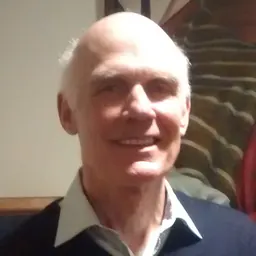
Named in this biography and alive at the same time





Related people
Same field, nearest in time



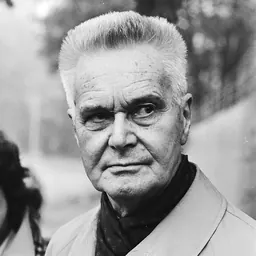
Contemporaries
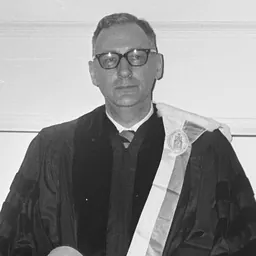
People whose lives overlapped Kwoh-Ting Li's




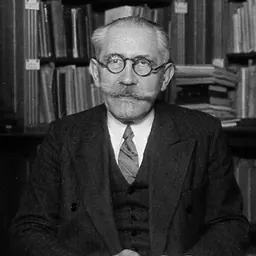
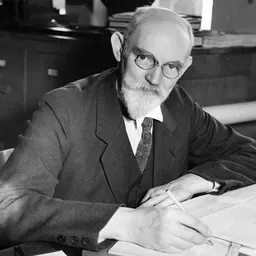
Frequently asked questions
Who was Kwoh-Ting Li?
Taiwanese politician (1910-2001)
When was Kwoh-Ting Li born?
Kwoh-Ting Li was born on 28 January 1910 in Nanjing.
When did Kwoh-Ting Li die?
Kwoh-Ting Li died on 31 May 2001 in Taipei.
What was Kwoh-Ting Li's occupation?
Kwoh-Ting Li was an economist, politician, minister and finance minister.
What nationality was Kwoh-Ting Li?
Kwoh-Ting Li was Chinese and Taiwanese.
Sources & further reading
Cite this page
APA: Biography.guide. (2026). Kwoh-Ting Li. https://biography.guide/kwoh-ting-li/
MLA: "Kwoh-Ting Li." Biography.guide, https://biography.guide/kwoh-ting-li/.
Chicago: "Kwoh-Ting Li." Biography.guide. https://biography.guide/kwoh-ting-li/.
Data last updated: 2026-09-22 · Spot an error? Report a correction.
Portrait: Wikimedia Commons · author & licence
Page generated 2026-09-27 05:02 UTC