
About Kwesi Armah
Lived 1929 – 2006 (aged 77). Kwesi Armah was a Ghanaian diplomat, politician, minister and jurist.
Kwesi Armah (21 September 1929 – 24 November 2006)
Role in the Vietnam War
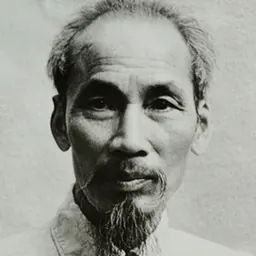
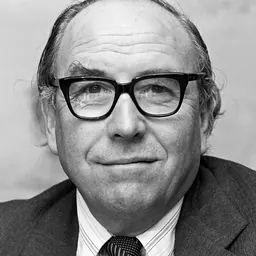
While he was High Commissioner, Armah led a delegation of diplomats sent by Nkrumah to Vietnam in 1965 to establish ties to the government in Hanoi following the rejection of a Commonwealth Peace Mission proposed earlier that year. That mission ended with President Ho Chi Minh personally thanking the delegation and Nkrumah for their concern, but still rejected the proposed mission as an American-driven "negotiated settlement" that was "fraudulent and sinister". Armah was effectively exiled from Ghana, while his family was targeted by military forces and placed under house arrest. Armah was also targeted for extradition to Ghana on his return to London, ostensibly for misappropriation of £30,000 of government funds. Home Secretary for the United Kingdom Roy Jenkins determined that the charges were brought by Ghana for political crimes, and thus chose to decline the extradition request under the Fugitive Offenders Act. Although freed, he was tried at the Old Bailey and subsequently acquitted. Armah was separated from his family for two years, when they too were released from house arrest and allowed to return to their home in England.
Leadership and coup
Nkrumaist political parties were not permitted again until the establishment of the Third Republic of Ghana, allowed by Jerry Rawlings, who had led the Armed Forces Revolutionary Council (AFRC) in a June 1979 coup. Armah became a leader of the People's National Party (PNP) that rose to power in the republic's first—and only—election that brought Hilla Limann to the presidency. Two years later, yet another coup led by Jerry Rawlings overthrew the Limann government. Rawlings established the Provisional National Defence Council (PNDC), which oversaw a system of Public Tribunals that would not be "fettered by legal technicalities". Along with two other leaders of the PNP, Armah was charged and convicted of corruption, namely the bribery of former AFRC officers, and served seven years in prison. He was placed in administrative detention once more in 1991 "in the interest of national security" after writing an article in the Ghanaian newspaper Christian Chronicle critical of the ruling PNDC. He was not brought to trial until three months later.
Death
Kwesi Armah died on 24 November 2006 in Accra. He was married and had five children, including the writer and analyst Esther Armah.
Publications Africa's Golden Road, Heinemann Educational Books, 1965 Ghana: Nkrumah's Legacy, London: Rex Collings, 1974 Peace without Power: Ghana's Foreign Policy 1957-1966, Ghana Universities Press, 2004.
Don’t just read it —
keep it.
Full-length biographies made to live with: read them, listen on the way to work, watch them tonight.
- E-book
- Audio
- Video
Instant download · yours to keep · every purchase keeps this site free
Important facts
Family & relationships
People in Kwesi Armah's life
Named in this biography and alive at the same time


Related people
Same field, nearest in time

Contemporaries
People whose lives overlapped Kwesi Armah's

Frequently asked questions
Who was Kwesi Armah?
Ghanaian politician and diplomat (1929-2006)
When was Kwesi Armah born?
Kwesi Armah was born on 21 September 1929.
When did Kwesi Armah die?
Kwesi Armah died on 24 November 2006 in Accra.
What was Kwesi Armah's occupation?
Kwesi Armah was a diplomat, politician, minister and jurist.
What nationality was Kwesi Armah?
Kwesi Armah was Ghanaian.
Sources & further reading
Cite this page
APA: Biography.guide. (2026). Kwesi Armah. https://biography.guide/kwesi-armah/
MLA: "Kwesi Armah." Biography.guide, https://biography.guide/kwesi-armah/.
Chicago: "Kwesi Armah." Biography.guide. https://biography.guide/kwesi-armah/.
Data last updated: 2026-09-20 · Spot an error? Report a correction.
Page generated 2026-09-27 05:00 UTC